
$11.07 Bn Cryptocurrency Market Forecast to 2035
Discover how the $11.07 Bn cryptocurrency market will grow by 2035, covering technology, applications, custody solutions, and key trends.


Cryptocurrency market has moved far beyond its early days as a niche digital experiment. What once attracted only tech enthusiasts and early investors has now become a serious global industry. Governments, financial institutions, technology companies, and everyday users are all participating in this rapidly expanding ecosystem. As a result, long-term projections suggest that the cryptocurrency market could reach $11.07 Bn by 2035, driven by real-world use cases, stronger infrastructure, and rising trust.
This growth is not only about the price of popular cryptocurrencies. Instead, it reflects deeper changes in how value is created, stored, and transferred digitally. Blockchain technology, improved security systems, and better user experiences are helping cryptocurrencies become more practical for daily use. At the same time, businesses are exploring crypto-based solutions for payments, asset management, and digital ownership.
Another important factor behind this market expansion is diversification. The future cryptocurrency market will not rely on a single technology or application. It will be shaped by different blockchain models, multiple areas of application, various custody solutions, and several types of digital assets. Each of these elements plays a unique role in driving adoption and stability.
This article explores the $11.07 Bn cryptocurrency market by 2035 in a clear and easy-to-read way. It explains how technology choices, application areas, custody models, and asset types work together to shape the future of this fast-growing market.
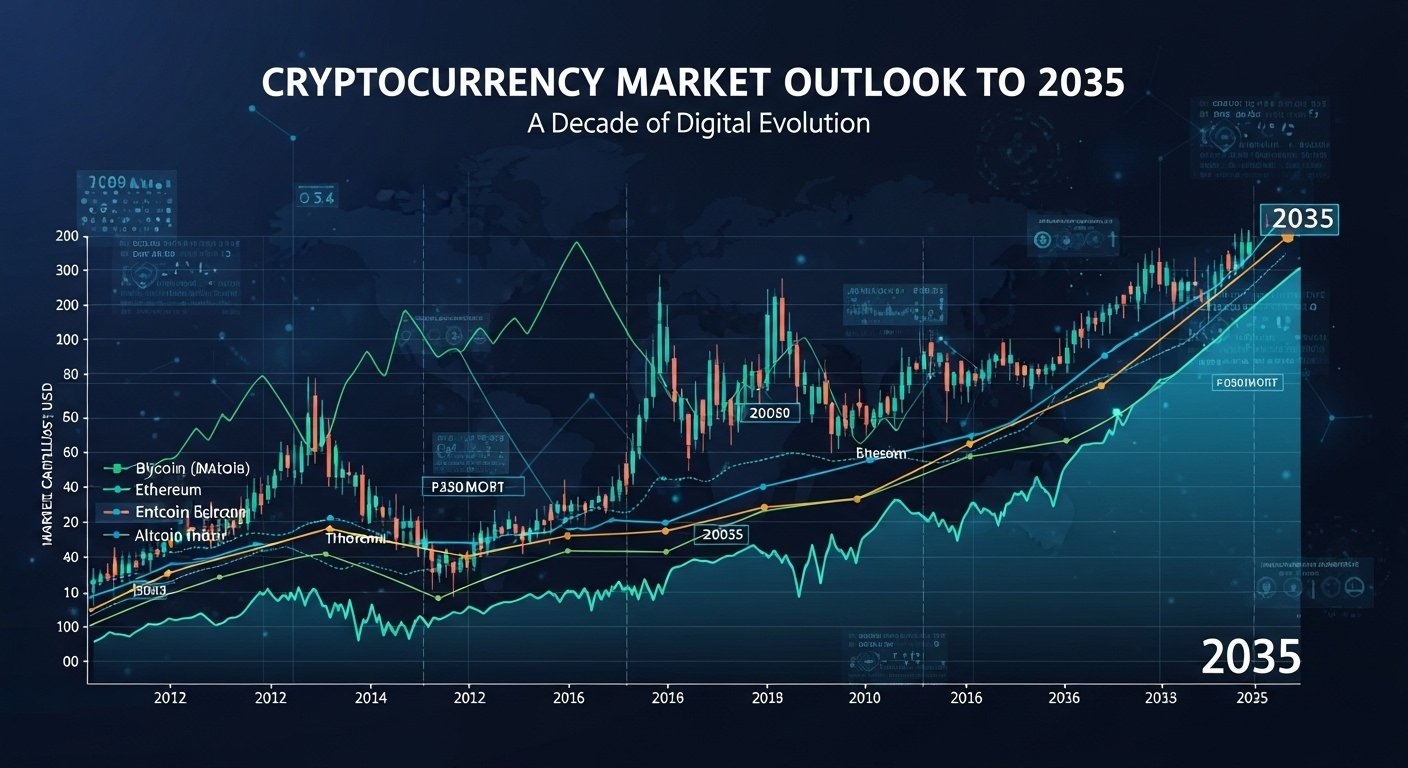
Cryptocurrency Market Outlook to 2035
The road to a $11.07 Bn valuation reflects a shift from speculation to real utility. In earlier years, the cryptocurrency market was largely driven by price movements and investor sentiment. While volatility still exists, today’s market shows stronger fundamentals.
More people are using cryptocurrencies for payments, savings, and digital investments. Businesses are adopting crypto for cross-border transactions and automated financial processes. Governments are also introducing clearer regulations, which helps reduce uncertainty and encourages wider participation.
Technological improvements are another major driver. Faster transaction speeds, lower fees, and better network security make crypto more usable. These improvements support long-term growth and help cryptocurrencies compete with traditional financial systems.
By 2035, the cryptocurrency market is expected to be more mature, regulated, and trusted. This maturity will support sustainable growth rather than short-lived hype cycles.
Type of Technology Shaping the Cryptocurrency Market
Public Blockchain Technology
Public blockchains remain the backbone of the cryptocurrency market. These networks are open to anyone and promote transparency and decentralization. They are commonly used for digital currencies, decentralized finance platforms, and NFT ecosystems.
Public blockchains encourage innovation because developers can freely build applications. As scaling solutions improve, these networks are becoming faster and more affordable. This makes them suitable for everyday transactions, online services, and global payments.
By 2035, public blockchains are likely to support a wide range of applications beyond trading, making them central to the market’s long-term growth.
Private and Permissioned Blockchains
Private and permissioned blockchains serve a different purpose. Access is limited to approved participants, which makes them attractive to enterprises and financial institutions. These systems offer greater control, privacy, and compliance.
In the cryptocurrency market, permissioned blockchains are often used for internal settlements, supply chain tracking, and regulated asset tokenization. They may not replace public networks, but they complement them by addressing enterprise needs.
As adoption grows, hybrid models that combine public transparency with private control may become more common.
Scaling Solutions and Interoperability
Scaling technology plays a critical role in the future cryptocurrency market. Layer-2 networks and interoperability tools reduce congestion and transaction costs. They also allow different blockchains to communicate with each other.
These solutions improve user experience and make crypto practical for high-volume applications. By 2035, scaling technologies will help support mass adoption and unlock new use cases.
Area of Application Driving Market Growth
Payments and Cross-Border Transfers
Payments are one of the strongest use cases for the cryptocurrency market. Traditional international transfers are often slow and expensive. Cryptocurrencies can reduce both time and cost by removing intermediaries.
In many regions, crypto-based payments also improve financial access. Digital wallets allow users to send, receive, and store value without relying on traditional banks. This is especially important in underserved markets.
As payment systems mature, cryptocurrencies may become a standard option for global transactions.
Decentralized Finance (DeFi)
Decentralized finance has transformed how people interact with financial services. DeFi platforms allow users to lend, borrow, trade, and earn returns without centralized intermediaries.
Although early DeFi faced security and volatility challenges, the ecosystem has improved. Better audits, risk management tools, and regulatory awareness are making DeFi more reliable.
By 2035, DeFi is expected to play a major role in the cryptocurrency market, offering alternative financial services alongside traditional banking systems.
Tokenization of Real-World Assets
Tokenization is one of the most promising trends in the cryptocurrency market. It allows real-world assets such as real estate, stocks, and commodities to be represented digitally on a blockchain.
This process improves liquidity and makes asset ownership more accessible. Investors can own smaller portions of high-value assets, while transactions become faster and more transparent.
As regulations evolve, tokenization could significantly expand the market’s size and reach.
NFTs and Digital Ownership
NFTs are no longer limited to digital art. They now represent ownership rights in gaming, entertainment, memberships, and digital identity systems.
In the future cryptocurrency market, NFTs may support ticketing, licensing, and intellectual property protection. Their value will increasingly come from utility rather than speculation.
Type of Custody Solution and Its Impact
Self-Custody Solutions
Self-custody gives users full control over their digital assets. This model aligns with the core philosophy of decentralization. Users manage their own private keys through hardware or software wallets.
While self-custody offers independence, it also requires responsibility. Lost keys can mean lost assets. To address this, modern wallets are introducing recovery features and improved security tools.
Self-custody will remain an important part of the cryptocurrency market, especially for experienced users.
Custodial Wallets and Exchanges
Custodial solutions store assets on behalf of users. They are popular because they are easy to use and offer customer support.

For many newcomers, custodial wallets serve as the first entry point into the cryptocurrency market. Strong security measures and regulatory compliance are essential to maintain trust in these platforms.
Institutional Custody Services
Institutional custody solutions are designed for large investors and financial institutions. These services include advanced security, insurance coverage, and regulatory reporting.
Institutional custody plays a key role in attracting large-scale investment. As institutions enter the market, demand for professional custody services continues to grow.
Type of Cryptocurrency Assets
Payment Cryptocurrencies
These assets are designed for transferring value efficiently. Their success depends on transaction speed, fees, and network security.
Payment-focused cryptocurrencies support everyday transactions and global settlements within the cryptocurrency market.
Stablecoins
Stablecoins reduce price volatility by being linked to fiat currencies or other assets. They are widely used for trading, payments, and DeFi applications.
By 2035, stablecoins may become essential tools for everyday crypto use.
Utility and Security Tokens
Utility tokens provide access to specific platforms or services. Security tokens represent regulated financial assets.
Both categories contribute to market diversification and long-term stability.
Conclusion
The journey toward an $11.07 Bn cryptocurrency market by 2035 reflects a shift toward maturity, usability, and trust. Growth will be driven by improved technology, practical applications, secure custody solutions, and diverse asset types.
As blockchain technology integrates with traditional systems, cryptocurrencies will become less experimental and more essential. The future market will focus on real value creation rather than speculation, making crypto a lasting part of the global digital economy.
FAQs
Q: Why is the cryptocurrency market expected to reach $11.07 Bn by 2035?
Growth is driven by wider adoption, improved technology, real-world applications, and stronger regulatory frameworks.
Q: Which application area contributes most to cryptocurrency adoption?
Payments, decentralized finance, and asset tokenization are among the strongest growth drivers.
Q: Are custody solutions important for market growth?
Yes. Secure and user-friendly custody solutions increase trust and attract both retail and institutional users.
Q: Will stablecoins dominate the future cryptocurrency market?
Stablecoins will play a major role due to their price stability and usefulness in payments and DeFi.
Q: Is the cryptocurrency market moving beyond speculation?
Yes. The focus is shifting toward practical use cases, infrastructure development, and long-term value creation.
Also More: Crypto Market Rally Regulatory & Economic Catalysts