Bitcoin Climbs to $96,240 as Altcoins Surge
Bitcoin climbs to a two-month high of $96,240 as altcoins surge and short sellers get squeezed, signaling renewed momentum in the crypto market.

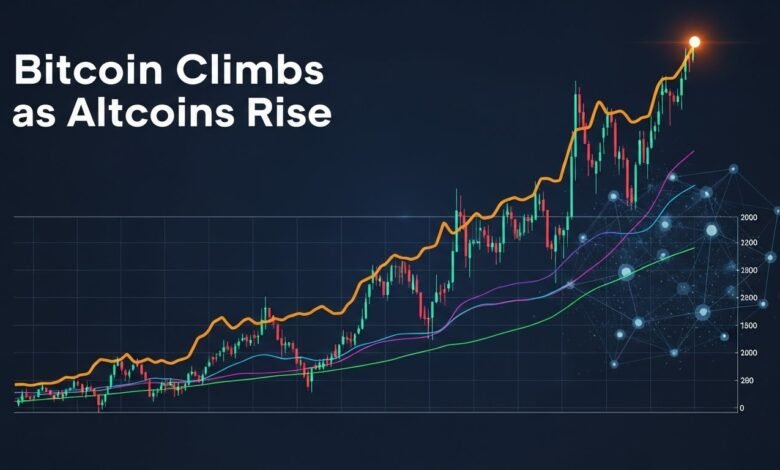
Bitcoin has once again captured global attention after climbing to a two-month high of $96,240, reigniting bullish sentiment across the cryptocurrency market. The sharp upward move did not occur in isolation. As Bitcoin surged, altcoins followed with strong gains, while traders holding bearish positions were caught off guard, triggering a powerful short squeeze that accelerated the rally even further.
This price movement reflects more than just another volatile swing. It signals a renewed appetite for risk, shifting market psychology, and a recalibration of expectations after weeks of consolidation. When Bitcoin moves decisively, it sends ripples through the entire digital asset ecosystem, influencing trader behavior, liquidity flows, and sentiment across both retail and institutional participants.
In this article, we take an in-depth look at why Bitcoin climbs to two-month high of $96,240 as altcoins surge and shorts get squeezed, what is driving this momentum, how short liquidations amplify price action, and what it could mean for the next phase of the crypto market. Whether you are a trader, investor, or market observer, understanding the mechanics behind this rally provides valuable insight into how Bitcoin and altcoins behave during periods of renewed momentum.
Bitcoin’s rise to $96,240 and its market significance
A move to $96,240 represents more than a simple price increase. A two-month high acts as a psychological marker, signaling that buyers have regained control after a period of uncertainty. For many market participants, such levels confirm strength rather than speculation, encouraging additional capital to flow into Bitcoin.
Bitcoin’s ability to reclaim higher price territory demonstrates resilience. After facing selling pressure in prior weeks, the market has absorbed supply and pushed prices upward again. This transition from hesitation to conviction is often what separates temporary rebounds from more sustained trends.
Another important factor is market memory. Price levels near previous highs attract attention because they represent zones where sellers were once dominant. When Bitcoin breaks above those areas, it forces market participants to reconsider their assumptions, often leading to increased participation and momentum-driven buying.
The role of momentum in Bitcoin price action
Momentum plays a critical role in Bitcoin’s price behavior. Once price begins to rise steadily, it tends to attract trend-following traders and algorithms designed to identify breakouts. These participants do not rely on narratives or speculation; they respond directly to price strength.
As Bitcoin climbed toward $96,240, momentum accelerated as more buyers entered the market. This influx of demand not only lifted Bitcoin but also improved overall market confidence, creating favorable conditions for altcoins to rally alongside it.
Momentum-driven rallies are especially impactful in crypto markets because they operate continuously across global exchanges. Unlike traditional markets with limited trading hours, Bitcoin trades around the clock, allowing momentum to build rapidly and cascade through multiple trading sessions without interruption.
Altcoins surge alongside Bitcoin’s breakout
When Bitcoin rises sharply, altcoins do not always follow immediately. In many cases, capital concentrates in Bitcoin first as traders seek relative stability. However, this rally was different. Altcoins surged alongside Bitcoin, signaling a broad-based shift in risk appetite.
This synchronized movement suggests that traders believe the rally has strength beyond a short-term bounce. Large-cap altcoins often benefit first, followed by mid-cap and smaller projects as confidence spreads. This rotation reflects optimism that liquidity will remain available and that volatility will favor upside potential.

Altcoin rallies are also fueled by leverage dynamics. As Bitcoin’s price increases, it boosts the value of collateral held by traders, enabling them to take on additional positions. This expansion of market activity contributes to the rapid appreciation seen across multiple digital assets.
Understanding the short squeeze that fueled the rally
One of the most powerful forces behind this move was a short squeeze. In crypto markets, many traders use leverage to bet on price declines by opening short positions. When price moves against them, losses can accumulate quickly.
As Bitcoin climbed past key resistance levels, short sellers were forced to close their positions to limit losses or due to automatic liquidations. Closing a short position requires buying Bitcoin, which adds upward pressure to price. This creates a feedback loop where rising prices force more shorts to exit, further accelerating the rally.
Short squeezes are especially intense in crypto markets due to high leverage and constant trading. They can turn modest price increases into explosive moves within a short period, catching even experienced traders off guard.
Liquidations and their impact on price acceleration
Liquidations are a defining feature of leveraged crypto markets. When traders cannot meet margin requirements, exchanges automatically close their positions. This process converts losing positions into market orders, injecting sudden buying or selling pressure.
During this rally, liquidations amplified Bitcoin’s upward movement. Instead of gradual buying, forced orders hit the market rapidly, pushing prices higher in quick succession. This is why squeeze-driven rallies often appear sudden and aggressive, with long candles and sharp extensions.
Liquidations also remove excess leverage from the system. While painful for those on the wrong side of the trade, they can create a healthier market structure by reducing the likelihood of extreme volatility caused by overcrowded positions.
Market structure behind Bitcoin’s surge
Bitcoin’s rally is best understood by examining market structure. The crypto market consists of spot buyers, derivatives traders, and liquidity providers, all interacting simultaneously. When these elements align, price moves can become dramatic.
Spot market demand establishes a foundation. When real buyers step in, they provide stability and confidence. Derivatives traders amplify movements by using leverage, which increases sensitivity to price changes. Liquidity conditions determine how much price moves in response to each trade.
As Bitcoin approached $96,240, liquidity was sufficient to allow price discovery but thin enough to magnify the impact of aggressive buying and liquidations. This balance created the perfect environment for a sharp upward move.
Why two-month highs attract increased participation
A two-month high is a widely observed timeframe in trading strategies. Many participants use recent highs as confirmation signals, believing that strength over this period reflects genuine demand rather than noise.
When Bitcoin breaks above such levels, it triggers buy signals for momentum-based systems and discretionary traders alike. This convergence of strategies adds fuel to the rally and increases trading volume, reinforcing the move.
Additionally, media coverage and social sentiment often intensify around notable milestones. Increased attention draws in new participants, creating a self-reinforcing cycle where visibility leads to demand, and demand leads to higher prices.
Sentiment shift across the crypto market
The surge to $96,240 marked a noticeable shift in market sentiment. Prior caution gave way to renewed optimism, with traders reassessing downside risks and focusing on upside potential.
Positive sentiment is particularly influential in crypto markets, where narratives and expectations play an outsized role. When confidence returns, capital flows more freely, volatility increases, and speculative interest grows.
However, sentiment-driven rallies also require careful interpretation. While optimism can sustain momentum, excessive enthusiasm without follow-through from spot demand can lead to short-term corrections.
Potential scenarios following the rally
After a powerful move like this, the market typically enters a decision phase. There are several possible paths Bitcoin and altcoins could take from here.
One scenario involves consolidation. Bitcoin may trade sideways near recent highs as the market absorbs gains and evaluates whether demand remains strong. This outcome often supports continued altcoin strength as traders rotate capital.
Another scenario is a pullback. If the rally was driven primarily by liquidations rather than fresh buying, price may retrace some gains. Such corrections are common and can serve to reset momentum.
A third possibility is continuation. If buyers remain active and sellers fail to regain control, Bitcoin could push beyond current levels, attracting even more attention and participation.
Risk management lessons from short-squeeze rallies
Rallies fueled by short squeezes offer valuable lessons. They highlight the risks of excessive leverage and the importance of respecting market momentum. Betting against strong trends can be costly, especially in highly volatile environments.
For long-term investors, these moves underscore the importance of patience. Sudden price spikes may not always represent ideal entry points, but they can confirm broader market strength.
Understanding the difference between organic demand and forced buying helps traders navigate volatility more effectively and make informed decisions rather than emotional ones.
Conclusion
The moment when Bitcoin climbs to two-month high of $96,240 as altcoins surge and shorts get squeezed represents a powerful intersection of momentum, market psychology, and structural dynamics. It showcases how quickly sentiment can shift and how leverage can amplify price movements.
While the immediate excitement is undeniable, the broader takeaway lies in what this rally reveals about confidence returning to the market. Bitcoin’s strength has once again set the tone, pulling altcoins higher and reminding participants of the market’s capacity for rapid change.
Whether this move marks the beginning of a sustained uptrend or a temporary surge, it reinforces one fundamental truth: Bitcoin remains the heartbeat of the crypto market, and when it moves decisively, the entire ecosystem responds.
FAQs
Q: Why is Bitcoin reaching a two-month high important?
A two-month high signals renewed strength and confidence among buyers, often attracting additional participation and confirming bullish momentum.
Q: What causes altcoins to surge when Bitcoin rises?
Altcoins surge when Bitcoin rises due to improved market sentiment, increased liquidity, and traders seeking higher-risk, higher-reward opportunities.
Q: What is a short squeeze in crypto markets?
A short squeeze occurs when rising prices force short sellers to buy back positions, adding buying pressure that accelerates the rally.
Q: Are liquidations good or bad for the market?
Liquidations are disruptive but can reduce excessive leverage, potentially leading to a healthier and more balanced market structure.
Q: Will Bitcoin continue to rise after hitting $96,240?
Future price action depends on sustained demand, sentiment, and broader market conditions. Consolidation, pullbacks, or further upside are all possible.
See More: Bitcoin Price Prediction BTC Holds $90K