
Crypto ETFs Turn Volatile in Feb as Bitcoin Lags, XRP Shines
February opened with sharp volatility for crypto ETFs. Bitcoin lagged while XRP gained attention. Explore what’s driving the shift.


February began with sharp swings that once again reminded investors why crypto ETFs are among the most emotionally charged instruments in modern markets. After a strong finish to the previous month, optimism quickly gave way to uncertainty as prices reversed, volatility spiked, and investor positioning shifted rapidly. Bitcoin, long considered the anchor of the digital asset market, struggled to maintain momentum. In contrast, XRP emerged as a surprising point of strength, drawing attention during a period when many traders expected broad-based weakness.
This divergence has fueled headlines about a “two-track” crypto market. On one track, Bitcoin-heavy crypto ETFs faced selling pressure, declining prices, and rising skepticism. On the other, XRP-related exposure benefited from renewed interest, signaling that investors are becoming more selective rather than abandoning crypto entirely. This pattern highlights a growing maturity in how market participants approach digital assets through ETFs, treating them less as a single trade and more as differentiated opportunities.
The early-February volatility wasn’t just about price movement. It was about psychology, liquidity, and the speed at which capital now flows through regulated investment vehicles. With crypto ETFs offering instant exposure, investor sentiment can shift in real time, amplifying both fear and opportunity. Understanding why Bitcoin lagged while XRP shined offers valuable insight into where the crypto ETF market may be headed next.
The Market Backdrop: Why February Sparked Instability in Crypto ETFs
Crypto rarely moves in isolation, and February’s volatility reflected broader market uncertainty. Global investors entered the month on edge, weighing inflation concerns, interest rate expectations, and risk exposure across equities and alternative assets. In that environment, high-volatility instruments like crypto ETFs often become the first assets investors reduce when confidence wavers.
ETFs magnify this effect because of their structure. Unlike direct crypto ownership, ETF shares can be traded instantly during market hours. When uncertainty rises, selling can accelerate quickly, creating sharp intraday moves. This dynamic was clearly visible in early February, as trading volumes surged and prices swung aggressively.
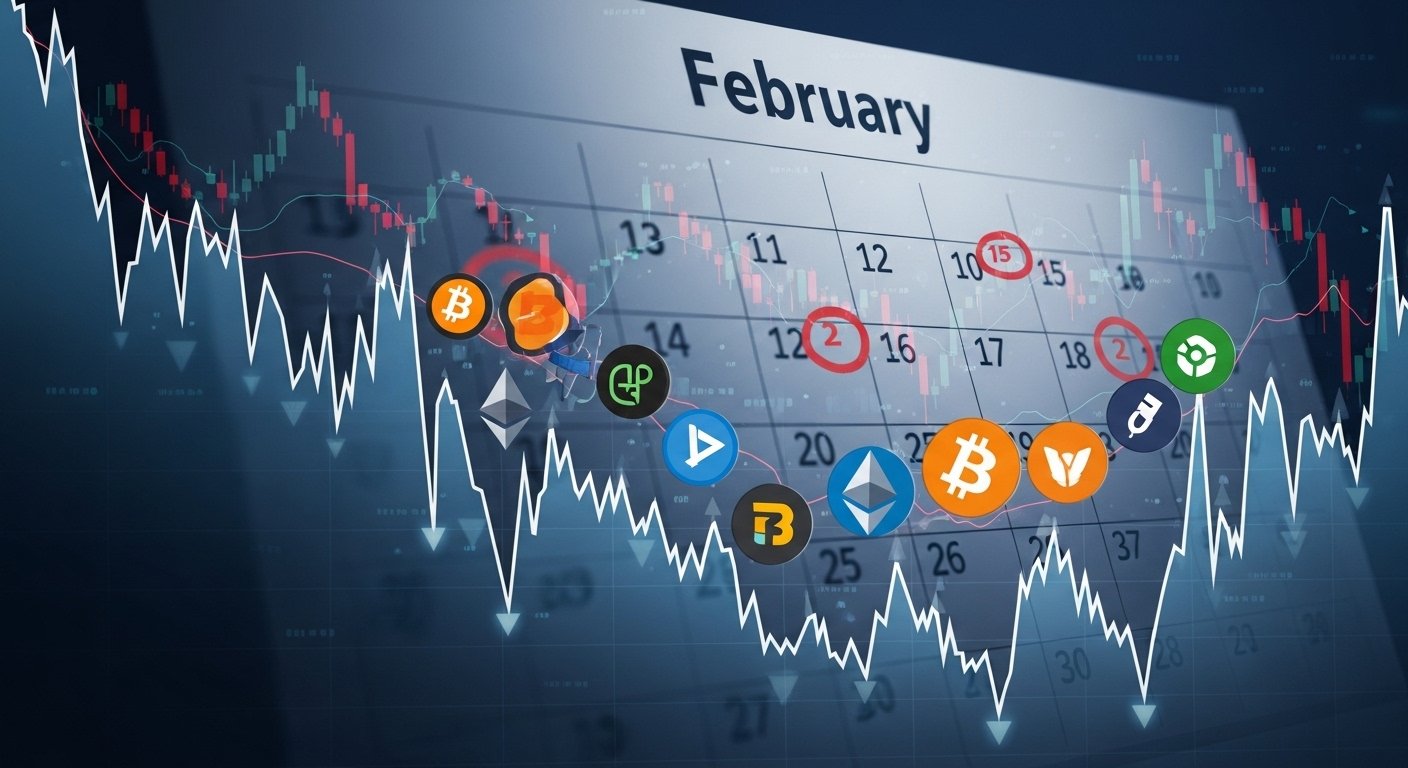
Another factor was positioning. After strong gains earlier in the year, many investors were sitting on profits. February became a natural moment to lock in gains, particularly in Bitcoin-focused crypto ETFs that had attracted significant inflows previously. This profit-taking contributed to Bitcoin’s underperformance and set the stage for a broader rotation within the crypto market.
Bitcoin Under Pressure: Why Bitcoin-Centric Crypto ETFs Lagged
Price Weakness and Investor Fatigue
Bitcoin’s struggle in February weighed heavily on Bitcoin-dominant crypto ETFs. As prices pulled back from recent highs, confidence weakened among short-term holders. For many investors who entered through ETFs, this was their first experience with a meaningful crypto correction, and the psychological impact was immediate.
Unlike long-term Bitcoin holders accustomed to volatility, ETF investors often have lower tolerance for sharp drawdowns. This mismatch can lead to faster selling during downturns, reinforcing price weakness. As Bitcoin slipped, selling pressure increased, creating a feedback loop that pushed prices lower and kept Bitcoin lagging relative to other digital assets.
ETF Flows and the Visibility of Selling
One of the defining features of crypto ETFs is transparency. Daily flow data makes it easy to see whether money is entering or leaving a fund. In February, outflows from Bitcoin-focused ETFs became a dominant narrative, reinforcing bearish sentiment. This visibility matters. When investors see persistent outflows, it can discourage new buyers from stepping in, even if they believe in Bitcoin’s long-term prospects. As a result, Bitcoin’s recovery attempts struggled to gain traction, keeping performance subdued compared to other cryptocurrencies.
Bitcoin’s Role as a Macro Asset
Bitcoin is often treated as a macro-sensitive asset, similar to high-growth stocks. When risk appetite declines, Bitcoin tends to feel the impact first. In February’s uncertain environment, investors reduced exposure to assets perceived as high beta, and Bitcoin-heavy crypto ETFs were an obvious target. This macro framing contrasts with how some investors view XRP, which helped explain the divergence that followed.
XRP Shines: Understanding XRP’s Relative Strength
Rotation Instead of Retreat
While Bitcoin lagged, XRP benefited from a rotation within the crypto market. Rather than exiting crypto entirely, many investors reallocated capital toward assets with different narratives and perceived upside. XRP emerged as a beneficiary of this shift, gaining attention as an alternative play during Bitcoin’s consolidation. This rotation highlights an important evolution in crypto ETF investing. Investors are no longer treating crypto exposure as a single binary decision. Instead, they are actively choosing between assets based on relative strength, momentum, and narrative appeal.
Narrative Differentiation and Speculation
XRP’s appeal often lies in its distinct positioning. While Bitcoin is framed as digital gold, XRP is associated with payments, transaction efficiency, and institutional use cases. During periods of Bitcoin weakness, this differentiation can attract speculative interest. In February, XRP’s ability to hold up better than Bitcoin at key moments reinforced the perception that it offered something different. Even modest outperformance can snowball into increased attention, particularly in a volatile market where investors are searching for leadership.
ETF Accessibility Amplifies Interest
As crypto exposure through ETFs becomes more common, rotations like this can happen faster. Investors can shift allocations with a few clicks, moving from Bitcoin-heavy crypto ETFs into alternative crypto products without dealing with wallets or exchanges. This ease of access amplifies short-term trends and makes relative performance more visible.
What Crypto ETF Flows Reveal About Investor Behavior
Flows as a Sentiment Indicator
ETF flows are one of the clearest windows into investor sentiment. In February, the contrast between Bitcoin ETF outflows and interest in other crypto exposures suggested a market that was cautious but not bearish across the board. For Bitcoin, sustained outflows signaled hesitation and a desire to reduce risk. For XRP, relative stability and attention suggested that investors were still willing to take selective bets. This split behavior underscores the importance of watching flows alongside prices when evaluating crypto ETFs.
Liquidity: Advantage and Risk
Liquidity is one of the biggest advantages of ETFs, but it can also be a source of instability. During calm markets, liquidity makes crypto ETFs efficient and accessible. During volatile periods, it accelerates selling and magnifies swings. February’s price action showed how quickly sentiment can shift when liquidity meets uncertainty. Investors who expected ETFs to smooth out crypto’s volatility learned that the wrapper doesn’t change the nature of the underlying asset.
Investor Psychology: Why Bitcoin Lags While XRP Shines
Fear of Drawdowns
Bitcoin’s recent correction created hesitation among investors who bought near highs. This group tends to sell into rallies, limiting upside and prolonging consolidation. As long as this overhang exists, Bitcoin-heavy crypto ETFs may continue to lag.
The Search for Relative Winners
At the same time, markets are always searching for leadership. XRP’s relative resilience made it a focal point for traders looking to stay invested in crypto without riding Bitcoin’s turbulence. This search for relative winners is a powerful force, especially in ETF-driven markets where reallocations are easy. However, relative strength can be fleeting. XRP’s shine reflects current conditions, not guaranteed long-term dominance.
Navigating Crypto ETFs During Volatile Markets
Aligning ETFs With Time Horizon
The most important decision for crypto ETF investors is time horizon. Short-term traders must be prepared for sharp swings and rapid sentiment shifts. Long-term investors need conviction and discipline to hold through volatility without reacting emotionally. Bitcoin-focused ETFs may suit investors with a long-term thesis who can tolerate drawdowns. XRP exposure may appeal to those seeking tactical opportunities, but it carries its own risks.
Diversification Isn’t Automatic Protection
Owning multiple crypto ETFs doesn’t automatically reduce risk. In periods of market stress, correlations can rise, and diversified crypto exposure may still experience significant volatility. Diversification only works when assets truly behave differently under pressure. February’s rotation suggests differentiation is possible, but it is not guaranteed to persist.
Watching Flows, Not Just Headlines
Headlines often lag reality. ETF flows provide near real-time insight into what investors are actually doing. Monitoring flows can help investors understand whether price moves are driven by conviction or short-term emotion.
What Comes Next for Crypto ETFs After February’s Volatility
Potential Stabilizers
Markets often stabilize after intense volatility as sellers exhaust themselves and prices find equilibrium. If broader financial conditions improve, Bitcoin could regain momentum, helping stabilize crypto ETFs overall. Clearer trends and reduced uncertainty would also encourage long-term allocators to step back in, potentially reversing outflows.
Ongoing Risks
Despite potential stabilization, risks remain. Another surge in market uncertainty could reignite selling pressure. Bitcoin-heavy crypto ETFs would likely feel the impact first, while XRP’s relative performance would depend on whether rotation continues or correlations rise again. February’s experience highlights how quickly conditions can change in the crypto ETF market.
Conclusion: What February Teaches Us About Crypto ETFs
The volatile start for crypto ETFs in February illustrates a market in transition. Bitcoin lagged under selling pressure and investor caution, while XRP shined as capital rotated toward alternative narratives. This divergence reflects a more nuanced approach to crypto investing, enabled by the accessibility and liquidity of ETFs.
For investors, the key takeaway is that crypto ETFs are powerful tools—but they require clear strategy and emotional discipline. Volatility is not a temporary anomaly; it is a defining feature. Those who understand how flows, narratives, and psychology interact will be better positioned to navigate future swings as the crypto ETF landscape continues to evolve.
FAQs
Q: Why are crypto ETFs so volatile?
Crypto ETFs track highly volatile digital assets and trade with stock-like liquidity, which can amplify price swings during periods of uncertainty.
Q: Why did Bitcoin lag in February?
Bitcoin lagged due to profit-taking, risk-off sentiment, and visible ETF outflows, which weakened confidence among short-term investors.
Q: Why did XRP perform better than Bitcoin?
XRP benefited from investor rotation and narrative differentiation, attracting attention as an alternative when Bitcoin struggled.
Q: Are crypto ETFs suitable for long-term investors?
They can be, but only for investors who understand and accept significant volatility and have a clear long-term strategy.
Q: What should investors watch when investing in crypto ETFs?
Beyond price, investors should monitor ETF flows, market sentiment, and broader financial conditions to better understand risk and opportunity.
Also More: Bitcoin Dropped to 2024 Prices as Crypto Stocks Slide