Bitcoin Bounces to $69K, But Charts Stay Bearish
Bitcoin rebounds to $69K, yet bearish signals persist. Explore support/resistance, RSI, MACD, moving averages, and what could happen next.


Bitcoin’s return to the $69,000 zone is the kind of move that grabs attention fast. It feels like the market is “back,” especially after a rough stretch that rattled traders and triggered a wave of fear across social feeds. A rebound toward $69K also taps into memory: this area has acted like a magnet for sentiment, liquidity, and momentum in the past. When Bitcoin approaches a famous level, it often becomes a battlefield where bulls try to reclaim confidence and bears try to prove that the bounce is just a pause before the next leg down.
But here’s the important distinction: a bounce is not the same as a trend reversal. Bitcoin can push upward for a day or two—and still remain bearish on the charts if the larger structure hasn’t improved. Many traders have learned this the hard way. In a downtrend, the sharpest rallies can happen precisely because conditions are weak. Oversold markets snap back, shorts get squeezed, and buyers step in at “discount” levels. That produces a strong headline move without repairing the deeper damage.
This article breaks down why Bitcoin bounced to $69K, why many chart signals still look bearish, and what bulls must do to flip the narrative. We’ll examine key technical tools like moving averages, RSI, and MACD, along with market structure, momentum shifts, and the crucial support and resistance zones that define what comes next. Throughout, we’ll also weave in related and LSI terms such as Bitcoin price action, crypto market sentiment, bull trap, bear market rally, trend reversal confirmation, and institutional demand—so you get a realistic and actionable picture, not hype.
Bitcoin Bounces to $69K: What the Move Really Means
A rebound to $69K is meaningful, but not automatically bullish. In technical analysis, the context matters more than the number. Bitcoin can trade at $69K in a healthy uptrend or in a broken downtrend. The chart tells you which one you’re dealing with by answering a few questions: Is Bitcoin making higher highs? Are pullbacks shallow and bought quickly? Are breakouts holding? Is the market reclaiming key moving averages and turning them into support?
Right now, the bounce looks like a recovery attempt rather than a confirmed trend reversal. That’s not pessimism—it’s just how markets behave. In bearish phases, price often rallies into resistance, triggers optimism, then rolls over when sellers defend key levels. This is why experienced traders treat big green candles with caution when the broader structure still shows weakness.

The $69K area also acts like a psychological trigger. When Bitcoin approaches it from below, many traders who previously bought higher see a chance to exit closer to break-even. That increases selling pressure in the zone. At the same time, momentum buyers try to push through because “breaking $69K” sounds like a bullish headline. That tug-of-war creates volatility and fake-outs, which is exactly why analysts say charts can remain bearish even during a bounce.
Why Bitcoin Bounced: The Mechanics Behind the Rebound
Bitcoin rarely moves for a single reason. Most bounces are a blend of positioning, liquidity, and psychology. Understanding these forces helps explain why Bitcoin can surge to $69K and still not be “safe.”
Oversold Relief Rally and Positioning Reset
When Bitcoin falls quickly, it often becomes oversold on short-term timeframes. That doesn’t guarantee an immediate reversal, but it does increase the odds of a snapback rally. Traders who were short take profits, and buyers step in because the risk-to-reward looks better after a sharp decline. The result is a reflexive move upward—what many call a bear market rally.
These rallies can be intense. A market that drops hard builds tension like a compressed spring. When selling pressure slows, price rebounds rapidly because the book is thin and demand suddenly matters again. This kind of move can lift Bitcoin to $69K without changing the bigger trend.
Short Covering and the “Squeeze Effect”
In crypto, leverage plays a major role. When the market is heavily short, a bounce can force liquidations. As shorts get stopped out, they buy back Bitcoin to close positions. That buying pushes price higher, which triggers more liquidations, creating a feedback loop. This is why Bitcoin rebounds can feel explosive.
The catch is that short covering is not the same as fresh spot demand. If the rally is mostly powered by forced buying, it can fade once the squeeze runs out of fuel. That’s one reason the charts can stay bearish even while Bitcoin rises.
Buyers Defending a Key Demand Zone
Some bounces happen because buyers identify a zone they consider valuable. That zone may be tied to previous consolidation, a major psychological level, or an area with visible liquidity. When enough participants defend it, Bitcoin rebounds. The market can still be bearish, though, if that defense doesn’t translate into reclaiming major resistance and building higher highs.
The Big Issue: A Bounce Doesn’t Repair a Bearish Structure
If you want to know whether Bitcoin is truly shifting bullish, focus on structure. A downtrend is defined by lower highs and lower lows. A trend reversal requires breaking that pattern. Bitcoin can bounce to $69K and still be bearish if the rebound fails to take out a meaningful prior high. Even worse, the bounce can create a lower high—one of the most common continuation signals in bearish markets. That’s why traders talk about bull traps: rallies that lure buyers into thinking the worst is over, only for the market to reverse and sell off again. In other words, Bitcoin bouncing is not the question. Bitcoin sustaining is the question.
Key Technical Indicators: Why Charts Still Look Bearish
Technical indicators don’t predict the future, but they help measure what is happening right now—trend, momentum, and participation. When analysts say “charts are still bearish,” they often mean several indicators remain misaligned.
Moving Averages: The Trend Filter Most Traders Watch
Moving averages are popular because they simplify the trend. In bullish conditions, Bitcoin tends to trade above key averages, and pullbacks often bounce off them. In bearish conditions, Bitcoin tends to trade below them, and rallies often fail when they hit those averages.
A rebound to $69K can still be bearish if Bitcoin remains below major moving averages or if those averages are sloping downward. Even if price briefly pierces an average, what matters is whether it can hold above it and turn it into support. Many bear market rallies fail right at dynamic resistance, then roll over.
For a more confident bullish shift, traders typically want to see Bitcoin reclaim key moving averages, consolidate above them, and then continue higher with strong follow-through.
RSI: Momentum Can Improve Without Turning Bullish
RSI (Relative Strength Index) measures momentum. In bear phases, RSI often behaves differently than in bull phases. Instead of pushing into strong bullish territory, RSI can remain suppressed and roll over quickly after rebounds. This creates a pattern where Bitcoin rises, but RSI fails to confirm a strong momentum regime.
An RSI bounce from oversold levels is normal during relief rallies. The bearish signal appears if RSI stalls and forms a lower high while price approaches resistance. That kind of momentum divergence can hint that the rebound is running out of strength.
MACD: Lagging, But Useful for Confirmation
MACD is a trend-following momentum tool. It can lag, but it’s widely used because it helps confirm whether momentum is actually shifting or simply bouncing.
In bearish setups, MACD may remain negative or struggle to flip convincingly positive. A quick Bitcoin surge to $69K can happen before MACD turns. If MACD fails to improve meaningfully, it’s another reason analysts stay cautious. The market can rally short-term while underlying momentum remains weak.
Volume and Follow-Through: The “Reality Check”
The most underrated part of analysis is follow-through. A single spike can be emotional. Real reversals tend to show a sequence: breakout, consolidation, retest, continuation. Volume often supports that process by showing sustained interest.
When Bitcoin bounces to $69K on thin or inconsistent volume, it raises questions. Is this real demand or just positioning? If buyers can’t keep pressure on, the rebound can fade quickly. This is why many analysts focus less on the first bounce and more on what happens after it.
Support and Resistance: The Levels That Decide What Happens Next
When Bitcoin is hovering near a high-profile level like $69K, support and resistance become the story. These zones define where buyers are likely to step in and where sellers are likely to defend.
Support: Where Bulls Must Hold the Line
Support is not a single number; it’s usually a zone. Bitcoin needs to hold key support levels to prevent the bounce from collapsing into another sell-off. If price breaks below support, confidence often fades fast, and bearish momentum can return. What matters is not just that Bitcoin touches support, but how it reacts there. A healthy market typically shows quick buying, strong closes, and limited downside follow-through. A weak market often breaks support, retests it from below, and then drops further. If Bitcoin fails to hold support after bouncing to $69K, it can turn the entire move into a short-lived dead cat bounce—a sharp recovery that doesn’t change the underlying decline.
Resistance: Why $69K Can Act Like a Ceiling
Resistance is where sellers become active. The $69K region can be resistance because it’s psychologically important and because traders remember it. Many participants who bought higher may use the rebound to sell. That creates supply overhead. For bulls, the goal is not merely to touch $69K, but to reclaim it. Reclaiming means Bitcoin closes above the zone, holds above it, and uses it as support on pullbacks. Without that, $69K can remain a ceiling that repeatedly rejects price. If Bitcoin keeps rejecting near $69K, it reinforces the bearish view: the market is rallying into sell pressure rather than breaking through it.
Market Context: Sentiment and Liquidity Still Matter
Bitcoin isn’t only a chart. It’s also a sentiment instrument. Macro conditions, risk appetite, liquidity cycles, and institutional behavior can all shape whether a bounce becomes a reversal or fizzles out. When broader markets are uncertain, Bitcoin can struggle to sustain rallies because traders reduce risk. In that environment, bounces become shorter and more violent. Crypto market sentiment can flip quickly, turning optimism into fear within hours. This is why experienced analysts combine Bitcoin technical analysis with context. A bullish breakout is more reliable when sentiment improves gradually, liquidity returns, and the market begins to trend rather than whip around.
Two Scenarios After the $69K Bounce
Instead of pretending the market has one guaranteed direction, it’s smarter to outline the two most likely paths and what evidence supports each.
Scenario 1: Bullish Continuation and Trend Repair
In the bullish scenario, Bitcoin holds its higher lows, reclaims resistance around $69K, and then builds above it. You would typically see the chart begin to shift from lower highs to higher highs. Momentum indicators like RSI and MACD would start confirming strength rather than simply bouncing. Moving averages would begin flattening and eventually turning upward.
This scenario doesn’t require perfection. It requires proof. The market needs to show that buyers can defend dips and that rallies aren’t instantly sold. If Bitcoin can demonstrate acceptance above key resistance, sentiment often improves, and sidelined capital may re-enter.
Scenario 2: Bearish Rejection and Another Leg Down
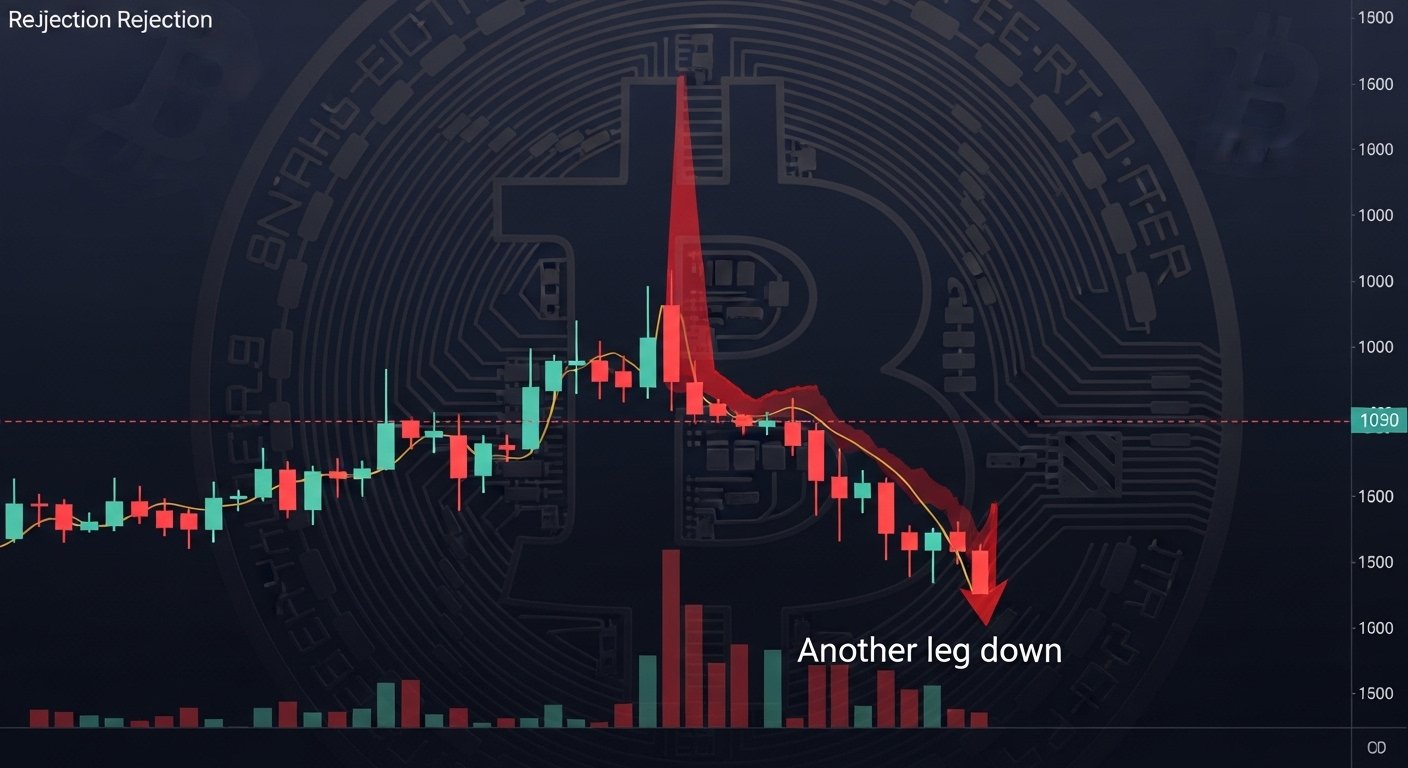
In the bearish scenario, Bitcoin’s move to $69K is a classic rally into resistance. Price fails to hold above the zone, sellers step in, and Bitcoin forms another lower high. If support breaks afterward, the market can slide quickly as confidence evaporates and stops trigger. This scenario is common when bounces are driven by short covering rather than fresh demand. Once forced buying ends, price can retrace sharply. A rejection from $69K would reinforce the idea that the broader trend is still bearish.
How to Read the Next Few Days Without Getting Trapped
The biggest mistake traders make during volatile periods is falling in love with a single candle. A better approach is watching how Bitcoin behaves around key levels. If Bitcoin holds above reclaimed resistance, that’s constructive. If it repeatedly wicks above $69K and closes back below, that’s a warning sign. If momentum improves and structure shifts into higher highs and higher lows, the bearish thesis weakens. If momentum fades and price breaks support, the bearish thesis strengthens.
This mindset keeps you grounded. It also prevents emotional decisions based on hype, fear, or overly confident predictions. Bitcoin rewards patience because the best opportunities usually come after the market proves its direction, not before.
Conclusion
Bitcoin bouncing to $69K is an important moment, but it’s not a guarantee of a bullish reversal. The charts can remain bearish if Bitcoin is still trapped under key resistance, failing to reclaim major moving averages, and showing only temporary momentum improvement in indicators like RSI and MACD. In bearish phases, strong rallies often occur—and many of them fail.
The next decisive signal will come from follow-through: whether Bitcoin can reclaim $69K and hold it as support, or whether it rejects and breaks down through key support zones. Until the market proves sustained strength, the cautious view remains valid: Bitcoin can bounce sharply, yet still be bearish on the chart.
FAQs
Q: Is Bitcoin hitting $69K a bullish signal?
It can be, but only if Bitcoin holds above $69K and turns it into support. If price rejects and closes below repeatedly, the level acts as resistance and the setup remains bearish.
Q: What is the biggest sign that the charts are still bearish?
A bearish structure—lower highs and lower lows—plus failure to reclaim major resistance. Even with a bounce, the trend can stay down until structure improves.
Q: How do RSI and MACD help in Bitcoin analysis?
RSI measures momentum and can show whether buyers are gaining strength or just triggering an oversold bounce. MACD helps confirm whether momentum is shifting sustainably, though it often lags.
Q: What is a bull trap in Bitcoin trading?
A bull trap is when Bitcoin rallies convincingly, attracts buyers, then reverses sharply and continues lower. It often happens when price runs into strong resistance during a bearish trend.
Q: What should I watch next after this $69K bounce?
Watch whether Bitcoin can reclaim $69K with strong closes, build higher lows, and show consistent follow-through. If support breaks after rejection, bearish continuation becomes more likely.
See More: Crypto ETFs Turn Volatile in Feb as Bitcoin Lags, XRP Shines