
Brian Armstrong vs France central bank chief at Davos
Coinbase CEO Brian Armstrong clashed at Davos with France’s central bank chief over yield, stablecoins, and the “bitcoin standard.”


Davos is famous for polite conversations. People disagree, but they usually do it carefully. That’s why the exchange between Coinbase CEO Brian Armstrong and France’s central bank chief stood out. It felt direct. It felt personal. And it highlighted a bigger fight that keeps growing every year: who should shape the future of money.
On one side, Coinbase CEO Brian Armstrong represents the crypto view. He argues that money should be more open, more competitive, and less controlled by governments. He often speaks about Bitcoin as a long-term alternative to traditional systems. He also supports crypto products that offer yield, because he believes people should benefit from better technology and better financial access.
On the other side, the central bank view is very different. France’s central bank leadership sees money as public infrastructure. In their eyes, the financial system must be stable above all else. They worry that private digital assets—especially those offering yield—could weaken banks, increase risks, and reduce the power of central banks to manage inflation and crises.
This is why their Davos disagreement matters. It wasn’t only about Bitcoin. It wasn’t only about Coinbase. It was about two different definitions of trust. Armstrong trusts open networks and market choice. Central bankers trust institutions, laws, and public responsibility.
In this article, we’ll explain the debate in clear terms. We’ll cover what Coinbase CEO Brian Armstrong meant by the “bitcoin standard,” why the central bank chief pushed back, why yield became a key point, and what it all could mean for crypto regulation and global markets.
What sparked the clash at Davos
The argument became sharp when the discussion turned to how Bitcoin should be described. Armstrong pushed the idea that Bitcoin is not issued by any company or government. He described it as a network with rules, not a product with an “issuer.”
That distinction may sound small, but it matters a lot.
If Bitcoin is treated like something issued by a private entity, regulators can treat it like a company product. If Bitcoin is treated like a decentralized network, it becomes harder to control in the usual ways. This is one reason Armstrong emphasizes decentralization. He wants policymakers to see Bitcoin as a protocol, similar to the internet.
The central bank view is different. Central bankers often focus on responsibility and accountability. When something affects money, savings, and economic stability, they want someone to be accountable. A system with “no issuer” can sound risky, because it may not have clear legal responsibility when problems occur.
This difference in thinking is the first reason Coinbase CEO Brian Armstrong and the central bank chief clashed at Davos.
The “bitcoin standard” explained in plain language
The phrase “bitcoin standard” sounds dramatic. Many people misunderstand it. So let’s keep it simple.
A “standard” in money means the system is anchored to something. In the past, some countries used a gold standard. That meant money supply was tied to gold reserves. Governments had less flexibility to print money.
A “bitcoin standard” is the idea that Bitcoin could become a similar anchor in the future. Not necessarily for daily payments, but as a reserve asset. Supporters believe Bitcoin could act like digital gold because it has a limited supply and can be verified.
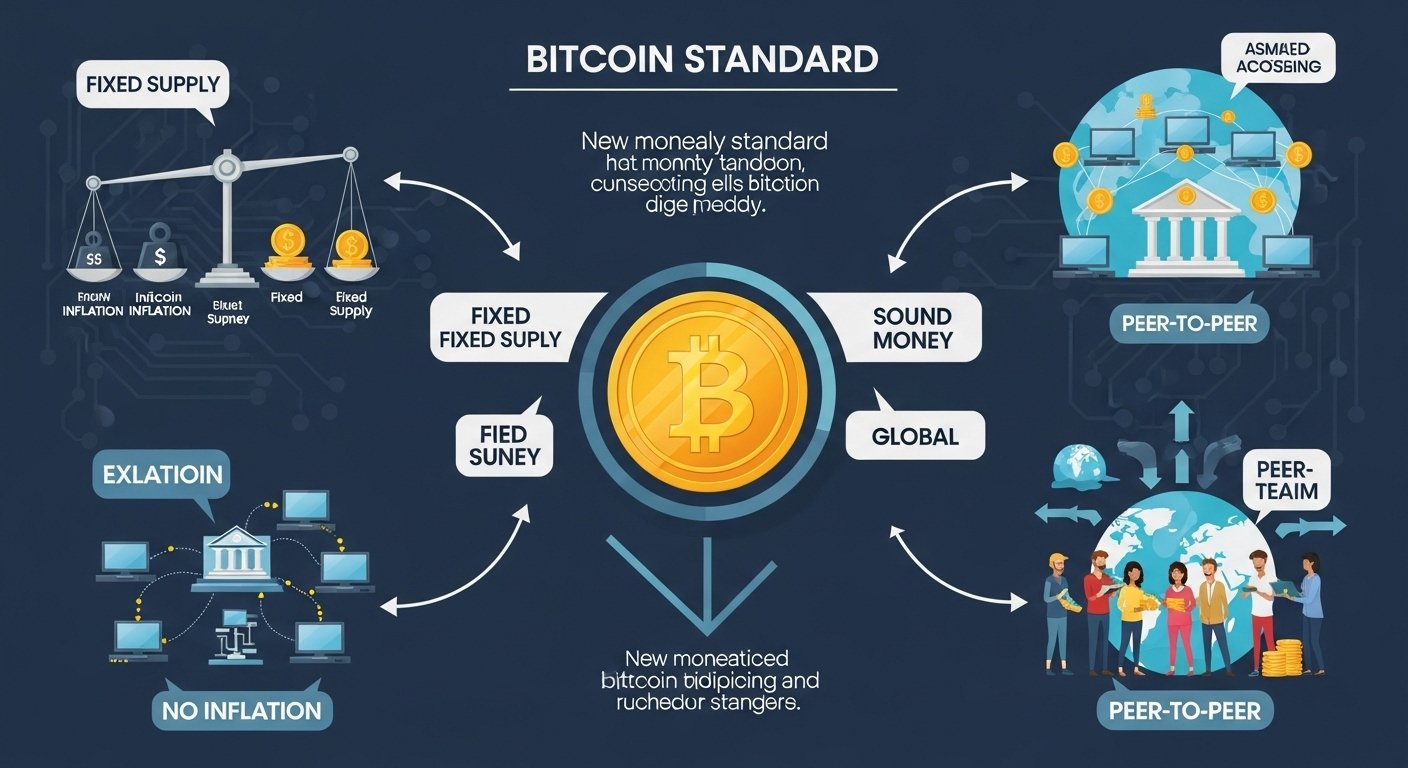
When Coinbase CEO Brian Armstrong uses this phrase, he is usually making a long-term argument: that people and even governments may choose Bitcoin as a store of value if they lose trust in fiat currencies.
But for central banks, this idea is uncomfortable. Central banks rely on flexibility. They adjust interest rates. They increase or reduce liquidity. They respond to crises. A system anchored to a fixed-supply asset limits those tools.
This is why the “bitcoin standard” part of the debate felt heated. To Armstrong, it represents freedom and discipline. To a central banker, it can represent risk and loss of control.
Why “yield” became the most important part of the debate
Even though the headline focuses on Bitcoin, the most practical issue is yield.
Yield is simply return. It’s what you earn when your money generates interest or profit. In everyday life, people expect yield from savings accounts, bonds, or money market funds.
In crypto, yield can come from different sources. Some yield is risky and depends on lending or leverage. But another type is connected to stablecoins that hold reserves. If a stablecoin is backed by safe assets like short-term government debt, those reserves can earn yield.
This is where the conflict begins.
Why Coinbase CEO Brian Armstrong supports crypto yield
Armstrong’s argument is easy to understand: if money earns yield somewhere in the system, users should get part of it. He believes crypto makes finance more efficient. In his view, stablecoins and tokenized dollars can reduce costs, remove middlemen, and return value to users.
He also sees yield as competition. If banks can earn money on customer deposits, why shouldn’t modern digital finance offer similar benefits?
So for Coinbase CEO Brian Armstrong, yield is not just a feature. It’s a symbol of progress and fairness.
Why central banks distrust yield in crypto products
Central banks see yield differently. They worry about scale and speed.
If a stablecoin offers yield, it can attract huge amounts of money. People may move funds out of banks and into stablecoins. That can weaken banks, because deposits are a key source of funding.
Central banks also worry about panic. If people fear a stablecoin might fail, they could rush to redeem. That kind of “run” can happen quickly in digital systems.
This is why a central bank chief may push back against yield. It’s not only about consumers. It’s about financial stability.
So when Armstrong argues for yield, he is arguing for competition. When central banks argue against it, they are arguing for system safety.
Stablecoins: the real reason this Davos clash matters
Bitcoin is important, but stablecoins may be even more important in policy debates.
Stablecoins are designed to keep a stable value, often tied to the U.S. dollar or euro. They are used for trading, payments, and moving money across borders.
Stablecoins matter because they behave like money.
Why stablecoins worry central banks
Central banks worry that stablecoins could become private money at scale. If people use stablecoins for daily transactions, then private issuers gain influence over money flows. That can weaken a country’s control over its own monetary system.
Europe is especially sensitive to this issue because of “monetary sovereignty.” Policymakers worry about a future where digital payments depend heavily on dollar-based private stablecoins.
This is one reason the France central bank chief would challenge Coinbase CEO Brian Armstrong at Davos. From the European view, the issue isn’t only innovation. It’s control over the monetary future.
Why Coinbase sees stablecoins as a breakthrough
From Armstrong’s view, stablecoins are useful because they make payments faster and cheaper. They also increase access. In places with weak banking systems, stablecoins can offer a way to hold more stable value.
Armstrong tends to see stablecoins as modern financial infrastructure. That is why he often defends them strongly, especially when regulators want to restrict yield or limit usage.
Tokenization: why Davos keeps bringing crypto into mainstream finance
Another reason this debate happened at Davos is tokenization.
Tokenization means putting real-world assets on blockchain rails. That could include bonds, funds, and other securities.
This idea appeals to financial institutions because it can make settlement faster. It can reduce paperwork. It can lower costs.
But tokenization also brings crypto questions into traditional finance. Once assets move on crypto-style rails, policymakers must decide how these rails should be governed.
Why tokenization increases the importance of stablecoins
Tokenized markets still need something to settle trades. They need a cash-like asset. In many tokenized systems, stablecoins play that role.
That means stablecoins are not just a crypto product. They become part of market infrastructure. And if stablecoins offer yield, their influence grows even faster.

This is why the Davos clash was not just about Bitcoin. It was about the role stablecoins could play in the future of finance.
What this Davos debate could change
Arguments at Davos don’t directly change laws. But they shape the mood.
Regulation may tighten around yield
Yield is likely to remain one of the most debated topics in crypto policy. Some regulators may allow it under strict rules. Others may restrict it to protect banks and reduce risk.
Either way, stablecoin yield is now too important to ignore. Coinbase CEO Brian Armstrong will keep pushing for it. Central banks will keep warning about it.
The bitcoin standard idea will remain controversial
Even if no country adopts a bitcoin standard soon, the idea will keep influencing narratives. Supporters will present Bitcoin as a safe store of value. Critics will present it as unstable and impractical as a monetary anchor.
That tension will continue, especially when inflation rises, debt grows, or trust in institutions weakens.
Conclusion
The clash between Coinbase CEO Brian Armstrong and France’s central bank chief at Davos was not just a loud moment. It showed where the biggest conflict is heading.
Armstrong argues for open systems, market competition, and the possibility of a long-term “bitcoin standard.” Central bankers argue for stability, accountability, and control over money as public infrastructure.
Yield sits at the center because it turns crypto into everyday finance. If stablecoins offer yield, they compete with banks. That forces regulators to act. That is why the debate felt intense.
The key takeaway is simple: crypto is no longer being judged only as an asset. It is being judged as a financial system. And when crypto becomes a system, the arguments become political, not just technical.
FAQs
Q: What does “bitcoin standard” mean?
A “bitcoin standard” is the idea that Bitcoin could become a long-term monetary anchor, similar to how gold once supported currencies, mainly as a reserve asset.
Q: Why did Coinbase CEO Brian Armstrong argue about yield?
He supports yield because he believes users should benefit from returns generated in the system, especially with stablecoins backed by safe reserves.
Q: Why do central banks oppose yield in stablecoins?
They worry it can pull money out of banks, weaken financial stability, and increase the risk of digital “runs” during crises.
Q: Are stablecoins more important than Bitcoin in regulation debates?
Often yes. Stablecoins connect directly to payments and money markets, so regulators treat them as more urgent.
Q: What does this Davos clash mean for crypto investors?
It suggests regulation will keep intensifying, especially around stablecoins and yield. It also shows crypto is now being treated as serious infrastructure, not a niche trend.
Also More: Stablecoins in Argentina A New Era of Financial Stability?