Gold and Silver Hit Records as Bitcoin Lags
Gold and silver are back in the spotlight, and this time the move feels bigger than the usual short-term pop. In market after market


Gold and silver are back in the spotlight, and this time the move feels bigger than the usual short-term pop. In market after market, gold and silver are pressing into record territory, drawing attention from everyone—long-term savers, professional traders, and everyday investors who simply want something that holds value when the world feels unpredictable. While stocks can rally and crypto can spike, gold and silver have a particular kind of gravity: they tend to shine brightest when confidence in the future gets cloudy.
This latest surge is not happening in a vacuum. Inflation concerns haven’t fully disappeared, interest-rate expectations keep shifting, and geopolitical headlines continue to inject uncertainty into global trade and energy prices. Add to that a strong narrative around central banks increasing reserves and households searching for stability, and it becomes easier to see why gold and silver are approaching historic levels again. The rally is also being reinforced by a psychological feedback loop: when new highs are set, more market participants take notice, liquidity increases, and momentum can build.
At the same time, Bitcoin—often marketed as “digital gold”—is struggling to keep up with the renewed pace in gold and silver. That doesn’t mean Bitcoin is finished or that crypto has no future. It does mean the market is behaving differently than the most bullish crypto narratives suggested. When conditions favor caution, many investors still prefer assets with thousands of years of history, established global liquidity, and broad acceptance in both institutional and personal portfolios.
In this article, we’ll unpack why gold and silver are breaking records again, what “approaching historic levels” really means in a market context, and why Bitcoin is falling behind in this particular cycle. We’ll also explore practical considerations—without hype—so you can understand where gold and silver might fit in a portfolio and what signals matter most going forward.
Why Gold and Silver Are Surging Toward Historic Levels
When gold and silver push to record territory, it’s rarely one single trigger. More often, it’s a combination of macroeconomic pressure, shifting investor psychology, and real-world supply-and-demand dynamics. The current environment is a classic recipe for renewed interest in precious metals, especially when multiple risks overlap and markets are forced to price uncertainty rather than comfort.
The Safe-Haven Reflex Is Strong Again
A major driver behind the rise in gold and silver is the return of the safe-haven mindset. When investors feel uneasy about growth, financial stability, or political risk, they often move into safe-haven assets that have historically held up in turbulent periods. Gold and silver tend to benefit because they are not someone else’s liability in the way that many financial instruments are. A stock depends on corporate earnings. A bond depends on a borrower’s ability to pay. Gold and silver are tangible stores of value with a unique role in the global financial psyche.
This reflex becomes stronger when market uncertainty isn’t isolated to one region. When uncertainty is global—rates, trade routes, energy costs, and policy changes all moving at once—demand for gold and silver can broaden. That broader demand is one reason the market can climb toward historic levels rather than fading after a brief rally.
Inflation Expectations and the Search for an Inflation Hedge
Even when inflation readings cool compared with peak periods, the “inflation memory” can linger. Households remember rising prices. Businesses remember margin pressure. Investors remember how quickly purchasing power can erode. In that context, gold and silver often regain popularity as an inflation hedge, especially for people who don’t want all their protection tied to a single currency or policy outcome.
It’s important to note that gold and silver don’t always move in perfect lockstep with inflation data month to month. What often matters more is the direction of inflation expectations and the perceived ability of central banks to manage price stability without damaging growth. When the market doubts that balancing act, gold and silver can strengthen as investors look for a hedge that doesn’t rely on policy perfection.
Real Yields, Rate Expectations, and Currency Pressure
A key macro variable for gold and silver is real yields, or the return investors earn after accounting for inflation. When real yields are high and stable, holding non-yielding assets can feel less attractive. But when real yields fall or become more uncertain—especially if rate cuts are anticipated or growth worries rise—gold and silver can become more compelling.
Currency dynamics matter, too. If a major currency weakens or becomes more volatile, global investors often diversify. Gold and silver are global assets priced and traded worldwide, making them a natural destination when currency confidence wobbles. Even subtle shifts in foreign-exchange markets can ripple into the gold and silver market, particularly when the narrative already favors defensive positioning.
The Structural Forces Supporting Gold and Silver Demand
Short-term price moves can be noisy, but structural forces can keep gold and silver elevated for longer periods. When gold and silver approach historic levels, it’s worth looking beyond headlines to the underlying demand sources that can make a rally sturdier.
Central Bank Buying and Reserve Diversification
One of the most discussed themes in recent years has been central bank buying. Central banks hold reserves to manage stability and confidence, and many have shown interest in diversifying away from overdependence on any single foreign asset. Gold and silver—especially gold—can fit into this logic because they are widely recognized, liquid, and historically associated with monetary reliability.
When official-sector demand rises, it can support gold and silver prices even when speculative interest fades. Central banks are not usually momentum traders. Their actions can represent longer-term strategic positioning, which may help explain why gold and silver can grind higher and remain near historic levels rather than quickly reversing.
Retail and Cultural Demand That Doesn’t Disappear
In many parts of the world, gold and silver aren’t just investments; they’re cultural savings tools. Jewelry demand, wedding traditions, and physical ownership preferences can create a baseline of ongoing demand. This matters because it can provide price support during periods when financial markets are choppy.
Physical buying also increases during uncertainty. When people want assets they can hold directly, they often choose coins, bars, or jewelry. That “physical preference” is one reason gold and silver maintain a unique position compared with purely digital assets.
Supply Constraints and the Silver Story
Silver has its own twist: it’s both a monetary metal and an industrial metal. That dual identity can amplify moves. When economic optimism rises, industrial demand can support silver. When fear rises, monetary demand can support silver. If both narratives appear at once—like industrial investment trends alongside safe-haven flows—silver can become especially sensitive.
On the supply side, mining investment cycles are slow. New production takes time. That can tighten the market when demand ramps up. When gold and silver approach historic levels, silver’s supply-and-demand balance often becomes a bigger talking point because it can swing faster than gold under certain conditions.
How Gold and Silver Compare in This Rally
Even though gold and silver often move together, their personalities differ. Understanding the relationship helps explain why both are breaking records again yet may behave differently from day to day.
Gold: The Primary Monetary Anchor
Gold is typically seen as the core store of value in the metals complex. It’s widely held by central banks, institutions, and long-term investors. When fear increases, gold tends to attract the first wave of defensive demand. That’s one reason gold often leads in major cycles and can set the tone for the broader gold and silver market.
Gold’s role is also simpler. It’s not heavily dependent on industrial demand, so it’s less exposed to manufacturing slowdowns than silver. If the market narrative centers on stability, hedging, and monetary caution, gold can hold up well.
Silver: Higher Volatility and Industrial Tailwinds
Silver tends to be more volatile than gold, and that volatility can cut both ways. In rallies, silver can surge strongly because it is smaller, more reactive, and influenced by both investment and industry. In pullbacks, it can drop faster.
During periods when gold and silver are gaining together, silver’s outperformance often reflects growing confidence that the rally has breadth—meaning it’s not just a single fear trade. When silver participates strongly, investors sometimes interpret it as a sign that demand is expanding beyond pure safety into broader commodity and industrial themes.
Why Bitcoin Falls Behind as Gold and Silver Rise
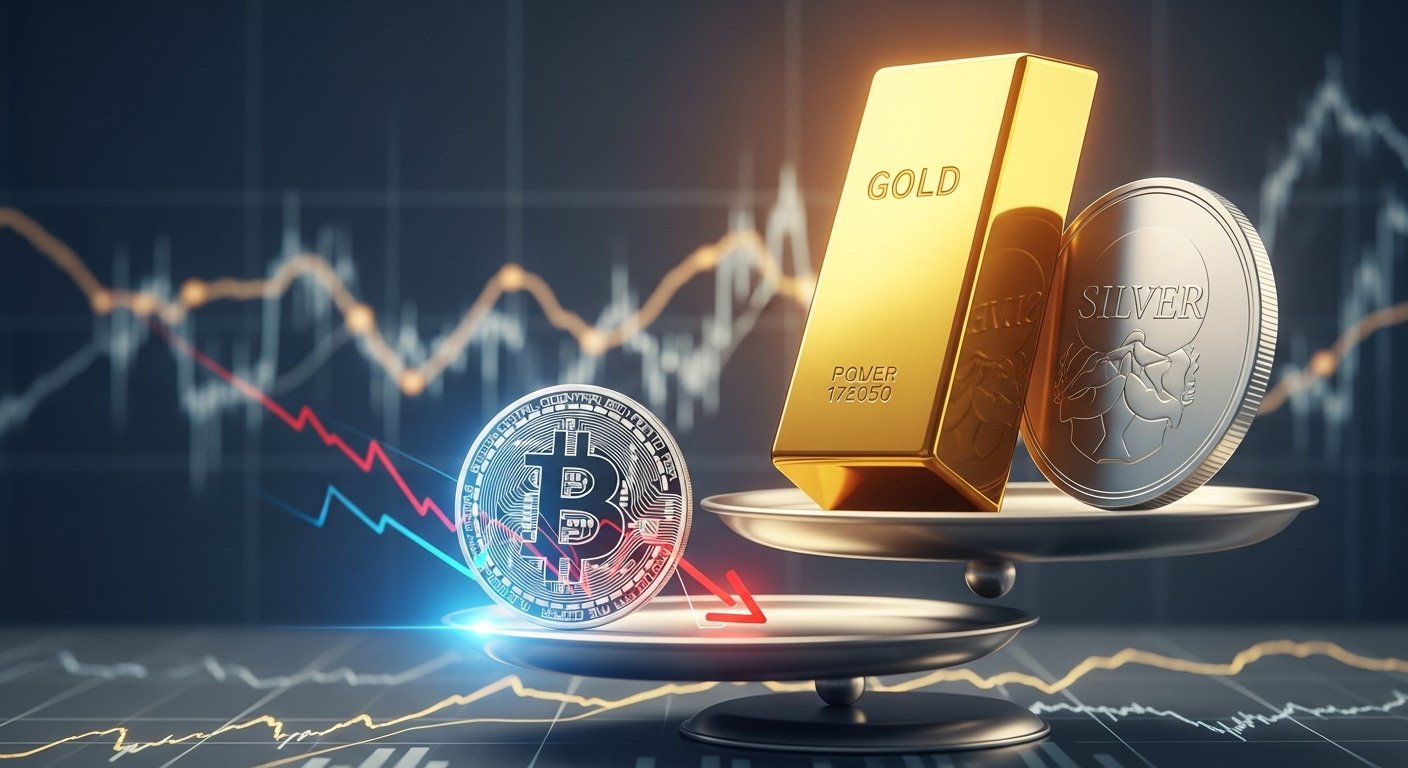
Bitcoin’s relationship with gold and silver is complicated. In some periods, Bitcoin rallies alongside metals as a “risk alternative.” In other periods, it trades more like a high-volatility technology proxy—sensitive to liquidity, speculation, and risk appetite. When gold and silver break records and Bitcoin lags, it usually signals that the market’s current preference is stability over explosive upside.
Bitcoin Still Trades Like a Risk Asset in Key Moments
Even though Bitcoin is pitched as “digital gold,” it often behaves more like a risk-on asset during stress events. When liquidity tightens or investors de-risk, Bitcoin can face sharper selling pressure than gold and silver. That’s not a moral judgment; it’s a reflection of market structure. Crypto markets are still heavily influenced by leverage, sentiment, and rapid capital flows.
When the market prioritizes capital preservation, gold and silver can look more attractive because they have lower volatility and a longer track record of holding value through crises.
Regulation, Market Structure, and Investor Comfort
Another reason Bitcoin can fall behind gold and silver is investor comfort. Many institutions have mandates, risk controls, and regulatory frameworks that make buying precious metals straightforward while crypto exposure remains more complicated. Even when crypto products become more accessible, decision-makers often prefer the simplest hedge when uncertainty rises.
In addition, crypto markets can be affected by exchange risk, custody concerns, and policy shifts. Those factors can add friction at the exact moment investors want less friction. Gold and silver, by contrast, have established infrastructure: futures markets, vaulting services, physical dealers, and deep global liquidity.
“Digital Gold” Works Best in a Different Narrative
Bitcoin tends to shine when the narrative is aggressive monetary debasement, high liquidity, strong risk appetite, and a cultural momentum wave around innovation. Gold and silver tend to shine when the narrative is caution, hedging, and broad uncertainty.
So when gold and silver are approaching historic levels and Bitcoin falls behind, it often reflects which story the market is currently voting for. It doesn’t mean Bitcoin can’t rally later. It means the current cycle is rewarding safety-first behavior more than speculative conviction.
What “Approaching Historic Levels” Means for Investors
When gold and silver climb toward historic levels, investors face a psychological challenge. New highs can trigger fear of missing out, but they can also increase the risk of buying during a short-term spike. The key is understanding what historically elevated prices signal—and what they don’t.
New Highs Can Be a Signal of Persistent Uncertainty
If gold and silver are breaking records again, it suggests uncertainty isn’t fading quickly. Markets are forward-looking. If participants believed stability was right around the corner, defensive assets would usually cool down. Sustained strength in gold and silver can indicate that investors want protection not just for weeks, but for months or longer.
Volatility and Pullbacks Are Still Normal
Even in strong cycles, gold and silver can correct. Sharp moves attract profit-taking. Headlines change. Rate expectations shift. The presence of pullbacks doesn’t automatically invalidate the broader trend. In fact, healthy consolidations can sometimes make rallies more durable because they reduce overheated positioning.
The Role of Portfolio Balance
Many investors approach gold and silver not as “get rich quick” assets but as portfolio stabilizers. The idea is to reduce the chance that a single market event wipes out performance across all holdings. In that framework, the question isn’t whether gold and silver will outperform everything else every year. The question is whether they can help manage risk when other assets struggle.
How to Think About Exposure to Gold and Silver Without Overdoing It
If you’re considering gold and silver because they’re near historic levels, it helps to think in terms of purpose rather than hype. The best allocation is usually the one you can hold through noise, not the one that looks smartest for a week.
Physical Metals vs Paper Exposure
Physical ownership of gold and silver appeals to investors who value direct control. It also introduces storage and security considerations. Paper exposure—such as funds or derivatives—can be convenient and liquid but comes with different trade-offs, including fees, tracking differences, and counterparty structures.
The “right” method depends on your goal. If your goal is disaster insurance, physical gold and silver may feel more aligned. If your goal is tactical trading or fast portfolio rebalancing, market-based exposure can be more practical.
Time Horizon Matters More Than Headlines
A common mistake is reacting to gold and silver only when they’re already surging. A steadier approach is to think in time horizons. If you view gold and silver as long-term protection, then day-to-day price noise matters less than the broader economic environment and your overall allocation.
Avoiding Narrative Traps
Be wary of absolutes. “Gold always wins.” “Bitcoin will replace gold.” “Silver is guaranteed to explode.” Markets punish certainty. Gold and silver can be excellent tools, but they are not magic. They perform best when they match the environment and the investor’s purpose.
The Bigger Picture: What Could Drive the Next Move?
When gold and silver are at or near historic levels, the next move often depends on how macro expectations evolve. A few themes tend to dominate.
Monetary Policy Shifts and Real Yield Direction
If markets anticipate easier policy or if real yields drop, gold and silver may stay supported. If policy turns more restrictive than expected, metals can face headwinds. The market’s reaction can be nuanced, though, because it depends on whether rate changes are seen as growth-positive or stability-negative.
Geopolitical Risk and Energy Markets
Geopolitical risk has a direct psychological effect and an indirect economic effect. It can raise energy costs, disrupt supply chains, and increase inflation uncertainty. Those channels often strengthen gold and silver demand as investors seek hedges that do not depend on smooth global coordination.
Investor Sentiment and Rotation Between Asset Classes
Capital rotates. Sometimes the market favors stocks, sometimes bonds, sometimes commodities, sometimes crypto. When gold and silver lead while Bitcoin lags, it implies a rotation toward traditional hedges. That can change if liquidity improves and risk appetite returns, but rotations often unfold over months rather than days.
Conclusion
Gold and silver breaking records again and approaching historic levels is not just a headline—it’s a reflection of what investors are feeling beneath the surface. In an environment shaped by shifting inflation expectations, uncertain rate paths, currency volatility, and persistent geopolitical tension, gold and silver remain two of the market’s most trusted safe-haven assets. Their rally suggests a broad desire for stability and protection, not merely a short-lived trade.
Bitcoin falling behind in this phase doesn’t erase its long-term relevance, but it does highlight an important truth: during periods when markets prioritize capital preservation, gold and silver often regain center stage. Whether you’re a long-term saver, an active investor, or simply trying to understand the moment, the key is to focus on purpose. Gold and silver can play a powerful role as a hedge and a store of value, especially when confidence is fragile—but they work best as part of a balanced strategy rather than an all-in bet.
FAQs
Q: Why are gold and silver rising at the same time?
Gold and silver often rise together when investors seek safety and hedges against uncertainty. Gold typically benefits from monetary and safe-haven demand, while silver can gain from both investment flows and industrial expectations, allowing both to rally in the same cycle.
Q: Does it mean gold and silver will keep going up from here?
Not necessarily. Even when gold and silver are in strong trends, pullbacks are normal due to profit-taking and shifting rate expectations. Longer-term direction often depends on real yields, currency strength, and whether uncertainty remains elevated.
Q: Why is Bitcoin falling behind gold and silver right now?
Bitcoin frequently behaves like a higher-volatility risk asset, especially when liquidity tightens or investors reduce risk. In cautious environments, many investors prefer the stability and long-established market structure of gold and silver over more speculative assets.
Q: Is silver a better investment than gold during record highs?
Silver can outperform gold during strong rallies because it’s more volatile and influenced by both industrial and investment demand. However, that same volatility can lead to sharper drawdowns. Gold is often viewed as the steadier anchor within gold and silver exposure.
Q: What’s the simplest way to think about adding gold and silver to a portfolio?
Think of gold and silver as tools, not trophies. Many investors use them as diversification and protection rather than chasing short-term gains. The best approach is usually one aligned with your time horizon, risk tolerance, and the role you want gold and silver to play in your overall strategy.