
NYSE Blockchain Platform Why Execs Are Bullish
NYSE is building a blockchain platform for tokenized stocks, 24/7 trading, and instant settlement—fueling bullish exec talk and ETH/XRP speculation.

NYSE blockchain platform sounds like something that belongs in a future-tense keynote—right up until you realize it’s already being built. The New York Stock Exchange, through parent company Intercontinental Exchange (ICE). It has announced the development of a platform designed for trading and on-chain settlement of tokenized securities. In plain English, the plan is to create a regulated venue where stocks. ETFs can be represented as digital tokens, traded 24/7, funded with stablecoins. Then almost immediately rather than waiting for the traditional settlement cycle to complete.
That combination—legacy-market trust plus always-on crypto-style rails—is exactly why executives are sounding optimistic. Why the market is buzzing about what it could mean for major public blockchains like Ethereum. For heavily watched tokens like XRP. Even if the NYSE blockchain platform is built as a regulated system with institutional guardrails, it forces a new question into the open: if Wall Street is moving “on-chain,” which chains, standards, and liquidity networks benefit most?
This article breaks down what the NYSE blockchain platform is, how it’s supposed to work. Why leaders are bullish, and why traders are connecting the dots to Ethereum and XRP—even if those connections involve speculation, not guarantees.
What the NYSE Blockchain Platform Actually Is
At its core, the NYSE blockchain platform is a proposed digital marketplace and settlement stack for tokenized securities—digital representations of assets like U.S.-listed equities and ETFs. The platform is intended to support features that traditional stock exchanges do not offer today, including continuous trading, fractional participation, and near-instant finality of trades.

A key nuance is that NYSE describes this as a platform that will seek regulatory approvals and is designed to align with established market-structure principles. In other words, it’s not a “move fast and break things” crypto exchange clone. It’s a bid to modernize the plumbing—matching, clearing, settlement, and custody—while keeping the regulatory expectations that come with public markets.
Tokenized securities, explained without the hype
Tokenization uses blockchain technology to turn ownership claims into digital tokens that can be transferred and settled through ledger-based systems. AP’s description frames tokenization as using blockchain to create tradable digital tokens that stand in for assets like stocks or bonds, enabling broader access and potentially continuous markets.
The NYSE blockchain platform goes a step further by explicitly aiming to support tokenized shares that are “fungible” with traditionally issued securities and also tokens that might be natively issued as digital securities. That matters because it hints at two paths: token-wrapping existing securities versus issuing new securities directly in token form.
Why this isn’t “NYSE launching a coin”
It’s easy to misread headlines and assume the NYSE blockchain platform means the exchange is launching a new cryptocurrency. That’s not what’s being described. The initiative is about market infrastructure for trading, settlement, custody, and capital formation built around tokenized representations of regulated assets.
How the NYSE Blockchain Platform Is Designed to Work
The technical approach, as described publicly, is a hybrid: the NYSE plans to combine the exchange’s existing technology with blockchain-based components for what happens after a trade is matched.
Pillar plus blockchain-based post-trade systems
NYSE has said its design combines the Pillar matching engine with blockchain-based post-trade systems, including the capability to support multiple chains for settlement and custody.
SiliconANGLE adds useful detail: Pillar already powers core trading workflows, including connectivity features and trading-data functionality, while the blockchain-based post-trade layer is positioned to enable multi-chain settlement and digital asset custody.
This matters because it suggests the NYSE blockchain platform is not trying to replace every piece of existing exchange tech. It’s aiming to bolt modern settlement and custody rails onto a proven matching system—arguably the most “institution-friendly” way to bring tokenization into public markets.
24/7 trading and instant settlement
Both the NYSE and AP emphasize that the platform is being developed to enable around-the-clock trading with instant settlement of transactions.
TechSpot frames the ambition as a shift away from traditional settlement delays toward a world where transactions settle at execution, reducing time-based frictions and potentially reducing inefficiencies tied to the current settlement process.
Stablecoin-based funding and dollar-sized orders
One of the most eye-catching claims about the NYSE blockchain platform is the plan for stablecoin-based funding and orders sized in dollar amounts. AP notes stablecoin-based funding and dollar-based order sizing as part of the concept.
The press release is even more explicit: tokenized trading experiences would include stablecoin funding, instant settlement, and orders sized in dollar amounts.
If implemented cleanly, this could make the user experience feel closer to modern fintech apps while still operating in a regulated venue. But it also raises practical questions about which stablecoins, which banking partners, and what safeguards exist around funding flows.
Why Executives Are “Bullish” on the NYSE Blockchain Platform
Corporate leaders don’t hype infrastructure shifts unless they believe a payoff is real. The bullish tone around the NYSE blockchain platform comes from a simple idea: tokenization can compress time, automate settlement, and extend access without sacrificing institutional protections.
“Trust + technology” as the pitch
NYSE Group President Lynn Martin described the direction as moving toward fully on-chain solutions while grounding them in protections and regulatory standards—essentially “marrying trust with state-of-the-art technology.”
That framing matters because tokenization has always had two competing narratives: crypto-native speed versus TradFi-grade trust. The NYSE blockchain platform is trying to claim both.
ICE’s clearinghouses and the real prize: modern post-trade infrastructure
The exchange isn’t just building a shiny trading interface. The deeper story is clearing and settlement. ICE operates multiple clearinghouses globally, and the initiative is described as part of a broader strategy to prepare clearing infrastructure for 24/7 trading and even the potential integration of tokenized collateral.
In market plumbing, “post-trade” is where risk, capital, and operational complexity live. If the NYSE blockchain platform can reduce settlement time and streamline funding across time zones, that can potentially lower certain operational burdens—without pretending risk disappears.
Big-bank collaboration: Citi and BNY Mellon
Another reason execs sound bullish is that ICE is not going it alone. ICE has said it is working with banks including Citi and BNY to support tokenized deposits across clearinghouses, helping members manage funds outside traditional banking hours and meet margin obligations. That detail signals institutional seriousness. Tokenization talk is easy. Getting major banks to align with clearing operations is harder—and more meaningful.
The Regulatory Reality Check
The NYSE blockchain platform is explicitly “subject to regulatory approvals,” which is both a constraint and a feature.
Separate venue, familiar rules
AP notes the platform would be separate from the traditional NYSE itself, which currently operates on weekdays, and would power a new NYSE venue if it clears regulatory scrutiny.
The press release also emphasizes non-discriminatory access for qualified broker-dealers, pointing to a design intended to fit existing market-structure principles rather than bypass them.
What regulation could change—and what it probably won’t
The key takeaway is that “bullish” doesn’t mean “guaranteed.” It means influential players believe the probability of approval and adoption is high enough to invest resources and reputational capital.
Why Traders Are Linking the NYSE Blockchain Platform to Ethereum
Here’s where infrastructure headlines collide with market psychology. Traders often ask: if tokenization scales, which networks become the settlement layer of choice? The NYSE blockchain platform explicitly says it will support multiple chains for settlement and custody.
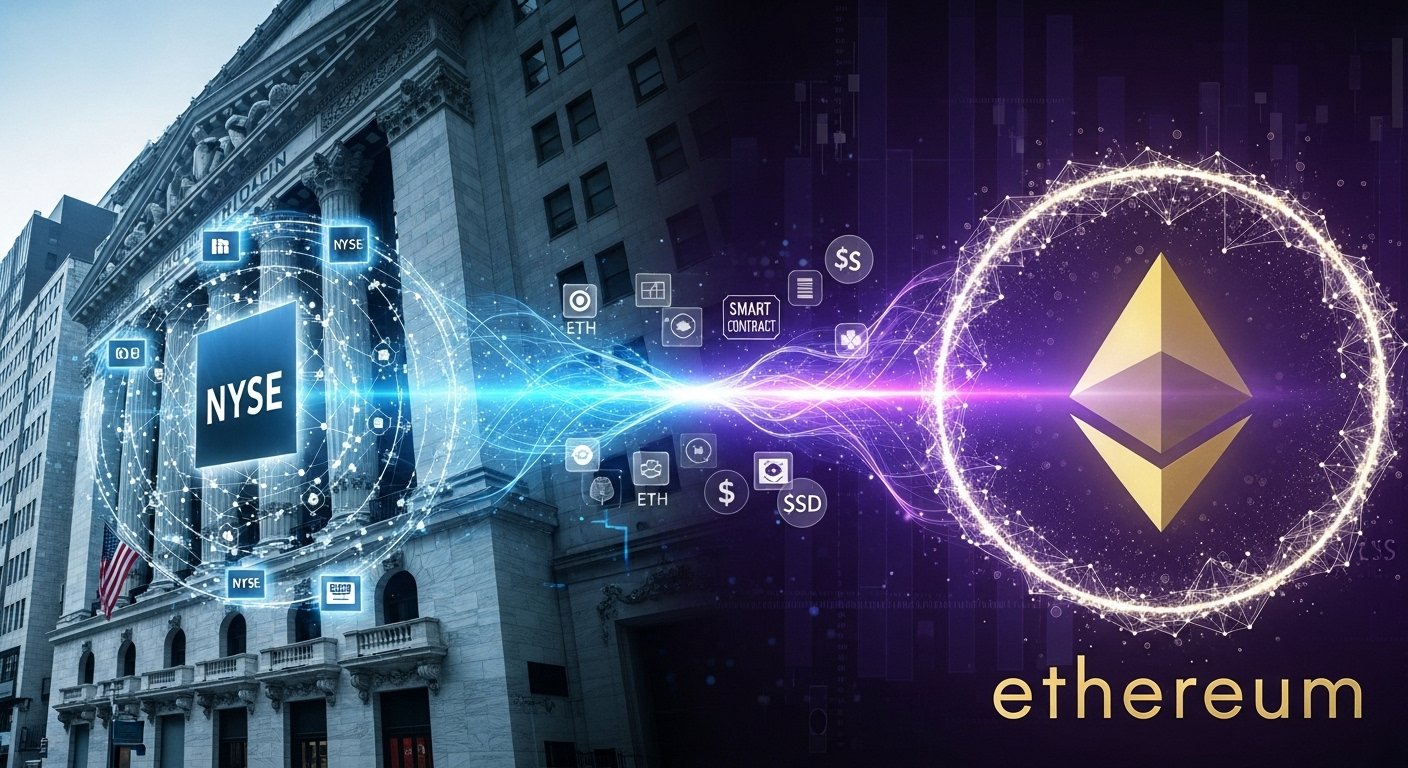
That single phrase is rocket fuel for Ethereum narratives because Ethereum is widely used for token standards and smart-contract settlement in crypto markets. Traders hear “multi-chain” and immediately game out scenarios where Ethereum becomes a major beneficiary—either directly, through settlement activity, or indirectly, through tooling and standards.
Ethereum’s “default settlement” story
The bullish Ethereum angle is not that the NYSE will definitely settle stock trades on public Ethereum. The more grounded version is this: as tokenized securities expand, ecosystems with mature smart-contract frameworks, developer tooling, and institutional integrations may gain mindshare and liquidity. Traders then front-run that possibility.
The NYSE blockchain platform’s multi-chain language creates optionality—and markets love optionality.
Public chain vs. permissioned chain: the critical distinction
The speculative leap is assuming “multi-chain” implies public chains like Ethereum mainnet. In practice, a regulated venue could choose permissioned networks, private instances, or settlement layers designed specifically for compliance. Still, even permissioned environments sometimes borrow standards, tooling patterns, and interoperability concepts from Ethereum’s broader ecosystem.
So the Ethereum trade can be less about “NYSE will use ETH” and more about “tokenization legitimizes smart-contract settlement, and Ethereum is the best-known smart-contract brand.”
Why XRP Keeps Getting Pulled into the Conversation
Whenever the market hears “cross-border,” “settlement,” or “tokenized value transfer,” XRP tends to re-enter the chat. The NYSE blockchain platform highlights stablecoin funding, instant settlement, and clearinghouse integration across jurisdictions and time zones.
That language resembles the problem space XRP traders already associate with: moving value quickly and cheaply, especially in payment and settlement contexts. The speculation is that if financial infrastructure becomes more token-native, assets positioned as settlement-oriented could benefit from renewed attention.
Speculation versus mechanism
It’s important to separate storyline from mechanism. The NYSE blockchain platform has not announced that it will use XRP. What traders are doing is mapping a macro trend—tokenized finance—onto familiar tokens.
The XRP thesis tends to spike when markets believe a new rails layer is forming and that legacy institutions may need fast bridges between systems. Whether XRP becomes that bridge is a different question. But speculation often prices narratives before engineering details arrive.
What the NYSE Blockchain Platform Could Change for Everyday Investors
If the NYSE blockchain platform reaches production in a meaningful form, the investor-facing effects could be significant, even if the underlying changes are mostly infrastructural.
Always-on markets and the end of the “closing bell” monopoly
A 24/7 venue doesn’t automatically mean every stock will trade around the clock with deep liquidity. But it could introduce new norms: weekend price discovery, after-hours corporate news reactions without waiting for Monday, and more continuous global participation.
Fractional access that feels native, not bolted on
Traditional markets already offer fractional shares in many brokerage apps, but that’s often handled internally. A tokenized environment could make fractional ownership more native to the instrument itself, depending on how tokenization is implemented. The NYSE platform explicitly calls out fractional share trading as an intended capability.
Faster settlement and a different risk profile
Instant or near-instant settlement can reduce certain timing risks that exist when settlement lags. At the same time, it changes operational dynamics—margin, liquidity management, and error handling all look different when everything clears immediately. TechSpot points to the promise of reducing delays and inefficiencies associated with the current settlement cycle.
The Competitive Landscape: NYSE Isn’t Alone
The NYSE blockchain platform is landing in a market where tokenization is already a competitive arena. TechSpot describes a broader wave of tokenization experiments across Wall Street.
Even without naming every competitor, the strategic point is clear: if tokenized securities become a standard, exchanges and financial infrastructure providers want to shape the standards, not inherit them.
Liquidity fragmentation and price discovery
If tokenized versions of securities trade across multiple venues or chains, liquidity can fragment. Fragmentation can widen spreads, complicate best execution, and make price discovery messier. A single regulated venue helps, but the broader ecosystem still matters.
Custody, security, and operational resilience
SiliconANGLE highlights that the design includes custody considerations and post-trade systems.
Custody is not a footnote. It’s the difference between a system institutions can use at scale and one that remains a niche experiment.
Stablecoin funding and systemic guardrails
Stablecoins are central to the concept, but stablecoin design, reserves, counterparties, and redemption mechanics matter. The NYSE blockchain platform may choose stablecoin approaches that prioritize regulatory clarity and risk management, but the broader market will still debate how stablecoin funding should work in public-market infrastructure.
Conclusion
The NYSE blockchain platform is best understood as Wall Street’s most direct attempt yet to fuse traditional exchange infrastructure with tokenized, always-on settlement rails. The vision includes 24/7 trading, fractional share access, stablecoin-based funding, and instant settlement, built by combining NYSE’s Pillar engine with blockchain-based post-trade systems and multi-chain support.
That’s why executives are bullish: it’s not just a feature—it’s a redesign of the financial plumbing. And it’s why traders are speculating on Ethereum and XRP: whenever regulated finance moves closer to on-chain systems, markets immediately try to predict which crypto networks and tokens benefit from the shift in narrative, adoption, and liquidity flows.
FAQs
Q: What is the NYSE blockchain platform in simple terms?
The NYSE blockchain platform is a proposed regulated system for trading and settling tokenized stocks and ETFs, designed for 24/7 access, stablecoin funding, and near-instant settlement rather than traditional settlement delays.
Q: Will the NYSE blockchain platform run on Ethereum?
NYSE has said the platform can support multiple chains for settlement and custody, but it has not announced which blockchains would be used in production. Traders speculate about Ethereum because of its prominence in token standards and smart contracts, but that remains speculation.
Q: What does “tokenized securities” mean for shareholders?
Tokenized securities are digital representations of shares. NYSE has indicated tokenized shareholders would participate in dividends and governance rights, aiming to preserve core shareholder entitlements even in token form.
Q: Why do traders connect XRP to this news?
Traders often associate XRP with settlement and value transfer narratives. Because the NYSE blockchain platform emphasizes tokenized settlement and always-on funding mechanics, some market participants speculate that “settlement-focused” crypto assets could gain attention—even though NYSE has not stated it will use XRP.