
Ripple Expands Custody Platform With New Integrations
Ripple expands its custody platform with new integrations, strengthening institutional security, staking, and enterprise-grade digital asset management.


Crypto landscape is evolving rapidly, and custody has emerged as one of the most critical components of that transformation. As digital assets mature from speculative instruments into regulated financial products, institutions are demanding infrastructure that mirrors the reliability, governance, and security of traditional finance. In response to this growing demand, Ripple expands custody platform with new integrations, signaling a decisive step toward becoming a cornerstone of enterprise-grade digital asset management.
Custody is no longer just about safely storing private keys. For banks, asset managers, fintech firms, and regulated crypto businesses, custody must support compliance, operational controls, scalability, and asset utility. Ripple’s latest expansion reflects this reality by enhancing its custody platform with integrations that strengthen cryptographic security and enable institutional participation in staking ecosystems. These improvements position the Ripple custody platform as a comprehensive solution designed to meet the operational realities of modern financial institutions.
As competition intensifies among custody providers, Ripple’s strategy highlights a broader shift in the market: institutions want custody platforms that integrate seamlessly into existing workflows while offering the flexibility to adapt to new blockchain-based financial models. This article explores what these new integrations mean, why they matter, and how Ripple is shaping the future of institutional digital asset custody.
Ripple Custody Platform
The Ripple custody platform is built specifically for institutional users who require more than basic crypto storage. Unlike retail wallets, institutional custody solutions must support complex governance structures, multi-layer approval processes, regulatory reporting, and strict security standards. Ripple’s custody offering focuses on delivering these capabilities through a unified, enterprise-ready platform.
At its core, the platform enables secure storage and management of digital assets while allowing institutions to define policies around access, transaction approvals, and asset movement. This approach ensures that custody operations align with internal risk frameworks and regulatory expectations. By designing custody as an infrastructure layer rather than a standalone product, Ripple allows organizations to integrate digital assets into their broader financial operations with confidence.
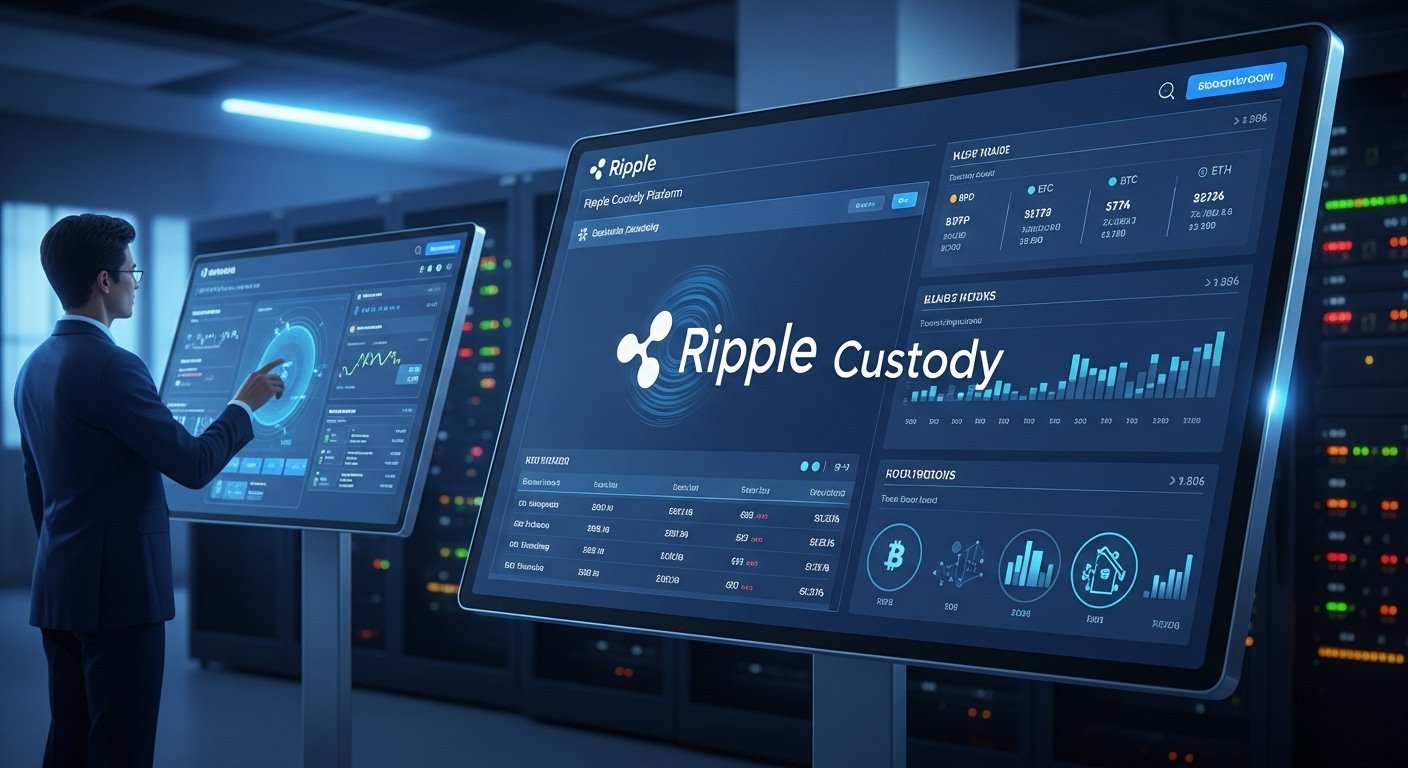
As Ripple expands custody platform with new integrations, it reinforces this foundation by adding specialized capabilities that address key institutional pain points, including advanced key protection and secure access to yield-generating activities.
Why Integrations Are Critical for Institutional Custody
For institutions, integrations are not optional enhancements—they are essential. Most financial organizations operate within complex technology ecosystems that include compliance systems, risk engines, accounting software, and security infrastructure. A custody platform that cannot integrate smoothly into this environment creates operational friction and increases risk.
When Ripple expands custody platform with new integrations, it reduces the need for institutions to rely on fragmented vendor stacks. Instead of stitching together separate solutions for security, staking, and governance, organizations can access these capabilities directly within the custody platform. This consolidation simplifies implementation, lowers operational overhead, and improves consistency across workflows.
Integrations also future-proof custody infrastructure. As blockchain networks evolve and new asset classes emerge, institutions need platforms that can adapt without requiring complete system overhauls. Ripple’s integration-driven approach positions its custody platform as a flexible foundation for long-term digital asset strategies.
Enhanced Security Through Advanced Key Management
Security remains the top priority for institutional custody. While software-based key storage may suffice for smaller operations, large institutions often require hardware-based solutions to meet internal and regulatory security standards. Recognizing this need, Ripple has strengthened its custody platform by integrating advanced hardware security capabilities.
These integrations support the use of hardware security modules, which are designed to safeguard cryptographic keys within tamper-resistant environments. By isolating sensitive key material from general-purpose systems, hardware-backed security significantly reduces the risk of unauthorized access or key compromise.
For institutions, this enhancement delivers several benefits. It aligns digital asset custody with existing enterprise security models, reduces the likelihood of internal security exceptions, and simplifies audit processes. As Ripple expands custody platform with new integrations focused on security, it reinforces trust among institutions that require uncompromising protection for high-value assets.
Expanding Asset Utility With Institutional Staking
Beyond secure storage, institutions increasingly expect custody platforms to support asset productivity. Staking has become a major component of digital asset strategies, particularly as proof-of-stake networks gain prominence. However, institutional staking introduces complexities that go far beyond retail participation.
Ripple’s custody expansion includes integrations that enable secure, policy-driven staking workflows within the custody platform. This allows institutions to participate in staking activities while maintaining strict governance controls, approval hierarchies, and operational oversight.
For asset managers and funds, this means staking can be incorporated into investment strategies without exposing the organization to unmanaged risk. For treasuries and fintech firms, it enables participation in network validation while preserving compliance and transparency. By embedding staking capabilities directly into the Ripple custody platform, Ripple transforms custody from a passive storage solution into an active financial infrastructure layer.
Ripple’s Broader Custody Strategy
The decision to expand custody platform with new integrations is not an isolated move. It reflects Ripple’s broader strategy to position custody as a central pillar of its enterprise offerings. Rather than treating custody as a supporting feature, Ripple is building it as a standalone, scalable platform that can support a wide range of institutional use cases.
This strategy includes continuous platform enhancements, ecosystem partnerships, and the incorporation of advanced compliance and governance tools. By doing so, Ripple aims to address the full lifecycle of digital asset management, from secure storage and transaction execution to reporting and regulatory readiness.
The emphasis on integrations suggests that Ripple views custody as an evolving ecosystem rather than a static product. Each new integration adds depth and flexibility, enabling institutions to customize their custody environment according to specific operational and regulatory requirements.
Benefits for Banks and Financial Institutions
Banks and traditional financial institutions are among the primary beneficiaries of Ripple’s custody expansion. These organizations operate under stringent regulatory frameworks and must demonstrate robust risk controls before adopting new technologies. The enhanced security and governance capabilities of the Ripple custody platform align closely with these expectations.
By offering hardware-backed security and controlled staking workflows, Ripple enables banks to explore digital asset custody services for clients or internal use cases. This could include holding tokenized assets, managing digital collateral, or supporting blockchain-based payment systems. As Ripple expands custody platform with new integrations, it lowers the barriers for banks to enter the digital asset space responsibly.
Advantages for Asset Managers and Funds
Asset managers and investment funds face growing pressure to offer digital asset exposure while maintaining institutional-grade risk management. Custody plays a critical role in this equation, as investors demand transparency, security, and operational rigor.
The expanded Ripple custody platform supports these needs by providing secure storage alongside integrated staking capabilities. This allows funds to generate additional returns on eligible assets while maintaining full control over governance and reporting. The result is a custody solution that supports both compliance and performance objectives.
Supporting Crypto-Native Firms at Scale
Crypto-native firms, including exchanges and fintech platforms, often begin with lightweight custody solutions designed for rapid deployment. As these firms grow, they encounter increasing regulatory scrutiny and operational complexity. Ripple’s custody platform is well-positioned to support this transition.

With enterprise-grade security, integrated asset services, and scalable governance features, the platform enables crypto-native firms to mature their custody operations without disrupting existing business models. The ability to integrate advanced capabilities as needed makes the Ripple custody platform an attractive option for companies scaling toward institutional standards.
Custody as the New Infrastructure Battleground
The digital asset custody market has become one of the most competitive segments in blockchain infrastructure. As more institutions enter the space, custody providers must differentiate themselves through reliability, flexibility, and depth of functionality.
Ripple’s approach emphasizes practical integrations that solve real operational challenges rather than flashy features. By focusing on security and asset utility, Ripple expands custody platform capabilities in ways that resonate with institutional decision-makers. This positions Ripple as a serious contender in the race to build the foundational infrastructure for institutional digital assets.
The Future of the Ripple Custody Platform
Looking ahead, Ripple’s custody roadmap is likely to continue evolving around integration, compliance, and scalability. Institutions will increasingly demand support for new asset types, tokenized securities, and cross-network interoperability. A custody platform that can adapt to these demands without sacrificing security will be well-positioned for long-term success.
As Ripple expands custody platform with new integrations, it signals a commitment to ongoing innovation rather than one-time upgrades. This approach aligns with the needs of institutions seeking stable partners in a rapidly changing technological landscape.
Conclusion
Ripple expands custody platform with new integrations at a pivotal moment for institutional digital assets. By enhancing security through advanced key management and enabling institutional staking within a governed environment, the Ripple custody platform moves closer to becoming a comprehensive solution for enterprise-grade digital asset management.
These developments reflect a broader strategy to transform custody from a passive service into an active, integrated financial infrastructure. For banks, asset managers, and crypto-native firms alike, Ripple’s expanded custody capabilities offer a path toward secure, compliant, and scalable participation in the digital asset economy.
As institutional adoption continues to accelerate, custody platforms that prioritize integration, governance, and security will define the next phase of the market. Ripple’s latest expansion positions it firmly within that future.
FAQs
Q: What does it mean that Ripple expands custody platform with new integrations?
It means Ripple has enhanced its custody platform by adding new capabilities through technology partnerships, improving security, governance, and asset functionality for institutional users.
Q: Why are integrations important for institutional custody platforms?
Integrations allow custody platforms to work seamlessly with existing enterprise systems, reducing operational complexity and improving security, compliance, and scalability.
Q: How does the Ripple custody platform improve security?
The platform supports advanced key management and hardware-based security measures, helping institutions protect cryptographic keys and meet strict security standards.
Q: Can institutions stake assets using the Ripple custody platform?
Yes, the expanded platform enables institutional-grade staking workflows that maintain governance, approvals, and operational controls.
Q: Who is the Ripple custody platform designed for?
It is designed for banks, asset managers, fintech companies, and crypto-native firms that require enterprise-grade digital asset custody with strong security and compliance features.