
US Control Over Venezuela Oil Trade Shock Ahead
US control over Venezuela’s oil could reshape global trade, reroute exports, shift prices, and redefine energy alliances worldwide.

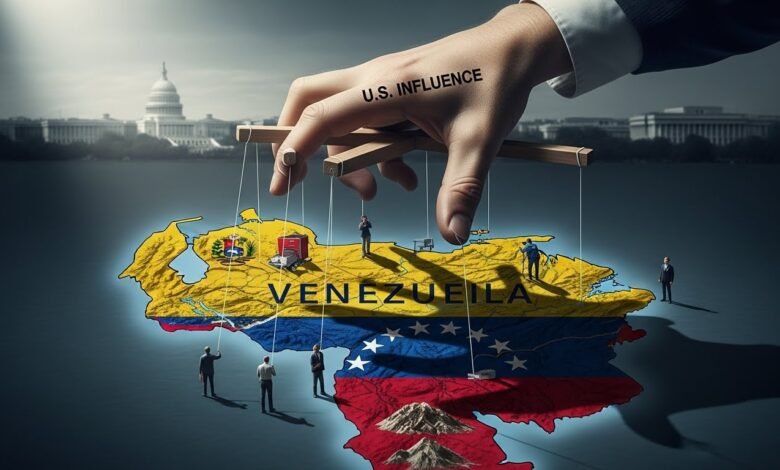
US control over Venezuela’s oil is no longer just a geopolitical talking point—it has become a serious variable in global energy markets and international commerce. Venezuela sits atop one of the largest oil reserve bases on Earth, yet its production has remained a fraction of what it could be due to years of sanctions, underinvestment, infrastructure collapse, and political turmoil. When Washington tightens or loosens its influence—through enforcement actions, sanctions rules, financial restrictions, and licensing decisions—it can alter not only Venezuela’s export options but also the entire global flow of heavy crude.
Oil trade is not simply “barrels bought and sold.” It is a network of shipping routes, refinery systems, insurance markets, payment channels, and political bargaining power. That’s why the question isn’t just whether Venezuela can export more crude. The deeper issue is whether US control over Venezuela’s oil can redirect where those barrels go, who gets them first, and what price the world pays for them.
This is especially important because Venezuela’s crude is largely heavy and extra-heavy—exactly the type of oil some refineries are specifically designed to process. Heavy crude is not easily replaced. When it disappears from the market, refineries must compete for limited substitutes, shipping lanes shift, and entire energy relationships can tighten or fracture. If the U.S. gains tighter influence over Venezuela’s oil exports or production decisions, global trade could see a rapid rebalancing in the Atlantic Basin, major changes in Chinese and Indian purchasing patterns, and a new phase of strategic refinery competition.
In this live Q&A-style breakdown, we’ll explore what US control over Venezuela’s oil really means, how it could reshape global trade, and why it matters for consumers, governments, and businesses worldwide.
What Does “US Control Over Venezuela’s Oil” Actually Mean?
The phrase US control over Venezuela’s oil can sound dramatic, but it usually doesn’t mean direct ownership of oil fields. Instead, it refers to a powerful set of leverage points that allow the United States to influence whether Venezuelan oil can be produced, sold, transported, insured, financed, and delivered.
In modern energy markets, control is often exercised through rules rather than troops. The U.S. can tighten or loosen restrictions through:
Sanctions enforcement that prevents companies from buying Venezuelan crude or paying the Venezuelan state oil sector.
Licensing approvals that permit specific companies to operate, export, or transact under controlled conditions.
Financial restrictions that limit Venezuela’s access to payment systems and international banking.
Maritime pressure that can discourage shipping companies, insurers, and trading firms from touching Venezuelan barrels.
These tools determine which buyers can access Venezuelan oil, how “clean” the trade is legally, and whether Venezuela’s production expansion becomes realistic or remains trapped by political and financial obstacles.
So when people discuss US control over Venezuela’s oil, they’re usually describing a system where Washington can open the tap for certain actors and close it for others—shaping trade flows without needing to physically seize resources.
Why Venezuela’s Oil Is a Global Trade Game-Changer
Venezuela is not just another oil exporter. It occupies a unique position because of its reserve size, crude type, and geographic relationship with major refining hubs.
Venezuela’s heavy crude matters more than volume headlines
Venezuela’s oil is predominantly heavy and extra-heavy, which makes it harder to extract, transport, and refine—but also makes it valuable to refineries configured for heavy feedstock. Many complex refineries, especially in the U.S. Gulf Coast, were built to process heavy crude efficiently. When Venezuelan supply is limited, these refineries must compete for other heavy sources like Canadian oil sands blends, Middle Eastern heavy grades, or remaining Latin American heavy crude.
This is why US control over Venezuela’s oil can impact global trade in a way that goes beyond headlines. If Venezuelan barrels return to the U.S. market under stable conditions, refinery margins and product exports can shift significantly.
Reserves are huge, but production is constrained
Venezuela’s reserve base is massive, yet actual production has been constrained by years of equipment failure, workforce loss, pipeline issues, and poor maintenance. This is a crucial reality check: even if political conditions changed overnight, Venezuela would still need time, investment, and technical capacity to raise output meaningfully. That means US control over Venezuela’s oil can shift trade patterns quickly through rerouting and pricing, but it cannot instantly create millions of extra barrels per day.
Live Q&A: The Biggest Questions About US Control Over Venezuela’s Oil
Would US control over Venezuela’s oil lower global oil prices?
It could—but not immediately, and not guaranteed.
Oil prices respond to both supply realities and expectations. If US control over Venezuela’s oil leads to more exports and signals that Venezuela might rebuild production over time, markets could price in future supply growth, which can soften prices. However, short-term prices depend on what the U.S. actually does.
If the U.S. tightens enforcement and restricts exports, Venezuela’s supply could shrink, supporting higher global prices. If the U.S. expands licenses and allows more legitimate production and trade, the market may anticipate gradual supply recovery. But Venezuela cannot ramp up rapidly, so any price effect would likely unfold in phases rather than overnight.
In other words, the price impact of US control over Venezuela’s oil is less about instant supply and more about credibility: traders react to what seems sustainable, not what sounds possible.
Could Venezuelan oil shift away from China and back to the US?
Yes, and this is where global trade would feel the impact fastest.
For years, China has been one of the key destinations for Venezuelan oil, often through indirect channels and complex trading arrangements. If US control over Venezuela’s oil tightens and enforcement increases, that trade becomes harder. Chinese refiners may lose access to discounted Venezuelan barrels and may have to buy heavier crudes elsewhere at market-linked prices.
At the same time, U.S. refiners—especially on the Gulf Coast—could benefit from greater access to heavy crude that fits their systems well. The geographic proximity also lowers shipping costs compared with trans-Pacific routes. If Venezuelan crude flows back into the U.S. system, global trade balances could shift: fewer barrels going to Asia, more staying in the Atlantic Basin, and new competition for heavy crude substitutes.
How would global shipping routes change?
Shipping is one of the most underappreciated drivers of global trade shifts. Oil routes aren’t fixed—they respond to policy pressure and commercial incentives.
If Venezuelan barrels move more openly to the U.S., tanker demand increases in the Caribbean and Atlantic lanes, often on shorter routes. That can change freight rate dynamics compared to long-haul trips to Asia. If policy becomes unpredictable or enforcement intensifies, shipping can become more complex, with traders relying on intermediaries, ship-to-ship transfers, and a “gray fleet” system that increases cost and risk.
So US control over Venezuela’s oil could either make trade cleaner and more direct—or push it into more opaque channels, depending on how strict and consistent enforcement becomes.
Refining Power: Why US Control Over Venezuela’s Oil Could Reshape Product Trade
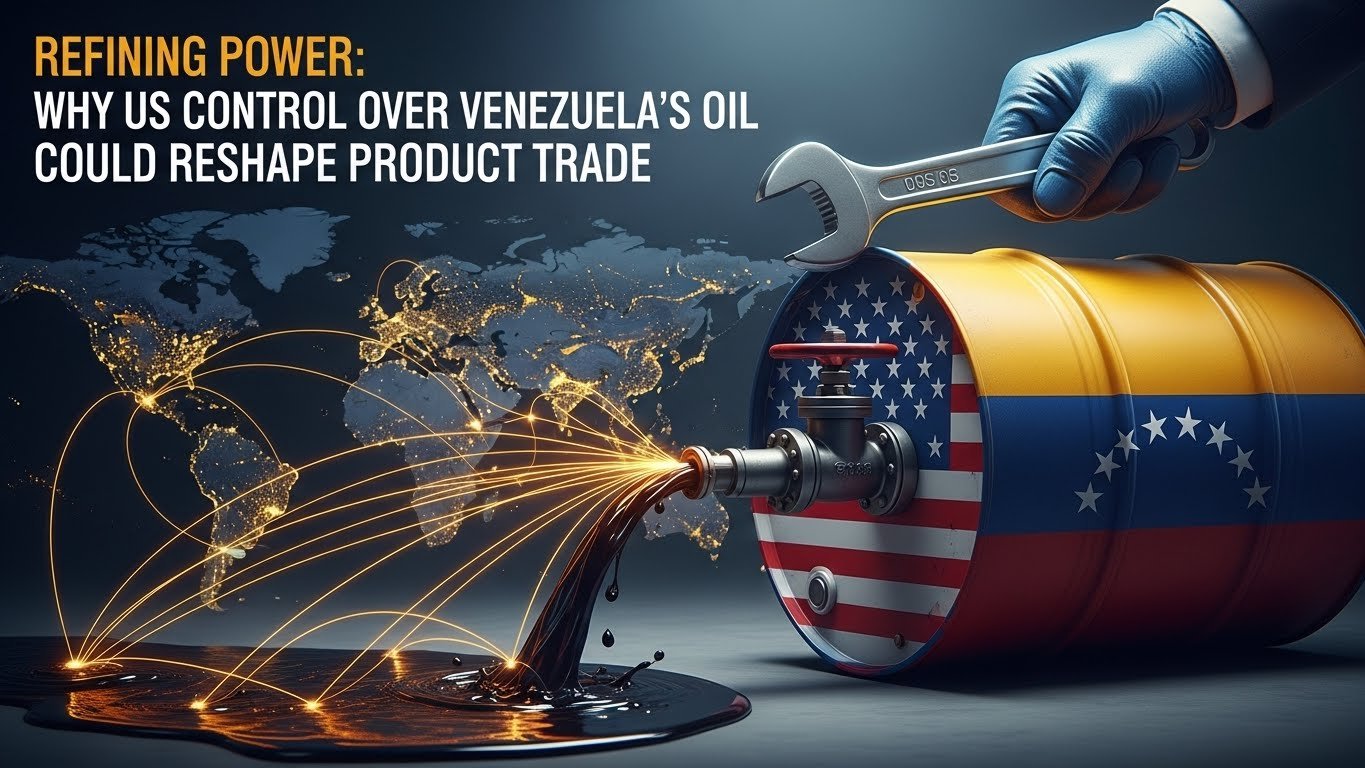
Crude oil is only the first step. What matters to trade is what happens after refining: gasoline, diesel, jet fuel, petrochemical feedstocks, and export flows of refined products.
US Gulf Coast refineries could gain an edge
The U.S. Gulf Coast is one of the world’s most advanced refining zones. Many refineries there are designed to process heavy crude into high-value fuels. When they have steady heavy crude supply, they can operate efficiently and export refined products competitively.
If US control over Venezuela’s oil results in stable heavy crude inflows, U.S. refiners could reduce their reliance on alternative heavy grades and improve margins. That advantage can ripple outward: more refined products exported into Latin America, Europe, and even Africa, changing trade routes beyond crude oil itself.
Petrochemical markets may also shift
Heavy crude availability affects feedstock choices for petrochemical production. A stable supply can influence the competitiveness of petrochemical exports, especially plastics and industrial inputs. If the U.S. becomes a stronger hub for Venezuelan crude processing, petrochemical trade may tilt further toward North American exporters.
The Sanctions and Licensing Lever: How Policy Becomes Control
One of the clearest forms of US control over Venezuela’s oil is the ability to grant exceptions. Licensing is essentially a controlled opening that allows some activity while restricting broader trade. This creates a system where policy shapes which companies can participate, which transactions are legal, and how revenue flows are managed.
Licensing can create:
- A narrow pipeline of allowed exports that are monitored and regulated.
- A competitive advantage for a small group of approved operators.
- A path for gradual reinvestment in Venezuela’s energy sector.
- Or, conversely, a pressure mechanism if licenses are revoked or tightened.
Because licensing can change quickly, it’s one of the most powerful short-term drivers of how US control over Venezuela’s oil translates into global trade shifts.
The China–India–Europe Triangle: Who Competes for Venezuelan Barrels?
Venezuelan oil doesn’t exist in a vacuum. Buyers compete, and their competition is shaped by policy.
China: Losing a discount advantage
China’s energy strategy prioritizes supply security and price advantage. Venezuelan crude has often been attractive because sanctions and complexity can produce discounts. If enforcement tightens and the U.S. successfully redirects Venezuelan exports, China could lose access to these discounted barrels and face higher costs for replacement heavy crude.
India: A flexible opportunistic buyer
India’s refineries are among the most adaptive in the world. They can process a variety of crude types and often take advantage of shifting trade patterns. If Venezuelan exports become more accessible under controlled conditions, India could increase imports—especially if prices remain favorable compared to Middle Eastern alternatives.
Europe: A potential secondary destination
Europe’s energy system has been reshaping since major disruptions to traditional supply routes in recent years. While Europe is not the closest market, it could still become a meaningful destination for Venezuelan crude if trade normalizes and freight economics support it.
The point is that US control over Venezuela’s oil doesn’t simply determine whether Venezuela can sell. It determines which major economies gain or lose leverage in the global energy competition.
Reality Check: Can Venezuela Actually Ramp Up Oil Production?
This is the question that separates market hype from reality.
- Venezuela’s oil sector faces structural constraints:
- Aging infrastructure across pipelines, storage, and terminals.
- Limited access to spare parts and modern equipment.
- Technical complexity of extra-heavy oil extraction.
- Loss of skilled labor due to migration and institutional collapse.
- Weak investment climate due to political instability and contract risk.
Even if the U.S. shifted policy toward a broader opening, Venezuela would still need years of stable investment and technical rebuilding to return to high production levels. That means US control over Venezuela’s oil might change trade routes first, then change supply levels later.
So the most immediate trade impact is likely rerouting, pricing adjustments for heavy crude, and refinery competitiveness—not a sudden flood of new supply.
Three Trade Scenarios: How US Control Over Venezuela’s Oil Could Play Out
Tight enforcement and export restriction
In this scenario, U.S. policy leans toward pressure and containment. Venezuelan exports remain constrained, and buyers rely on complex workarounds. Global heavy crude becomes tighter, and some refineries struggle with higher feedstock costs. Trade becomes less transparent, and shipping risks increase.
Managed opening under strict oversight
Here, US control over Venezuela’s oil is expressed through licenses and carefully monitored trade. Selected companies expand production gradually, exports to the U.S. increase, and Venezuela starts rebuilding infrastructure slowly. Global trade shifts toward the Atlantic Basin, refinery margins adjust, and the market becomes more predictable.
Rapid reintegration and production rebuilding
This is the most dramatic scenario and would require major political change. Venezuela is reintegrated into global markets quickly, investment increases, and long-term supply growth becomes plausible. Even then, production growth would still take time, but trade flows could shift sharply and legally, with fewer gray-market routes.
Each scenario changes global trade differently, but all reinforce a central truth: US control over Venezuela’s oil is a lever that influences energy commerce, refinery power, and international bargaining positions.
Conclusion
US control over Venezuela’s oil has the potential to reshape global trade because it affects more than Venezuela’s economy—it affects the mechanics of heavy crude supply, refinery competitiveness, and the flow of energy between continents. In the near term, the biggest changes are likely to appear in trade routes: fewer barrels moving through opaque channels to Asia and more moving into the U.S. refining system. Over the long term, the impact depends on whether Venezuela can rebuild capacity, attract investment, and stabilize its production environment.
Ultimately, the world is watching because Venezuela’s oil is not only a resource—it is a strategic trade asset. If the U.S. holds stronger influence over that asset, it could shift global trade patterns, reshape refinery power, and force major economies to renegotiate how they secure energy in a changing world.
FAQs
Q: What is meant by US control over Venezuela’s oil?
It usually refers to influence through sanctions, licensing, financing restrictions, and enforcement tools that determine who can produce and export Venezuelan oil and where it can be sold.
Q: How could US control over Venezuela’s oil affect China?
If enforcement tightens, China could lose access to discounted Venezuelan crude and be forced to buy replacement heavy oil at more competitive market rates, affecting refinery costs.
Q: Why is Venezuelan oil important to U.S. refineries?
Many U.S. Gulf Coast refineries are optimized for heavy crude. Venezuelan barrels fit their systems well, making them valuable for efficient refining and strong profit margins.
Q: Would global oil prices fall if Venezuela exports more?
Not immediately. Prices could soften over time if exports grow and production rebuild becomes credible, but Venezuela’s supply recovery would likely be gradual.
Q: Can Venezuela quickly increase oil production?
A rapid jump is unlikely. Venezuela needs years of investment, maintenance, and technical rebuilding to restore significant production capacity, even under favorable policy conditions.
Also Read: Crypto Founder Dumps Millions in Ethereum What Next?