Will altcoin season return? Explore sentiment market signals
Every time a new year begins, crypto traders and investors seem to regain a familiar appetite for risk. Fresh annual narratives emerge, capital


Every time a new year begins, crypto traders and investors seem to regain a familiar appetite for risk. Fresh annual narratives emerge, capital rotates, and social sentiment often shifts from cautious to optimistic in a matter of weeks. This pattern is so common that many market participants now watch early-year price action as a kind of psychological “starting gun” for the next major trend. That’s why early year speculation sentiment rises again has become one of the most repeated phrases in trading communities—because it often marks the moment when capital starts moving from defensive positioning into aggressive bets.
And when aggressive bets return to crypto, the conversation quickly turns to the same question: will the altcoin season reappear?
The concept of altcoin season refers to a period when alternative cryptocurrencies significantly outperform Bitcoin, often driven by risk-on momentum, liquidity expansion, and renewed hype around innovation. Historically, altcoin season tends to arrive after Bitcoin establishes a strong trend or stabilizes following major moves. Once Bitcoin cools down and traders look for bigger percentage gains, they often rotate into Ethereum and then into smaller altcoins, igniting broader market rallies.
But crypto is never that simple. Altcoin season doesn’t appear on schedule, and it doesn’t always look the same. Macro conditions, interest rates, regulatory pressure, ETF flows, stablecoin liquidity, and even meme-driven speculation all shape whether the market rotates into altcoins—or stays concentrated in Bitcoin.
In this article, we’ll explore why early-year speculation sentiment rises again, how market psychology works in January and the first quarter, and whether the conditions are forming for altcoin season to return. You’ll also learn the key indicators to watch, the major catalysts that could accelerate a new altcoin cycle, and how to approach the market with a balanced, strategic mindset.
Throughout this discussion, we’ll naturally include LSI keywords like crypto market sentiment, Bitcoin dominance, risk-on rally, capital rotation, Ethereum breakout, bull market cycle, on-chain data, and liquidity conditions to provide a complete, search-friendly guide without over-optimizing.
The early-year speculation sentiment rises again: What’s driving it?
When people say early-year speculation sentiment rises again, they’re usually pointing to a combination of market structure and human behavior. The first quarter often brings renewed activity because many investors reset portfolios, chase new themes, and re-engage after the holidays. In crypto, where narratives move faster than fundamentals, these seasonal shifts can become self-fulfilling.
One major driver is renewed risk appetite. The moment Bitcoin shows stability or upward momentum, traders begin anticipating the next phase of the bull market cycle. Since altcoins are historically more volatile than Bitcoin, they often become the preferred playground for speculative traders seeking higher returns.
Another factor is narrative reboot. Each year, new trends dominate headlines—whether it’s AI tokens, Layer 2 scaling, Real World Assets (RWA), DePIN, or meme coins. Early-year speculation sentiment rises again because market participants want to position early in narratives before they become mainstream. That narrative momentum can quickly spill into altcoins, creating the conditions for altcoin season to reappear.
Finally, early-year capital inflows can amplify movement. Crypto liquidity is extremely sensitive. Even moderate increases in stablecoin supply, exchange inflows, or institutional participation can produce outsized price reactions across altcoins, particularly mid-caps and small-caps.
Understanding altcoin season: What it is and why it matters
Before asking whether the altcoin season will reappear, it’s important to define what altcoin season actually means in a practical sense. In simple terms, it’s a period when altcoins outperform Bitcoin over a sustained timeframe. More specifically, many traders define it as when the majority of top altcoins (often top 50 or top 100) outperform Bitcoin over 60–90 days.
Altcoin season matters because it changes the market’s reward structure. During Bitcoin-led phases, capital is concentrated and price action is relatively measured. When altcoin season arrives, volatility expands dramatically. Gains can be rapid and aggressive, but so can drawdowns. This is where traders often see the biggest percentage returns—and where inexperienced participants often take the biggest losses.
Altcoin season is also a sentiment indicator. When altcoins start outperforming broadly, it signals that the market is willing to embrace risk again. That shift is closely linked to crypto market sentiment, liquidity conditions, and trader confidence in a continuing bull cycle.
Most importantly, altcoin season tends to reshape narratives. Projects that were ignored for months suddenly gain attention, communities explode with activity, and capital rotates rapidly between sectors. Understanding this rotation is key to navigating crypto responsibly.
Role of Bitcoin dominance in predicting altcoin season
One of the most reliable tools for evaluating whether altcoin season will reappear is Bitcoin dominance. This metric represents Bitcoin’s share of the total crypto market capitalization. When Bitcoin dominance rises, Bitcoin is outperforming altcoins overall. When Bitcoin dominance falls, altcoins are gaining market share, which can signal the start of altcoin season.
However, dominance isn’t a simple on/off switch. In many cycles, Bitcoin dominance rises during the early bull phase because money flows into the safest asset first. Then, as Bitcoin consolidates, traders rotate into Ethereum and large-cap altcoins. Eventually, dominance breaks down more sharply during the speculative phase when mid-cap and small-cap coins surge.
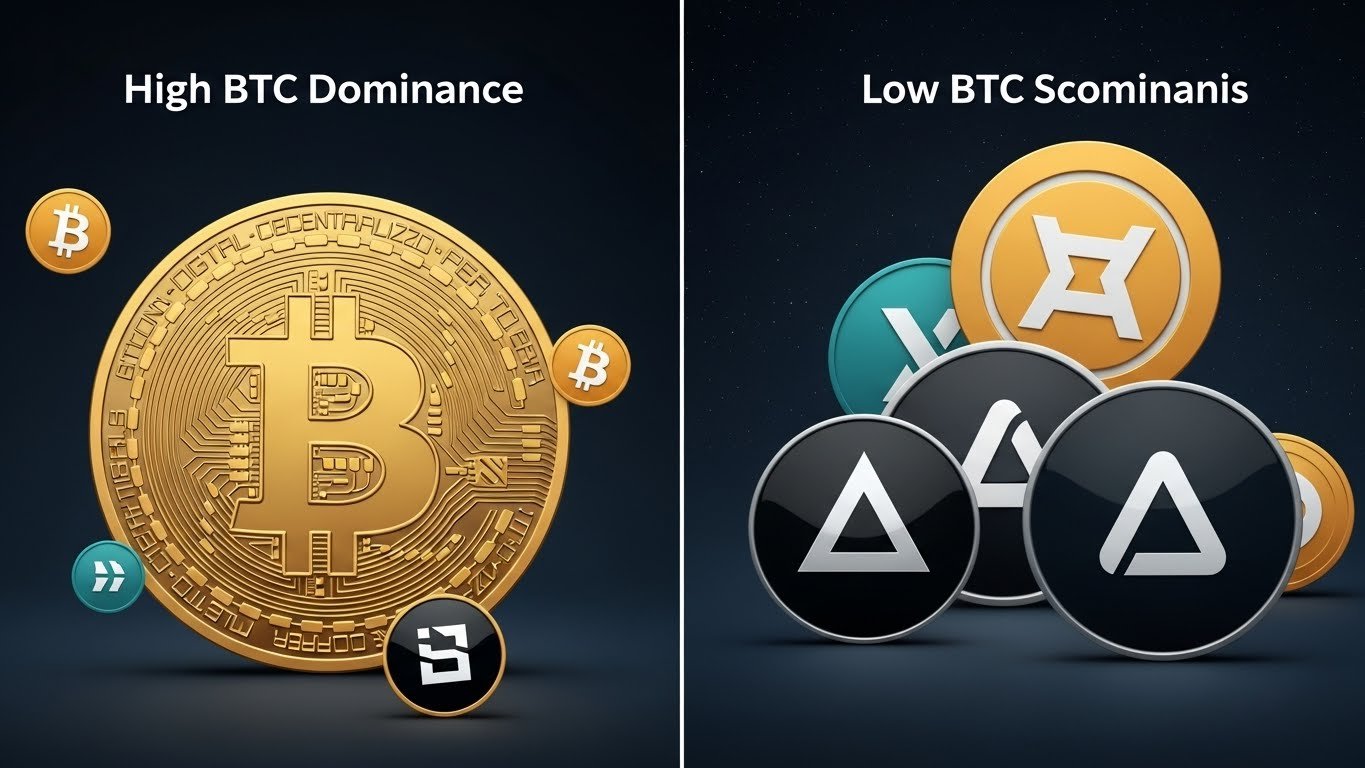
If early-year speculation sentiment rises again while Bitcoin dominance begins to stall or decline, that combination often points to a potential altcoin season setup. But it must be confirmed by other signals like volume, Ethereum strength, stablecoin growth, and on-chain data trends.
The key is to watch the trend, not the number. A falling dominance trend over weeks—especially during positive price action—is more meaningful than a single-day move.
Ethereum as the bridge: Why ETH usually leads the altcoin wave
Altcoin season rarely begins with random small-cap coins. Most cycles start with Ethereum. ETH often acts as the bridge between Bitcoin and the broader altcoin market. When investors begin to take more risk, they frequently move from Bitcoin into Ethereum first, because it’s liquid, widely accepted, and seen as the foundation of many crypto ecosystems.
An Ethereum breakout can be one of the clearest signals that altcoin season may reappear. When ETH begins outperforming BTC on the ETH/BTC ratio, it often indicates that capital rotation is underway. That ratio has historically been a key marker in shifting market phases.
The reason is simple: Ethereum is deeply integrated into DeFi, NFTs, Layer 2 networks, and token launches. As ETH strengthens, it tends to lift entire ecosystems with it, including major Layer 2 tokens, DeFi blue chips, and infrastructure coins.
If early-year speculation sentiment rises again but Ethereum remains weak relative to Bitcoin, the market may be in a Bitcoin-only phase rather than the early stages of altcoin season. ETH strength is often the confirmation traders look for.
hidden engine behind altcoin season
Altcoin season is not just about hype. It is also about liquidity. Altcoins need consistent inflows to sustain rallies. Without liquidity expansion, altcoin pumps become short-lived spikes followed by deep corrections.
Liquidity in crypto is influenced by several factors, including stablecoin supply, exchange activity, and overall macro conditions. When stablecoin market caps rise, it often means more deployable capital is entering the system. When stablecoin market caps shrink, speculative appetite often weakens.
Early-year speculation sentiment rises again more easily when liquidity is expanding, because traders feel confident there is enough capital to support risk assets. This is also why interest rates and broader market conditions matter. When traditional markets are risk-on and financing conditions loosen, crypto often benefits—especially altcoins.
Liquidity also impacts how capital rotates. In tight liquidity environments, capital stays concentrated in Bitcoin and a few large caps. In expanding liquidity environments, capital spreads outward, igniting altcoin season behavior.
On-chain data and sentiment signals: What the blockchain reveals
One of the biggest advantages crypto investors have is transparency. On-chain data provides insight into real activity: accumulation patterns, exchange flows, wallet growth, and network usage. These indicators can help confirm whether early-year speculation sentiment rises again is more than just social media excitement.
For example, exchange outflows can suggest accumulation, while exchange inflows can suggest selling pressure. Growing active addresses and increased transaction volume can point to genuine network demand rather than purely speculative trading. Meanwhile, rising DeFi total value locked (TVL) can reflect renewed confidence in decentralized finance ecosystems.
Sentiment indicators also matter. Funding rates, open interest, and derivatives positioning can reveal whether the market is overheated. During early altcoin season phases, funding rates tend to rise gradually. During late-phase mania, funding rates often become excessive, signaling instability.
If early-year speculation sentiment rises again while on-chain activity and network usage are also increasing, it strengthens the case that the market is transitioning into a broader altcoin phase rather than an isolated speculative burst.
Catalysts that could make altcoin season reappear
Altcoin season doesn’t return purely because people want it to. It typically requires catalysts that shift capital flows and narrative momentum. Several catalysts can accelerate a renewed altcoin cycle:
Regulatory clarity and institutional confidence
When markets sense reduced regulatory risk—or at least clearer rules—capital often becomes more comfortable moving into altcoins. Institutions tend to begin with Bitcoin exposure, then gradually explore Ethereum and larger alts as confidence grows. That institutional path can strengthen the foundation for altcoin season to reappear.
Innovation cycles and new sectors
Altcoin season is often narrative-driven. If early-year speculation sentiment rises again around a new wave of innovation—like AI tokens, RWA, DePIN, or novel L2 technology—capital can flood into related projects quickly. The sector narrative provides a reason for rotation beyond pure speculation, even if speculation still dominates short-term behavior.
Macro tailwinds and risk-on markets
Altcoin season is more likely when traditional markets support risk-taking. Strong equity performance, favorable liquidity conditions, and reduced recession fear can all increase the probability that altcoins outperform.
Bitcoin stabilization after a major move
Historically, altcoin season often intensifies when Bitcoin has already made a strong upward move and then enters a consolidation phase. Traders who missed Bitcoin’s rally look for opportunities elsewhere, and altcoins become the natural target.
When these catalysts align, the probability increases that altcoin season will reappear with sustained strength rather than short-lived hype.
The psychology of rotation: Why traders chase alts after Bitcoin pumps
The question “will the altcoin season reappear?” is partly a technical question and partly a psychological one. Human behavior drives many crypto cycles. After Bitcoin rallies, traders often experience a mix of excitement and regret. Those who missed entry points search for the next opportunity, and altcoins offer the illusion of “catching up.”
This is where early-year speculation sentiment rises again becomes powerful. New year optimism encourages fresh risk-taking. Many traders also believe that January represents a clean slate and a chance to reposition before the market fully moves.
Altcoins then become magnets for capital because they can deliver rapid gains. Social platforms amplify winners, creating a feedback loop where rising prices lead to rising attention, which leads to more buying. That loop is the heart of altcoin season mania.
But the psychology cuts both ways. When volatility increases, fear returns just as quickly. Sustainable altcoin season requires not only hype but also consistent liquidity and market confidence.
Signs that altcoin season might not reappear yet
It’s also important to acknowledge scenarios where early-year speculation sentiment rises again but altcoin season fails to fully materialize. This happens more often than many traders admit.
One major warning sign is persistent Bitcoin dominance strength. If dominance continues trending upward even during market rallies, it often means capital is staying concentrated. Another signal is weak Ethereum performance relative to Bitcoin. Without ETH leading, broad altcoin rallies tend to be fragile.
Macro uncertainty can also suppress altcoin season. If interest rates remain tight or global markets turn risk-off, speculative altcoins often struggle. Regulatory pressure and enforcement actions can also reduce the willingness to hold smaller assets.
Finally, market exhaustion matters. If the market has recently experienced a speculative blow-off top or sharp correction, traders may be cautious, limiting capital rotation into altcoins. In that scenario, early-year speculation sentiment rises again could simply be a short-term bounce rather than a sustained altcoin phase.
How to approach a potential altcoin season intelligently
If you believe altcoin season may reappear, the smartest approach is not blind excitement—it’s structured thinking. Altcoin rallies reward preparation and punish impulsiveness.
Start by focusing on market structure. Look at Bitcoin’s trend, Ethereum’s relative strength, and liquidity signals. Then evaluate narratives. Not all narratives survive. Some sectors shine briefly and fade quickly, while others sustain multi-month cycles.
It’s also crucial to differentiate between high-quality altcoins and purely speculative plays. During altcoin season, almost everything can rise, but long-term survivability still matters. Projects with real users, strong token economics, active development, and meaningful adoption often recover better after corrections.
If early-year speculation sentiment rises again, it may create a window of opportunity. But opportunity is not the same as certainty. Altcoin season can be unpredictable, and risk management is essential in any strategy.
Conclusion
So, will the altcoin season reappear? The honest answer is: it depends on alignment. When early-year speculation sentiment rises again, it often creates the emotional and narrative conditions for altcoins to rally. But for a true altcoin season—one where broad altcoin markets outperform Bitcoin for weeks or months—you typically need confirmation through Bitcoin dominance decline, strong Ethereum breakout behavior, expanding liquidity, and supportive macro signals.
The encouraging part is that early-year sentiment shifts can be the spark that begins the rotation. If Bitcoin remains strong while stabilizing, and Ethereum starts gaining relative strength, the groundwork for altcoin season becomes much more credible. Add in renewed narrative cycles and improving liquidity conditions, and the market could easily transition into an altcoin-driven phase.
At the same time, traders should resist the temptation to assume that every early-year rally automatically leads to altcoin season. Some years deliver only short bursts. The best approach is to watch the indicators, respect volatility, and treat early optimism as a signal to prepare—not a guarantee of profits.
If early-year speculation sentiment rises again and the market confirms rotation, altcoin season can absolutely reappear. The question is not whether it’s possible—it’s whether the market is ready to sustain it.
FAQs
Q: What does “altcoin season” mean in crypto?
Altcoin season is a market phase where altcoins outperform Bitcoin over a sustained period. It typically occurs when capital rotates from Bitcoin into Ethereum and then into smaller altcoins, leading to broad-based rallies.
Q: Why does early-year speculation sentiment rises again so often?
Early-year optimism, portfolio rebalancing, renewed narrative cycles, and fresh liquidity often combine to increase risk appetite. In crypto, this shift can quickly translate into speculative trading and renewed interest in altcoins.
Q: What is the best indicator that altcoin season will reappear?
One of the strongest indicators is a sustained decline in Bitcoin dominance, paired with Ethereum outperforming Bitcoin on the ETH/BTC ratio. Expanding stablecoin liquidity and strong on-chain activity also support the case.
Q: Can altcoin season happen without Bitcoin pumping first?
It can, but it’s less common. Many cycles begin with a Bitcoin rally that restores confidence and attracts capital, followed by consolidation and rotation into Ethereum and altcoins.
Q: How can beginners avoid mistakes during altcoin season?
Beginners should focus on market confirmation rather than hype. Watching Bitcoin dominance, Ethereum strength, liquidity conditions, and avoiding over-leveraged positions can reduce risk during volatile altcoin season moves.
Also Read: Altcoin Market News for Traders 2025 Updates Trading