XRP Surges 18% as Ripple Expands DeFi Ecosystem
XRP surges 18% after Ripple’s DeFi expansion announcement. Discover what’s driving the rally, XRPL upgrades, future outlook, and risks.

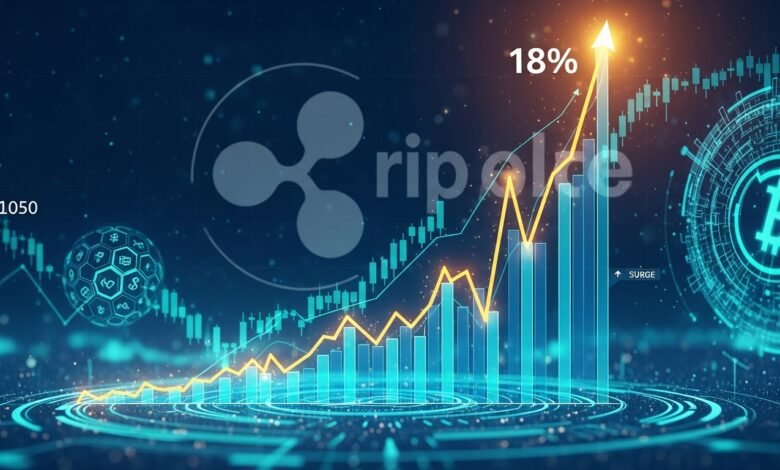
Cryptocurrency market is no stranger to volatility, but when XRP surged 18% in a short time frame, it captured widespread attention across traders, investors, and analysts alike. Unlike many sudden price spikes driven by speculation alone, this rally was tied to a concrete development: Ripple’s announcement of a major DeFi expansion across the XRP Ledger (XRPL). The move reinforced a growing belief that XRP is entering a new phase—one that extends beyond payments into a broader decentralized finance ecosystem.
For years, XRP has been closely associated with cross-border transactions and institutional payments. While that use case remains central, Ripple’s latest announcement signals a deeper evolution. The company is now positioning XRPL as a platform capable of supporting institutional-grade DeFi, stablecoins, and real-world asset tokenization, all while maintaining regulatory compatibility. This shift has significant implications for XRP’s utility, demand, and long-term valuation.
This article explores why XRP surged 18%, what Ripple’s DeFi expansion really means, how it could reshape the XRPL ecosystem, and whether this momentum can be sustained. We’ll also examine risks, market dynamics, and what investors should watch next.
Ripple’s DeFi Expansion Strategy
Ripple’s DeFi expansion is not about copying existing decentralized finance models. Instead, it focuses on building a framework that bridges traditional finance and blockchain technology in a compliant, scalable manner. This distinction is critical because it shapes how institutions perceive and adopt the XRPL ecosystem.
At its core, Ripple’s strategy is designed to enable financial institutions to participate in decentralized markets without abandoning regulatory standards. This includes tools for identity, compliance, asset issuance, and settlement. As a result, XRP is increasingly being viewed not just as a transactional asset, but as a foundational component within a growing financial infrastructure.
Why DeFi on XRPL Is Different
Most DeFi ecosystems prioritize permissionless innovation, often at the expense of regulatory clarity. Ripple’s approach is different. It aims to support regulated DeFi, where institutions can tokenize assets, issue stablecoins, and engage in lending or liquidity provision under defined rules.
This difference matters because institutional capital operates under strict compliance requirements. By addressing these constraints directly, Ripple is opening the door to a type of DeFi adoption that could scale more sustainably. The market’s reaction—reflected in the XRP price surge—suggests that investors see long-term value in this approach.
Why XRP Reacted So Strongly to the Announcement
An 18% surge is rarely driven by a single factor. In XRP’s case, several elements aligned simultaneously, amplifying the impact of Ripple’s DeFi announcement.
First, XRP already had deep liquidity across major exchanges, making it highly responsive to new narratives. Second, traders were primed for volatility due to broader market conditions. Finally, the announcement introduced a fresh growth narrative that repositioned XRP as more than a legacy payments token.
Narrative Shifts and Market Psychology
Markets are heavily influenced by stories. When an asset’s narrative changes, its valuation framework often changes with it. Ripple’s DeFi expansion reframed XRP as a potential cornerstone of institutional DeFi, rather than a single-purpose settlement asset. This narrative shift attracted speculative capital, long-term investors, and momentum traders all at once. As buying pressure increased, technical resistance levels were breached, triggering automated trades and short covering. The result was a sharp upward move that fed on itself, culminating in an 18% surge.
The Role of the XRP Ledger in DeFi Growth
The XRP Ledger (XRPL) plays a central role in Ripple’s expansion strategy. Known for its speed, low fees, and reliability, XRPL is well-suited for high-volume financial applications. However, DeFi growth requires more than performance—it requires flexibility and composability.
Ripple’s roadmap emphasizes expanding XRPL’s capabilities to support decentralized exchanges, asset tokenization, and advanced financial primitives. These enhancements are designed to attract developers, institutions, and liquidity providers to the ecosystem.
XRPL as a Settlement and Liquidity Layer
XRPL’s architecture allows for near-instant settlement, making it attractive for financial institutions that require efficiency. As DeFi applications grow on the ledger, XRP’s role as a liquidity asset becomes increasingly important. Whether facilitating trades, bridging assets, or supporting tokenized instruments, XRP stands to benefit from increased on-chain activity. This expanding utility is one reason investors reacted positively to the DeFi announcement. Utility-driven demand tends to be more durable than purely speculative demand, especially when tied to real financial use cases.
Stablecoins and Real-World Assets as Key Catalysts
Two components of Ripple’s DeFi vision stand out: stablecoins and real-world assets (RWAs). These elements are critical for institutional adoption and could significantly impact XRP demand over time.
Stablecoins as the Backbone of DeFi
Stablecoins serve as the primary medium of exchange in decentralized finance. They provide price stability, enable efficient settlement, and support lending and trading activities. By expanding stablecoin functionality on XRPL, Ripple is laying the groundwork for deeper liquidity and broader participation. As stablecoin activity increases, so does the need for reliable settlement infrastructure. XRP, as a native asset of XRPL, benefits indirectly from this growth through increased network usage and liquidity flows.
Tokenizing Real-World Assets on XRPL
Real-world asset tokenization is one of the fastest-growing areas in blockchain adoption. It allows traditional assets such as bonds, commodities, and real estate to be represented on-chain. Ripple’s focus on RWAs aligns XRPL with institutional priorities, as these assets represent trillions of dollars in potential value. If XRPL becomes a preferred platform for RWA issuance and settlement, XRP’s relevance within the ecosystem could grow substantially. This possibility is a major factor behind the market’s enthusiastic response.
How DeFi Expansion Could Drive Long-Term XRP Demand
Price rallies are temporary, but demand drivers can create lasting value. Ripple’s DeFi expansion introduces several mechanisms that could support sustained demand for XRP.
Increased Network Activity
As more DeFi applications launch on XRPL, transaction volume is likely to rise. Higher activity levels increase the utility of XRP as a settlement and liquidity asset, reinforcing its role within the ecosystem.
Broader Use Cases Beyond Payments
Historically, XRP’s primary use case was cross-border payments. While that remains important, DeFi expansion adds new dimensions to XRP’s functionality. These include liquidity provision, trading pairs, and integration into decentralized financial products. A broader set of use cases can attract a wider range of users, from developers to institutional investors, creating a more resilient demand base.
Market Conditions That Amplified the XRP Rally
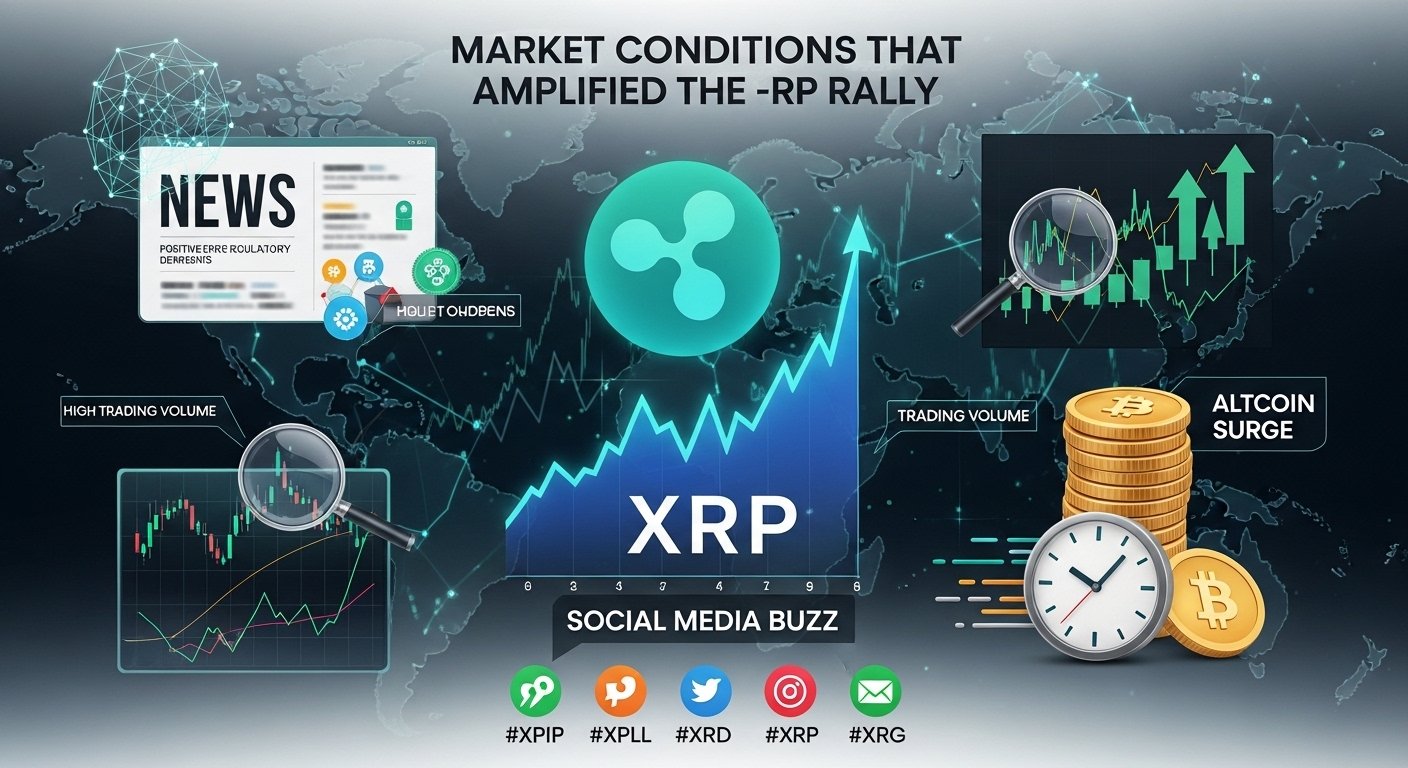
Timing played a crucial role in XRP’s 18% surge. The announcement came during a period of heightened market sensitivity, where traders were eager for clear catalysts. When the news broke, it coincided with improving sentiment across major cryptocurrencies. In such environments, assets with strong narratives tend to outperform. XRP’s DeFi story provided exactly that, allowing it to capture disproportionate attention and capital inflows.
Technical Breakouts and Momentum Trading
Once XRP broke through key resistance levels, momentum traders entered the market aggressively. This technical breakout reinforced bullish sentiment, drawing in additional buyers and accelerating the price move.
Risks and Challenges Facing XRP After the Surge
While the rally was impressive, it’s important to acknowledge the risks that could limit further upside.
Short-Term Overextension
Sharp price increases often lead to temporary overextension. After an 18% surge, XRP may experience consolidation or pullbacks as traders take profits. This does not invalidate the long-term thesis, but it can create short-term volatility.
Execution and Adoption Risks
Ripple’s DeFi expansion depends on successful execution. Building infrastructure, attracting developers, and onboarding institutions takes time. Delays or setbacks could dampen enthusiasm and pressure XRP’s price.
Regulatory Uncertainty
Although Ripple’s strategy emphasizes compliance, regulatory landscapes can change. Any adverse developments could impact institutional participation and market sentiment around XRP.
What Investors Should Watch Going Forward
To assess whether XRP’s momentum is sustainable, investors should focus on tangible indicators rather than price alone.
Growth in XRPL DeFi Activity
Metrics such as transaction volume, liquidity depth, and the number of active DeFi applications on XRPL will provide insight into real adoption. Consistent growth in these areas would validate the bullish narrative.
Institutional Engagement
Announcements of partnerships, integrations, or institutional use cases can signal growing confidence in XRPL’s DeFi ecosystem. These developments are often more meaningful than short-term price movements.
Broader Market Trends
XRP does not operate in isolation. Macroeconomic conditions, regulatory developments, and overall crypto market sentiment will continue to influence its performance.
Conclusion: XRP’s Surge Reflects a Broader Transformation
The 18% surge in XRP following Ripple’s DeFi expansion announcement was more than a speculative reaction—it reflected a growing belief that the XRP Ledger is evolving into a comprehensive financial platform. By focusing on institutional DeFi, stablecoins, and real-world asset tokenization, Ripple is positioning XRPL at the intersection of traditional finance and decentralized innovation.
Whether this momentum continues will depend on execution, adoption, and market conditions. However, the announcement has undeniably reshaped the conversation around XRP, shifting it from a legacy payments token to a potential cornerstone of regulated decentralized finance. For investors and observers alike, XRP’s recent surge may mark the beginning of a new chapter—one defined not just by price action, but by expanding utility and real-world relevance.
FAQs
Q: Why did XRP surge 18% after Ripple’s DeFi announcement?
XRP surged due to renewed investor confidence driven by Ripple’s DeFi expansion strategy, which positions XRPL for institutional adoption and broader financial use cases.
Q: What makes Ripple’s DeFi approach different?
Ripple focuses on regulated, institutional-grade DeFi rather than purely permissionless models, making it more attractive to traditional financial institutions.
Q: Does DeFi expansion guarantee long-term XRP growth?
No. While it improves XRP’s utility and narrative, long-term growth depends on execution, adoption, and overall market conditions.
Q: How do stablecoins and RWAs impact XRP?
Stablecoins and real-world assets increase on-chain activity and liquidity needs, indirectly strengthening XRP’s role within the XRPL ecosystem.
Q: Is XRP still primarily a payments-focused cryptocurrency?
Payments remain important, but Ripple’s DeFi expansion broadens XRP’s use cases, positioning it within a more diverse financial ecosystem.