
Ethereum Reasserts Control of DeFi TVL in 2026
Ethereum leads DeFi TVL again as rivals lag. Explore why liquidity, L2 scaling, and blue-chip protocols keep Ethereum ahead in DeFi.


Ethereum has once again tightened its grip on decentralized finance, reinforcing a trend many analysts expected but few believed would remain so resilient: Ethereum reasserts control of DeFi TVL even as newer blockchains promise faster speeds, cheaper transactions, and incentive-heavy growth campaigns. In a multi-chain era where liquidity can move with a click, dominance should theoretically be fragile. Yet time and again, capital flows back toward Ethereum’s DeFi ecosystem, treating it like a financial “home base” for both retail users and institutional participants.
To understand why this keeps happening, it helps to zoom out and look at what DeFi TVL (Total Value Locked) really represents. TVL is essentially the total value of crypto assets deposited into DeFi protocols on a chain. It includes assets locked in lending markets, liquidity pools, staking and liquid staking platforms, restaking systems, yield vaults, and derivatives protocols. While it isn’t a perfect measure of activity or profitability, it remains one of the clearest indicators of where deep liquidity and user trust reside. Over long cycles, TVL tends to concentrate around ecosystems that offer the strongest mix of security, composability, stable infrastructure, and high-quality applications.
That combination is exactly where Ethereum shines. Even in periods when chains like Solana, Tron, BNB Chain, Avalanche, and newer modular ecosystems surge in hype or short-term user growth, Ethereum’s DeFi base layer and Layer 2 expansion continue to function as the most reliable liquidity engine in crypto. Data sources like DeFiLlama consistently show Ethereum holding the largest share of DeFi TVL across chains, often exceeding half the market during strong cycles.
So why are competing chains struggling to close the gap? The answer isn’t just one factor. It’s a layered advantage built across years: Ethereum’s security, its deep liquidity pools, its blue-chip protocol stack, the dominance of ETH as DeFi collateral, and the rise of Ethereum-aligned Layer 2 networks that solve cost issues without abandoning Ethereum’s settlement layer. When Ethereum reasserts control of DeFi TVL, it’s not just a victory of technology; it’s a victory of network effects.
In this article, we’ll explore in detail how Ethereum reclaimed and sustained its lead, why rival chains have found it difficult to overtake it, and what this means for DeFi users, builders, and investors moving into 2026.
Why DeFi TVL Still Matters in a Multi-Chain World
Even with the growth of cross-chain bridges, chain abstraction, and app-specific rollups, DeFi TVL remains a powerful metric because it captures something fundamental: where capital feels safest and most useful. Investors and DeFi participants care about liquidity depth, slippage, borrowing efficiency, reliable stablecoins, and the ability to move between protocols without friction. These qualities improve when liquidity clusters tightly around the best ecosystems.
Ethereum’s TVL dominance reflects its role as the main hub for major DeFi categories:
The “Liquidity Gravity” Effect
Liquidity is magnetic. Once an ecosystem becomes the default destination for large pools of stablecoins, ETH collateral, and blue-chip tokens, it becomes easier for protocols to build on top of it. More protocols attract more users. More users attract more liquidity. This compounding effect is why Ethereum continues to pull capital back, even after competitors enjoy bursts of growth driven by incentives.
TVL as a Proxy for Trust
Although TVL can be inflated by incentives or circular deposits, long-term TVL growth generally aligns with trust. Ethereum’s reputation as the most secure smart contract settlement layer gives it an edge. Many users are willing to pay more in fees if it means their funds are on infrastructure that has survived years of attacks, black swan events, and market crashes.

When Ethereum reasserts control of DeFi TVL, it signals that the market still views Ethereum as the safest place for high-value DeFi activity.
Ethereum’s Core Advantage: Security and Settlement Reliability
Security is the base layer of DeFi success. A chain can have lightning-fast throughput and ultra-cheap transactions, but if users suspect higher systemic risk, large-scale liquidity will not remain anchored there.
Ethereum’s proof-of-stake architecture, mature validator ecosystem, and battle-tested client diversity make it the preferred settlement layer for high-value DeFi. Even when Ethereum fees spike during heavy activity, the market often treats those fees like a premium paid for safety.
This matters especially to institutional users. DeFi is no longer purely retail experimentation; it increasingly involves professional market makers, DAOs managing treasuries, and funds deploying sophisticated yield strategies. These participants tend to prioritize predictable execution and minimized chain risk over the cheapest possible fees.
Ethereum’s security advantage also compounds through its ecosystems of audits, tooling, and security researchers. Many of the strongest firms in smart contract auditing have spent years specializing in Ethereum-based codebases. This makes it easier for Ethereum-native protocols to attract capital because the market trusts the security process behind them.
The Blue-Chip Protocol Stack Keeps Ethereum at the Center
Another major reason Ethereum reasserts control of DeFi TVL is that Ethereum hosts the deepest bench of “blue-chip” DeFi protocols. These are protocols with long track records, massive liquidity, high integration counts, and strong governance models.
Liquid Staking and ETH Collateral Dominance
A huge portion of Ethereum DeFi TVL comes from staking and liquid staking systems such as Lido, along with ETH-based collateral deployed into lending and liquidity protocols. Over time, ETH has become the backbone collateral asset of DeFi. Many strategies are built around ETH yield plus additional DeFi yield stacking.
This creates structural demand for Ethereum DeFi, because a large share of capital in crypto is still held in ETH or ETH-equivalent forms.
Lending, Borrowing, and Stablecoin Liquidity
Ethereum’s lending markets, such as Aave, and its stablecoin ecosystems (USDC, USDT, DAI-like models, and emerging stable designs) remain central to DeFi’s liquidity cycles. Stablecoins are the working capital of decentralized finance, and Ethereum continues to host the deepest stablecoin liquidity in the market.
Competing chains have stablecoin markets too, but Ethereum’s liquidity tends to be the most integrated and composable across protocols. This creates superior capital efficiency and trading conditions, which helps reinforce Ethereum’s TVL leadership.
DEX Liquidity and Composability
Ethereum’s decentralized exchanges, and the entire AMM ecosystem that grew around them, are still the most composable in crypto. Even when alternative chains post higher raw transaction counts, Ethereum-based liquidity often remains the anchor for price discovery and major pools.
That composability is hard to replicate because it’s not just technical; it’s social and economic. Protocols choose Ethereum because other protocols are already there.
Layer 2 Scaling: Ethereum Expanded Without Fragmenting Its Brand
One of the most important changes in the last few years is that Ethereum’s scaling story is no longer theoretical. Layer 2 networks have turned Ethereum from a single chain into an expanding ecosystem that still settles back to Ethereum’s base layer.
This is a key reason why Ethereum reasserts control of DeFi TVL even while “cheaper” chains compete. Instead of losing users to other chains permanently, Ethereum shifted large chunks of activity onto rollups and L2s while preserving Ethereum’s settlement security.
Layer 2 Consolidation Strengthens the Ecosystem
The Layer 2 landscape has increasingly consolidated around a handful of major ecosystems. Research and market coverage in late 2025 highlighted that leading L2s captured most users and TVL, while many new L2 launches saw usage fade once incentives dried up.
This consolidation benefits Ethereum because it creates fewer, stronger Ethereum-aligned liquidity hubs rather than endless fragmentation. The result is a “family” of networks that function as extensions of Ethereum, rather than competitors to it.
Lower Costs Without Leaving Ethereum
For DeFi users, the biggest historical weakness of Ethereum was cost. Layer 2s reduce transaction fees dramatically while keeping users inside the Ethereum security umbrella. That changes the competitive equation: why migrate to a separate chain when you can get similar speed and cost benefits on an Ethereum rollup?
This also means that Ethereum’s DeFi TVL advantage isn’t just on mainnet. The broader Ethereum ecosystem increasingly includes L2 liquidity, creating a combined network effect that rivals struggle to match.
Competing Chains: Why the Gap Keeps Reappearing
If Ethereum is so dominant, why do competing chains keep gaining ground at all? Because alternative chains often shine in specific market phases. They may offer better user experience for retail trading, or they may grow rapidly thanks to heavy incentives and fast block times. But sustaining TVL dominance over a full cycle is much harder.
Incentive-Driven Growth Often Fades
Many chains experience TVL spikes when they launch aggressive liquidity mining or token rewards. This attracts mercenary capital: liquidity that arrives quickly but leaves quickly when rewards fall. Ethereum, by contrast, is less dependent on incentive bribes because its baseline user demand is structurally high.
Fragmented Liquidity and Weaker Composability
Competing ecosystems often have strong individual protocols, but they lack the depth of integration and composability Ethereum enjoys. This makes it harder to build complex strategies that layer lending, stablecoin swaps, yield vaults, and derivatives in a single coherent market.
Perceived Risk and Institutional Caution
Even when alternative chains are technically impressive, large-scale DeFi liquidity tends to prefer the chain with the strongest track record. Institutions and whales are often conservative. They may trade actively on other chains, but when it comes to locking large sums, Ethereum still feels like the “default safe harbor.”
This is one reason market reports frequently observe Ethereum sustaining a majority share of DeFi TVL during major growth periods. (CoinDesk)
Restaking and the New DeFi Primitive Reinforce Ethereum’s Lead
Restaking has emerged as a major narrative and infrastructure layer for Ethereum. It extends Ethereum’s security into additional services and networks, creating new yield opportunities and new places for capital to lock.
This category matters for TVL dominance because it encourages more ETH and ETH-derivative assets to stay inside Ethereum’s DeFi ecosystem rather than moving elsewhere. Restaking systems increase the “utility stack” of ETH, making it even more central as collateral.
As restaking grows, the line between DeFi, infrastructure, and staking blurs. But the TVL impact is clear: more locked value is still ultimately linked to Ethereum’s economic security.
Stablecoins: Ethereum’s Quiet Superpower
A chain’s DeFi ecosystem is only as strong as its stablecoin liquidity. Stablecoins are the rails of lending, leverage, trading, and yield farming. Ethereum continues to dominate stablecoin capitalization and stablecoin integration in DeFi, which reinforces its TVL dominance.
When traders want deep liquidity, tight spreads, and reliable stablecoin markets, Ethereum remains the best-connected ecosystem. Even when stablecoins exist on competing chains, the largest pools, most integrations, and most sophisticated strategies tend to remain Ethereum-first.
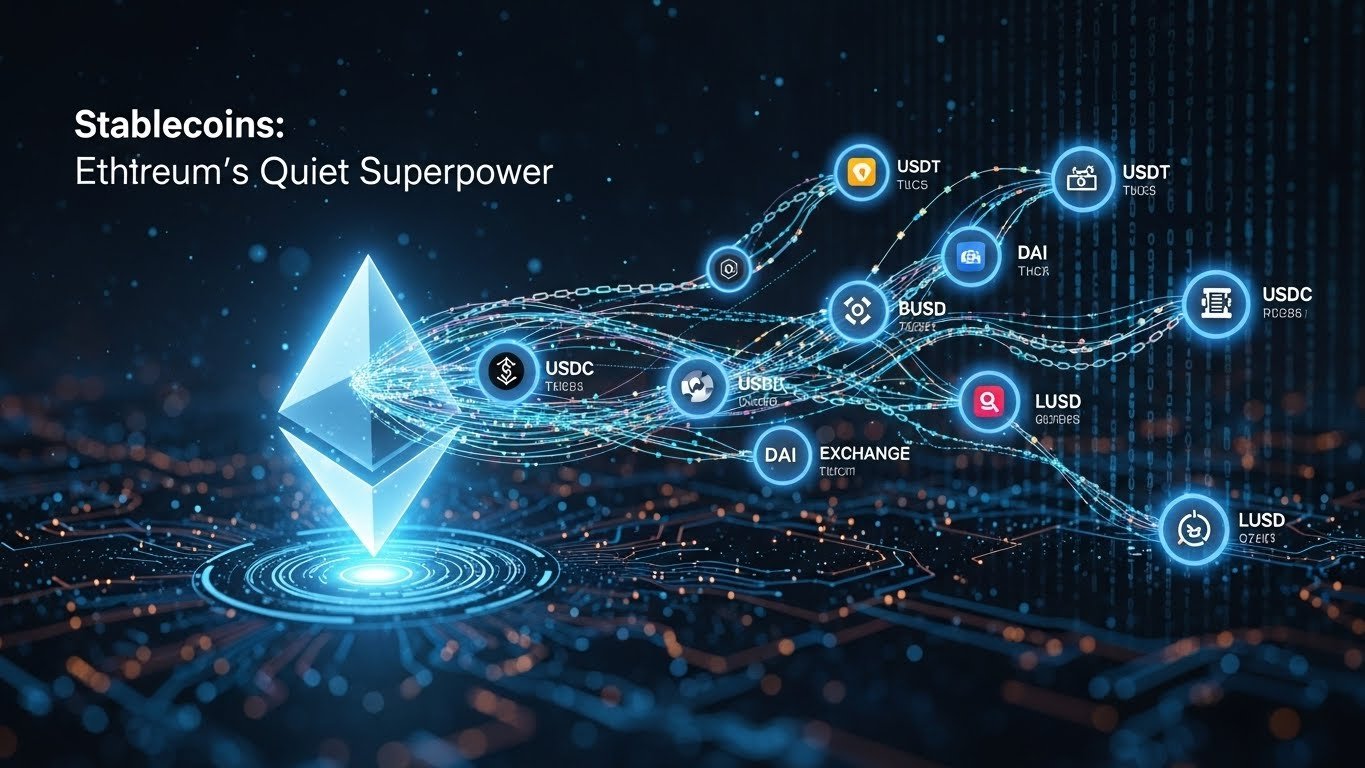
This stablecoin advantage matters because it powers everything else: lending markets thrive when stablecoins are abundant, DEX liquidity deepens, and yield markets become more capital efficient.
What This Means for DeFi Users and Investors
Ethereum’s continued lead has real implications for everyday DeFi users:
Better Liquidity and Lower Slippage
When Ethereum reasserts control of DeFi TVL, the biggest benefit for users is liquidity depth. Deep liquidity reduces slippage on swaps, improves borrowing rates, and makes leveraged strategies less costly.
More Reliable Infrastructure
Ethereum’s ecosystem benefits from the most mature infrastructure: wallets, indexing, MEV tooling, security standards, and on-chain analytics. That reliability matters for users who want consistent access and fewer “chain-wide surprises.”
Ecosystem Optionality Through L2s
Ethereum’s L2 expansion gives users more choice. If you want the strongest DeFi protocols and liquidity, you can stay in Ethereum’s orbit while choosing faster and cheaper execution layers.
The Road Ahead: Can Rivals Still Catch Up?
Ethereum’s dominance does not guarantee permanence. Crypto markets evolve quickly, and competing chains continue to innovate. There are several ways rivals could narrow the TVL gap:
Stronger Cross-Chain UX
If chain abstraction matures to the point where users don’t care what chain they’re on, liquidity could spread more evenly. But even in that world, Ethereum’s settlement role could remain central.
Specialized Chains and App-Specific Networks
Some ecosystems may grow by focusing on specific niches: high-frequency trading, gaming-integrated DeFi, or RWAs (real-world assets). These niches could attract meaningful TVL, but overtaking Ethereum across the full DeFi stack remains a major challenge.
Sustained Institutional Adoption Elsewhere
If a rival chain develops comparable trust and institutional adoption, it could start attracting stickier long-term liquidity. That would be one of the few forces capable of materially shifting Ethereum’s TVL share.
Still, as of recent DeFi market coverage, Ethereum often holds a majority share of TVL during strong cycles, with competitors fighting for the remaining portion.
Conclusion
Ethereum’s dominance isn’t accidental, and it isn’t only about being “first.” The reason Ethereum reasserts control of DeFi TVL is that Ethereum consistently combines the most valuable ingredients for DeFi success: security, deep liquidity, composability, stablecoin infrastructure, and a blue-chip protocol stack. Add Layer 2 scaling and emerging primitives like restaking, and Ethereum’s lead becomes even harder to challenge.
Competing chains will continue to grow, innovate, and occasionally surge in specific segments of DeFi. But closing the gap across the entire DeFi landscape requires more than speed and incentives. It requires trust, liquidity depth, and a protocol ecosystem that can sustain itself through multiple market cycles. For now, Ethereum remains the chain most DeFi participants return to when the stakes—and the locked value—are highest.
FAQs
Q: What does DeFi TVL mean, and why is it important?
DeFi TVL (Total Value Locked) measures the total value of assets deposited in DeFi protocols on a blockchain. It matters because it reflects liquidity depth, user trust, and where capital is most actively deployed.
Q: Why does Ethereum dominate DeFi TVL compared to other chains?
Ethereum dominates because of its security, strong stablecoin liquidity, deep composability, and long-standing blue-chip DeFi protocols. These factors attract long-term capital that tends to remain locked over time.
Q: Are Ethereum Layer 2 networks part of Ethereum’s DeFi dominance?
Yes. Layer 2 networks strengthen Ethereum’s position by offering faster and cheaper transactions while keeping settlement security tied to Ethereum, helping retain users and liquidity within Ethereum’s ecosystem.
Q: Can Solana, Tron, or other chains overtake Ethereum in DeFi TVL?
They can grow significantly and lead in certain categories, but overtaking Ethereum across the full DeFi stack is difficult due to Ethereum’s network effects, institutional trust, and protocol depth.
Q: Is DeFi TVL the only metric that matters for DeFi growth?
No. TVL is useful, but it should be evaluated alongside active users, protocol revenue, stablecoin flows, trading volume, and risk factors like smart contract security and liquidity concentration.
See More: Ethereum Price Consolidates Below $3,000 Is a Bottom In?