
(USSX) Strategic Market Analysis Growth & Outlook
(USSX) strategic market analysis covering trends, competition, growth drivers, risks, and future outlook for smarter investing decisions.


A strong (USSX) Strategic Market Analysis is more than a surface-level look at price movements or headlines. It is a structured way to understand how a market behaves, what forces are shaping demand and supply, and why investors, traders, and stakeholders are paying attention. In today’s fast-changing environment, the ability to interpret market signals accurately can determine whether an opportunity turns into long-term growth or short-term volatility.
The keyword (USSX) Strategic Market Analysis is especially relevant because markets are being reshaped by technology adoption, global liquidity cycles, shifting consumer behavior, and evolving regulatory frameworks. These factors create both opportunities and risks, requiring a deeper approach than simply tracking charts or following market sentiment. A strategic view asks the big questions: What is driving this market? Who holds the advantage? What trends are emerging beneath the surface? And what catalysts could accelerate growth or cause unexpected downturns?
This article provides a comprehensive (USSX) Strategic Market Analysis designed to help readers build a clearer understanding of market dynamics and future direction. You will explore macroeconomic context, competitive structure, trend indicators, and risk factors. You will also see how market segmentation, competitive positioning, strategic forecasting, and liquidity conditions influence performance. By the end, you’ll have a grounded framework for analyzing (USSX) with confidence—whether your focus is investing, trading, or simply staying informed.
Understanding (USSX): Market Context and Positioning
The first step in a (USSX) Strategic Market Analysis is defining what makes (USSX) distinct in the broader market landscape. Every market or asset has unique behavioral patterns shaped by its participant base, liquidity profile, and the information flow that affects sentiment. Understanding (USSX) requires identifying whether its value is primarily driven by fundamentals, speculation, or a blend of both.
In strategic market terms, positioning refers to where (USSX) sits relative to comparable benchmarks and competitors. A market that is heavily correlated to broader indices may move mainly with macro conditions, while a market with unique drivers may break away from broader trends. The difference matters: it changes how investors hedge risk, time entries, and allocate capital.
Another key factor is how market cycles affect (USSX). Markets tend to move through phases—accumulation, expansion, distribution, and contraction. A high-quality (USSX) Strategic Market Analysis looks at not only where (USSX) is today, but where it is likely heading based on cycle indicators like participation levels, volume shifts, sentiment trends, and macro tailwinds or headwinds.
This is also where LSI keywords such as market outlook, trend analysis, strategic forecasting, competitive landscape, and growth potential become essential. These concepts allow analysts to connect the dots between different data points and form a coherent narrative instead of relying on isolated indicators.
Macro Environment Influencing (USSX) Performance
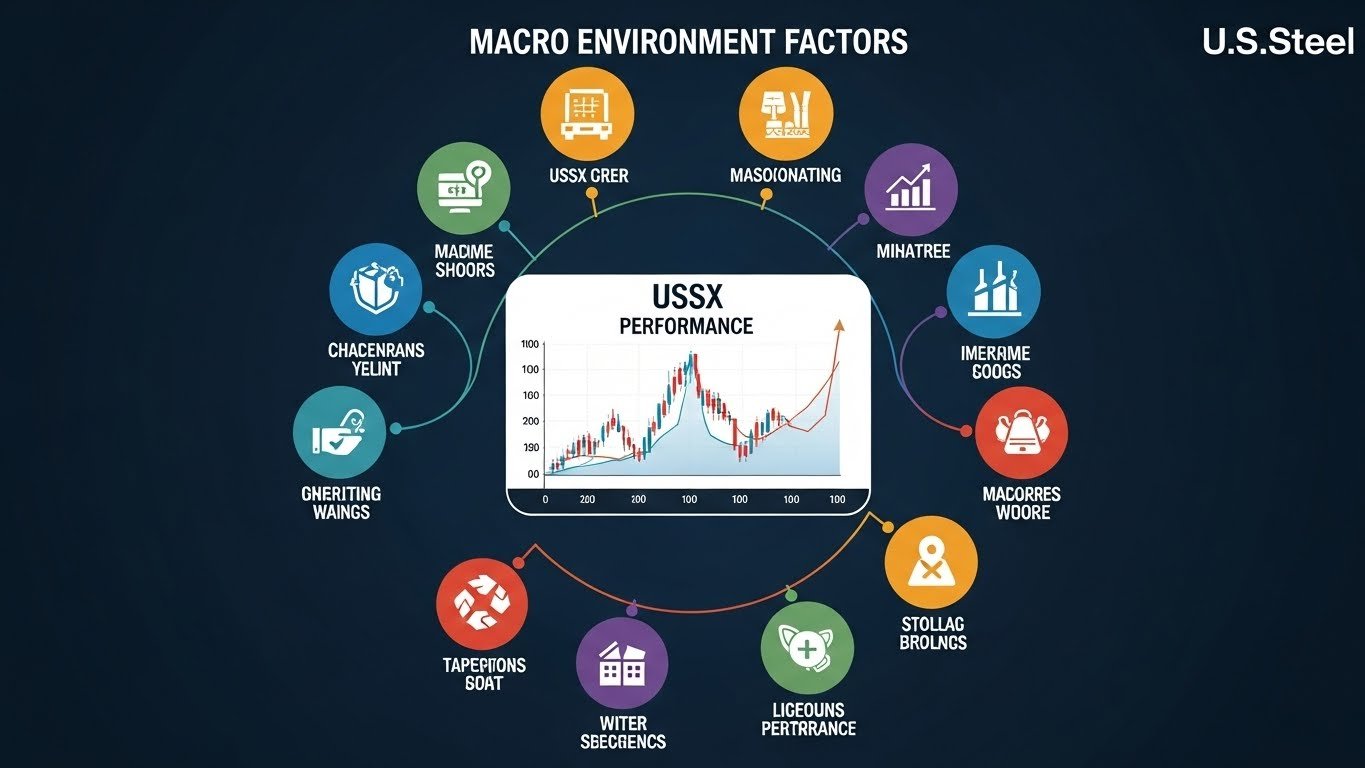
A strategic view always starts with the macro environment because macro conditions act like gravity for all markets. Even the strongest market can struggle when liquidity tightens, risk appetite falls, or global uncertainty rises. In a (USSX) Strategic Market Analysis, macro factors can help explain why the market behaves differently across timeframes.
Interest Rates, Liquidity, and Risk Appetite
One of the most important macro drivers is the cost of capital. When interest rates rise, markets often become more selective, favoring stability and predictable returns. Conversely, when interest rates are low and liquidity is abundant, speculative sectors and growth markets can experience rapid expansion. For (USSX), the liquidity cycle can determine how easily capital enters and exits the market, directly affecting volatility and momentum.
Strategic analysts watch for signals that liquidity is expanding or contracting. These signals often appear in the form of shifting institutional participation, changes in volume concentration, and broader investor sentiment. In practical terms, rising liquidity can fuel bullish narratives, while tightening liquidity can expose weak demand foundations.
Economic Indicators and Market Confidence
Economic growth, inflation trends, employment data, and consumer demand can all influence capital allocation decisions. While (USSX) may not move one-to-one with every indicator, macro conditions shape investor confidence, which in turn shapes market behavior. A strong (USSX) Strategic Market Analysis ties these indicators to potential market reactions, helping investors understand not just “what happened,” but “why it happened.”
Global Events and Regulatory Shifts
Markets do not operate in isolation. Geopolitical events, supply chain disruptions, and regulatory announcements can create rapid changes in sentiment. If (USSX) is sensitive to policy shifts, compliance requirements, or industry regulations, those factors become essential parts of strategic forecasting. In any market, uncertainty increases risk premiums, and that can influence valuations, trading activity, and long-term expectations.
Market Trends and Growth Drivers for (USSX)
The foundation of any (USSX) Strategic Market Analysis is identifying the trends that are shaping growth. Trends can be structural, cyclical, or sentiment-driven. Structural trends are long-term forces such as technology adoption or changing customer behavior. Cyclical trends are tied to economic and liquidity cycles. Sentiment-driven trends are often short-lived but can produce sharp moves.
Demand Shifts and Adoption Patterns
When (USSX) is supported by demand expansion, the market tends to show healthier growth characteristics. Demand can rise due to improved utility, broader awareness, accessibility, or improved ecosystem development. A strategic analyst looks at whether demand is organic and sustainable, or primarily speculative. Organic demand typically leads to more stable expansions, while speculative demand may lead to faster but riskier cycles.
Innovation and Competitive Differentiation
Markets reward innovation. If (USSX) is linked to an ecosystem, platform, or sector where innovation is accelerating, this becomes a major growth driver. Innovation strengthens competitive advantage and can create network effects that increase adoption. In a strategic lens, these forces matter because they can shift (USSX) from being a short-term trade into a long-term story.
This is where Bold LSI keywords like competitive advantage, market momentum, strategic positioning, and industry innovation naturally reinforce the analysis and help establish topical depth for search engines.
Institutional Participation and Market Credibility
Markets tend to stabilize as institutional participation grows. Institutions bring scale, but also due diligence and longer time horizons. When institutions increase involvement, it can improve liquidity, reduce extreme swings, and increase credibility. A strong (USSX) Strategic Market Analysis watches for institutional signals such as rising capital flows, structured investment products, and strategic partnerships.
Competitive Landscape: Who Shapes (USSX) Dynamics?

Competition is not always direct. In many markets, competition includes substitutes, alternative assets, and emerging entrants that compete for investor attention and capital. A deep (USSX) Strategic Market Analysis examines the competitive landscape to determine whether (USSX) is gaining market share or losing it.
Market Share and Relative Performance
Strategic analysts compare relative performance because outperformers attract attention. If (USSX) consistently outperforms comparable alternatives, it strengthens its market story. If it underperforms, investors may rotate away. Relative performance is not just about price; it also includes liquidity, adoption, ecosystem strength, and perceived durability.
Barriers to Entry and Differentiation
A market with low barriers to entry often becomes crowded. Crowded markets can dilute value unless there is clear differentiation. If (USSX) has a unique value proposition, it may maintain a stronger position even when new entrants appear. Differentiation can come from technology, partnerships, branding, community strength, or structural advantages.
Strategic Alliances and Ecosystem Strength
Competitive advantage often increases when an ecosystem expands through partnerships. Alliances can unlock distribution channels, improve infrastructure, and enhance user confidence. These developments are powerful catalysts in a (USSX) Strategic Market Analysis, especially if they open access to new segments or new liquidity pools.
Technical and Sentiment Indicators in (USSX) Analysis
While fundamentals shape long-term direction, technical and sentiment indicators often drive short- to medium-term moves. A balanced (USSX) Strategic Market Analysis integrates both.
Volume, Volatility, and Liquidity Signals
Volume is one of the most useful indicators because it reflects participation. Rising volume during price increases often suggests stronger conviction, while falling volume may indicate weaker follow-through. Volatility also provides important clues. High volatility can attract traders but discourage long-term investors unless it is tied to growth catalysts.
Liquidity is particularly important in strategic forecasting. A market can have strong growth potential but still struggle if liquidity remains thin. When liquidity improves, it often signals rising maturity and broader confidence.
Market Sentiment and Narrative Cycles
Markets frequently move on narratives. Narrative cycles can be driven by innovation announcements, macro shifts, or speculative hype. Sentiment analysis helps investors understand whether the market is overheating or undervalued relative to expectations. A key objective is to separate sustainable momentum from short-lived excitement.
In SEO terms, this section supports related phrases such as trend analysis, market psychology, price action, and market sentiment, while keeping the core focus on (USSX) Strategic Market Analysis.
Risk Factors and Challenges Facing (USSX)
Strategic analysis must include risks. Ignoring risk leads to biased forecasts and poor decisions. A responsible (USSX) Strategic Market Analysis highlights key vulnerabilities and the conditions under which the market could weaken.
Regulatory and Compliance Risks
Regulatory uncertainty can impact demand, access, and investor confidence. If compliance standards tighten or classifications shift, markets may react sharply. Strategic analysts monitor policy direction and enforcement trends because these forces can reshape entire industries.
Market Volatility and Liquidity Risk
Markets that rely heavily on speculative demand can experience sharper declines when sentiment turns. Liquidity risk becomes critical during downturns, when sellers overwhelm buyers. This is why analysts assess both bullish catalysts and downside scenarios.
Competitive Pressure and Innovation Risk
Competition can erode dominance if rivals innovate faster or offer better value. Innovation risk occurs when a market fails to keep pace with user expectations or technological change. If (USSX) depends on continuous upgrades, the ability to maintain innovation momentum becomes a key strategic factor.
Strategic Forecast: What’s Next for (USSX)?
Forecasting is not about predicting exact prices—it’s about identifying plausible scenarios and understanding what conditions would create each outcome. A strong (USSX) Strategic Market Analysis frames forecasting as scenario planning.
Bullish Scenario: Expansion and Adoption Growth
In a bullish scenario, (USSX) benefits from expanding liquidity, favorable macro conditions, and rising adoption. Growth could accelerate if major partnerships, ecosystem upgrades, or increased institutional flows strengthen credibility. Bullish environments often reward strong narratives and attract sustained capital inflows.
Neutral Scenario: Consolidation and Range Behavior
In a neutral scenario, (USSX) may consolidate as the market digests prior growth. Consolidation isn’t inherently negative—it can build a stronger foundation for future expansion. Range behavior often reflects equilibrium between buyers and sellers, providing opportunities for strategic accumulation.
Bearish Scenario: Liquidity Tightening and Sentiment Decline
In a bearish scenario, liquidity tightens, risk appetite declines, or external shocks disrupt confidence. Under these conditions, the market may experience deeper pullbacks. Strategic investors watch for whether declines are accompanied by weakening fundamentals or simply reflect macro-driven risk-off cycles.
How to Use (USSX) Market Analysis for Smarter Decisions
The practical value of a (USSX) Strategic Market Analysis lies in decision-making. Analysis should translate into a framework you can apply repeatedly, rather than a one-time opinion.
Investors benefit by aligning their strategy with market structure. Long-term participants may focus on adoption and ecosystem fundamentals, while short-term traders may focus on sentiment, volatility, and technical confirmation. Risk management becomes essential, particularly in markets where volatility can shift rapidly. Position sizing, diversification, and entry discipline can often matter more than trying to predict exact turning points.
Strategic market analysis is also about avoiding emotional decisions. Markets are designed to test patience and discipline. By focusing on trends, catalysts, and structural forces, you reduce the risk of being pulled into hype cycles or panic sell-offs. In the end, this approach allows you to build a more consistent way to interpret (USSX) and react intelligently.
Conclusion
A complete (USSX) Strategic Market Analysis reveals far more than surface-level price behavior. It identifies the macro forces shaping liquidity and risk appetite, evaluates growth drivers such as adoption and innovation, and explores the competitive landscape that determines long-term positioning. It also highlights critical risks—from regulatory uncertainty to volatility and competition—so that market participants can prepare for multiple outcomes instead of relying on a single narrative.
The key takeaway is that strategic analysis is not about certainty. It is about clarity. When you understand the environment, the trends, and the risks, you can make better decisions, respond faster to changing conditions, and recognize opportunities before they become obvious. Whether you are a long-term investor, a short-term trader, or a curious observer, applying a structured (USSX) Strategic Market Analysis provides a strong advantage in navigating this market’s future.
FAQs
Q: What is the purpose of a (USSX) Strategic Market Analysis?
The purpose is to evaluate (USSX) using a structured approach that includes macro drivers, trends, competition, risks, and forecasting scenarios so decisions are based on insight rather than speculation.
Q: How often should I review (USSX) market conditions?
A good practice is to review weekly for trend direction and monthly for deeper strategic shifts. However, major macro events or market news may require more frequent monitoring.
Q: What are the most important drivers of (USSX) performance?
Key drivers typically include liquidity conditions, adoption growth, innovation momentum, competitive positioning, and shifts in market sentiment and investor confidence.
Q: Is (USSX) more influenced by fundamentals or market sentiment?
It often depends on the phase of the market cycle. In early growth phases, sentiment can dominate. In mature phases, fundamentals and adoption trends usually become more important.
Q: What is the biggest risk when analyzing (USSX)?
The biggest risk is focusing on a single factor, such as price or hype, while ignoring liquidity, competition, and macro conditions. Strategic analysis works best when it integrates multiple perspectives into one coherent outlook.
Also Read: Bitcoin Market News Today Analysis Trends Predictions 2025