
Bitcoin LTH Selling Cools Distribution Ending?
Bitcoin long-term holder selling is slowing after months of distribution. Discover what this means for Bitcoin price, market trends, and future momentum.

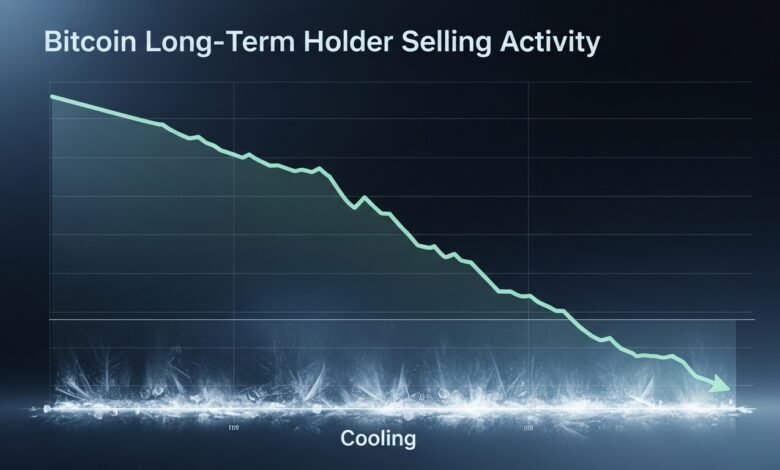
Bitcoin market has always been shaped by the behavior of its most committed investors—those who hold their coins through volatility, bear markets, and periods of uncertainty. These investors, known as long-term holders (LTHs), play a crucial role in determining Bitcoin’s broader market cycles. When they begin selling in large numbers, the market often experiences extended consolidation or downward pressure. However, when Bitcoin LTH selling begins to cool, it can signal a major shift in the market’s underlying dynamics.
Over the past several months, analysts have closely watched signs of long-term holder distribution. This phase typically occurs when investors who accumulated Bitcoin at lower prices decide to realize profits during higher price levels. Such activity increases the circulating supply of Bitcoin in the market, often slowing upward momentum. Recently, however, on-chain indicators suggest that this extended distribution period may finally be losing steam.
The slowdown in Bitcoin LTH selling has sparked discussion among analysts and traders about whether the market is transitioning from a distribution phase into a new accumulation phase. If long-term holders are no longer aggressively selling, it may indicate that the majority of profit-taking has already occurred. This change could significantly impact Bitcoin’s price trajectory in the coming months. Understanding what this shift means requires a deeper look into the behavior of long-term holders, the metrics used to measure their activity, and the broader implications for Bitcoin’s market structure.
Bitcoin Long-Term Holders
To fully understand the significance of Bitcoin LTH selling, it is essential to first define who these long-term holders are. In on-chain analysis, long-term holders are typically defined as investors who have held their Bitcoin for more than 155 days without moving it. This timeframe is widely used because coins that remain unmoved for this duration tend to belong to investors with stronger conviction.
Unlike short-term traders who react quickly to price fluctuations, long-term holders often follow a strategic investment approach. They tend to accumulate Bitcoin during bearish or uncertain periods and distribute portions of their holdings during strong bullish phases. Their behavior often reflects the broader sentiment of experienced investors in the market.

Because of this, long-term holder supply trends provide valuable insights into market cycles. When long-term holders increase their holdings, it generally signals strong confidence in Bitcoin’s long-term potential. Conversely, when they begin distributing coins, it may indicate profit-taking or a shift in market expectations.
Role of Long-Term Holder Distribution in Market Cycles
The concept of distribution is a key element in understanding Bitcoin’s price movements. During a distribution phase, long-term holders gradually sell portions of their Bitcoin holdings into the market, usually when prices have risen significantly. This process typically unfolds over several months rather than occurring all at once. As more coins enter circulation, selling pressure increases, which can limit further price growth. Even if demand remains strong, the additional supply from long-term holders can slow down upward momentum.
In many cases, distribution phases occur after significant price rallies. Early investors who accumulated Bitcoin at lower prices begin to lock in profits, transferring coins to newer participants entering the market. This shift in ownership is a natural part of the Bitcoin market cycle. However, distribution does not last forever. Eventually, the majority of willing sellers complete their transactions. When this happens, Bitcoin LTH selling begins to slow, signaling that the market may be approaching a new equilibrium.
Signs That Bitcoin LTH Selling Is Cooling
Recent on-chain indicators suggest that the pace of Bitcoin LTH selling has begun to decline compared to previous months. This shift has been observed through several metrics commonly used by blockchain analysts. One of the most important indicators is the long-term holder supply change, which tracks whether long-term holders are increasing or decreasing their Bitcoin holdings over time. When this metric turns positive, it suggests that long-term investors are accumulating more Bitcoin rather than selling it.
Another key metric is the Long-Term Holder Spent Output Profit Ratio (LTH-SOPR). This indicator measures whether long-term holders are selling their coins at a profit or a loss. A decline in LTH-SOPR activity can indicate that fewer long-term holders are rushing to take profits, suggesting that the major wave of distribution may be ending. Additionally, analysts often observe the age of coins being spent on the Bitcoin network. When older coins remain dormant and fewer long-held coins are moved, it suggests that long-term holders are becoming more confident in holding their positions rather than selling. Together, these signals point toward a gradual reduction in selling pressure from the most experienced Bitcoin investors.
Why Long-Term Holders May Be Slowing Their Selling
Several factors may explain why Bitcoin LTH selling appears to be cooling after months of distribution.
Market Equilibrium After Heavy Profit-Taking
One possible explanation is that the majority of profit-taking has already occurred. During strong rallies, many long-term holders sell portions of their holdings to lock in gains. Once those sales are completed, the remaining investors are often those with stronger long-term conviction. As a result, the supply of Bitcoin available for sale from long-term holders naturally decreases.
Stronger Confidence in Bitcoin’s Future
Another reason could be growing confidence in Bitcoin’s long-term value. As institutional adoption expands and Bitcoin continues to establish itself as a digital store of value, many investors may prefer to hold rather than sell. This shift in sentiment can lead to a reduction in selling pressure, especially among investors who view Bitcoin as a long-term hedge against economic uncertainty.
Absorption of Supply by New Market Participants
Markets also evolve as new participants enter the ecosystem. When new buyers absorb the supply released during distribution phases, the market gradually stabilizes. Once the available supply has been absorbed, fewer coins remain available for sale, which naturally reduces selling activity.
How Reduced LTH Selling Impacts Bitcoin Price
A slowdown in Bitcoin LTH selling can have several important implications for the market. First, it reduces the amount of Bitcoin entering circulation from older wallets. With fewer coins being sold, the market experiences less selling pressure. This can make it easier for prices to stabilize or move upward if demand remains strong. Second, reduced selling from long-term holders often improves market sentiment.
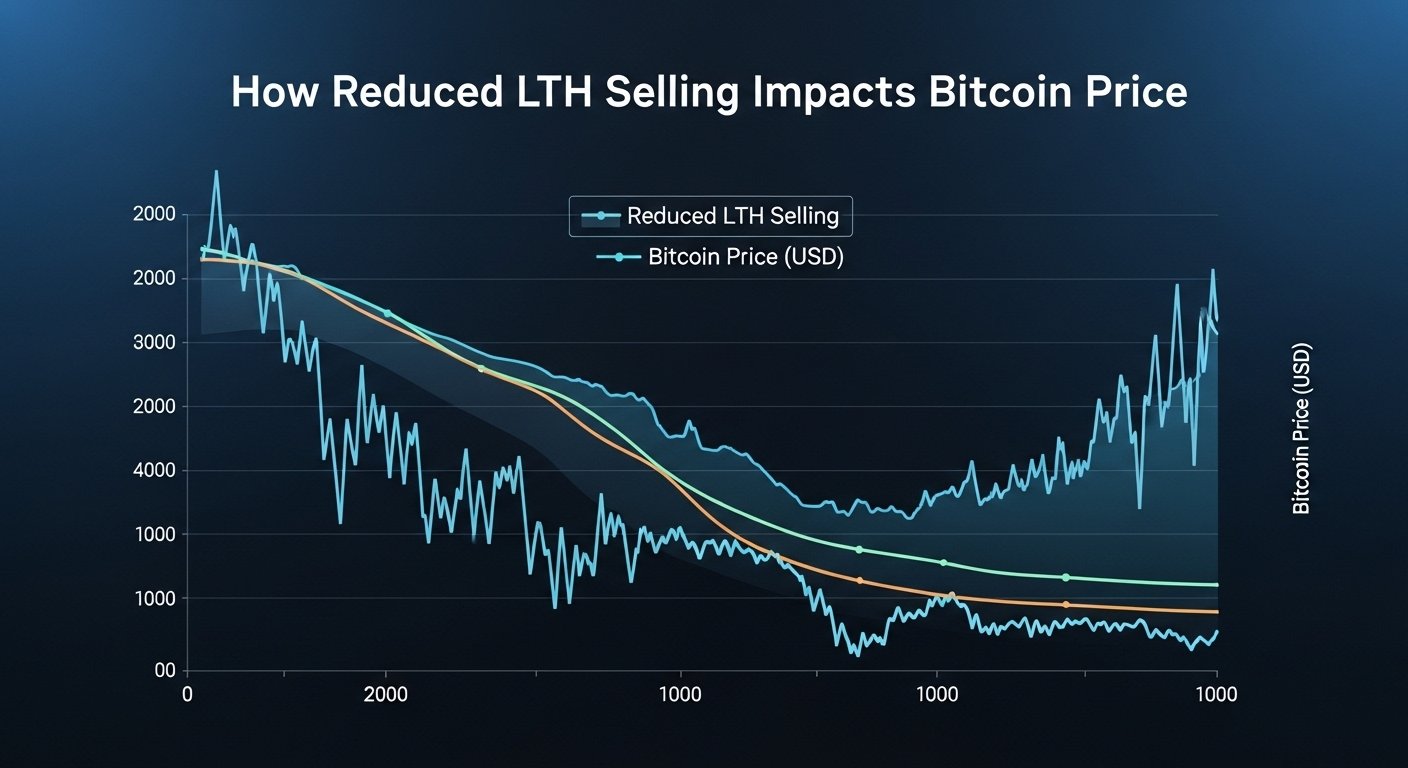
When experienced investors stop distributing their coins, it signals confidence in the asset’s long-term outlook. Third, lower selling pressure can lead to periods of price consolidation, where Bitcoin trades within a relatively stable range before its next major move. These consolidation phases often serve as the foundation for future bullish trends.
Could the Market Be Entering a New Accumulation Phase?
If the slowdown in Bitcoin LTH selling continues, the market may gradually transition from distribution into a new accumulation phase. Accumulation occurs when investors steadily buy Bitcoin over time, often during periods of price stability or mild declines. During this phase, coins move from weaker hands to stronger hands, setting the stage for potential future rallies.
Historically, accumulation phases have preceded some of Bitcoin’s most significant price increases. When supply becomes tightly held and demand begins to rise, even small increases in buying pressure can lead to substantial price movements. While it is still too early to confirm that a full accumulation phase has begun, the reduction in long-term holder selling is an encouraging signal.
Importance of Monitoring On-Chain Data
Despite the positive implications of cooling Bitcoin LTH selling, investors should remember that the cryptocurrency market is influenced by many factors beyond on-chain metrics. Macroeconomic conditions, global financial trends, regulatory developments, and investor sentiment can all impact Bitcoin’s price trajectory. Even if long-term holder selling slows, unexpected events can still introduce volatility. This is why many analysts recommend combining on-chain analysis with broader market research when evaluating Bitcoin’s outlook. By monitoring multiple indicators, investors can gain a more complete picture of market conditions.
Conclusion
The recent slowdown in Bitcoin LTH selling has sparked renewed optimism within the cryptocurrency market. After months of gradual distribution, the behavior of long-term holders appears to be shifting. Fewer coins are being sold by veteran investors, suggesting that the bulk of profit-taking may already be complete. While it is too early to declare that the distribution phase has definitively ended, the current trend is a positive development for the market. Reduced selling pressure from long-term holders often creates a more stable environment for price growth and market consolidation. If this trend continues and demand remains strong, Bitcoin could be preparing for its next major phase in the ongoing market cycle. As always, monitoring on-chain data alongside broader market indicators will remain essential for understanding where Bitcoin may move next.