
Blockcast 84 Licensed to Shill—What’s in Store for 2026
Blockcast 84’s 2026 crypto outlook: stablecoins, DeFi’s next era, and the return of NFTs—regulation, trends, and real use cases.


Blockcast 84 Licensed to Shill the market keeps teaching, it’s that hype alone doesn’t survive contact with reality. The last few years pushed crypto through cycles of exuberance, collapse, rebuilding, and cautious optimism. Now, as conversations like Blockcast 84 lean into what’s next, the big question isn’t “Will crypto pump?” It’s “What actually sticks?”
The 2026 narrative feels different because it’s less about promises and more about infrastructure. Stablecoins are no longer a niche tool for traders—they’re becoming a serious contender in payments, remittances, on-chain settlement, and even corporate treasury operations. DeFi is shifting from experimental “money legos” into something that increasingly resembles a modular financial system with risk controls, liquidity routing, and more realistic incentives. And NFTs—once treated as the punchline of crypto culture—are quietly re-entering the conversation with a stronger focus on utility, rights, and distribution.
This article breaks down what Blockcast 84 signals about 2026: the direction of stablecoins, the future of DeFi, and whether a return of NFTs is real—or just wishful thinking. Along the way, we’ll weave in LSI keywords and related terms—like regulatory clarity, tokenized assets, real-world assets (RWA), on-chain liquidity, Layer 2 scaling, and Web3 adoption—to give you a full-picture view without turning the read into a keyword soup. Expect detailed explanations, smooth flow, and practical context so the ideas feel grounded—not shilly.
Stablecoins in 2026: From Trading Tool to Economic Rail
Stablecoins may be the least flashy part of crypto, but they’re arguably the most important. In 2026, the stablecoin story isn’t just about keeping value steady; it’s about becoming a default “internet dollar” and a settlement layer for a global, always-on economy. The stablecoin boom is already tied to real demand: people want faster payments, cheaper transfers, and fewer middlemen. That’s not ideological—it’s practical.
Stablecoins also serve as the bridge between traditional finance and on-chain markets. As more financial products become tokenized, stablecoins act as the “cash” component for swaps, lending, yield strategies, and settlement. In that sense, they’re not merely a product category—they’re the base currency of crypto’s operating system. If 2026 truly becomes the year stablecoins step into the mainstream, it’ll be because they solve everyday problems better than legacy rails.
The “Regulation Premium” and Why It Matters
One of the biggest stablecoin catalysts is regulatory clarity. Markets price certainty. When rules become clearer—around reserves, audits, disclosures, redemptions, and issuer responsibilities—stablecoins can earn what you might call a “regulation premium.” That doesn’t mean regulation magically fixes everything, but it does reduce perceived risk for institutions, enterprises, and payment companies.
In 2026, stablecoins that align with strict compliance expectations could see broader adoption in cross-border commerce and fintech integrations. You might also see more stablecoin competition—more issuers, more models, and more jurisdiction-specific products. Some may focus on transparency and fully reserved holdings; others might chase growth through incentives and partnerships. But the long-term winners will likely be the ones that balance trust, usability, and distribution.
Stablecoin Utility Beyond Crypto Exchanges
The most meaningful stablecoin growth comes when people use them without thinking about “crypto” at all. By 2026, stablecoins could be deeply embedded into apps that feel like fintech, not Web3. Imagine stablecoin balances that move like messages—instantly, globally, and cheaply—while the complexity stays in the background.

This is why stablecoins remain central to the Blockcast 84 conversation: they’re not a speculative trend; they’re a foundational layer. And as stablecoins become more common, the rest of the crypto stack—DeFi, NFTs, and tokenized markets—gets a stronger base to build on.
The Future of DeFi in 2026: Less Ponzinomics, More Systems
DeFi’s original pitch was simple: open finance without gatekeepers. But early DeFi also relied heavily on inflated incentives, mercenary liquidity, and the belief that “yield” could be printed forever. 2026 looks like a turning point where DeFi either matures into sustainable systems—or gets outcompeted by smarter, safer alternatives.
What does DeFi maturity actually look like? It looks like better risk management, more efficient capital usage, improved liquidity routing, stronger security practices, and products that normal users can understand. It looks like protocols that behave more like financial infrastructure and less like casino games. In other words, the future of DeFi is about reliability.
Liquidity, Routing, and the Rise of Modular DeFi
In 2026, DeFi isn’t just about one protocol winning. It’s about composable layers that work together: DEXs, lending markets, liquid staking, bridges, and execution environments that optimize routing and minimize slippage. This is where on-chain liquidity becomes a competitive advantage—not just for traders, but for everything built on top.
You’ll likely see more “smart order routing” and liquidity aggregation that feels closer to modern market structure. As modular systems mature, users will care less about which protocol is used and more about outcomes: best price, fastest settlement, lowest fees, lowest risk. The DeFi user experience will be shaped by interfaces and aggregators that abstract complexity while still staying transparent.
Layer 2 Scaling and DeFi’s Next Adoption Wave
DeFi can’t reach mass usage if every interaction feels expensive, slow, or confusing. By 2026, Layer 2 scaling and improved execution environments could make everyday DeFi actions feel more like normal apps. When fees drop and transactions become smoother, new behavior becomes possible: micro-investing strategies, automated savings, and more frequent portfolio rebalancing.
This matters because the future of DeFi depends on real usage, not just market cycles. If DeFi becomes cheap and easy enough that people can actually use it without friction, then DeFi stops being “for crypto natives only.” That’s the adoption wedge—especially when stablecoins make the entry point familiar.
DeFi Risk Management: The Feature People Finally Want
For years, DeFi focused on permissionless access, but permissionless doesn’t mean riskless. The 2026 evolution includes better guardrails: improved collateral frameworks, smarter liquidation systems, more conservative default settings, and transparent risk disclosures. This is also where on-chain analytics and real-time monitoring become a product feature, not just a research tool.
In the spirit of Blockcast 84, the shift is cultural too: less “move fast and break things,” more “build systems that survive stress.” That doesn’t kill DeFi’s open ethos—it strengthens it. A system that can handle bad actors, volatility, and liquidity shocks is one that earns long-term trust.
Tokenized Assets and RWAs: DeFi’s Most Serious Narrative
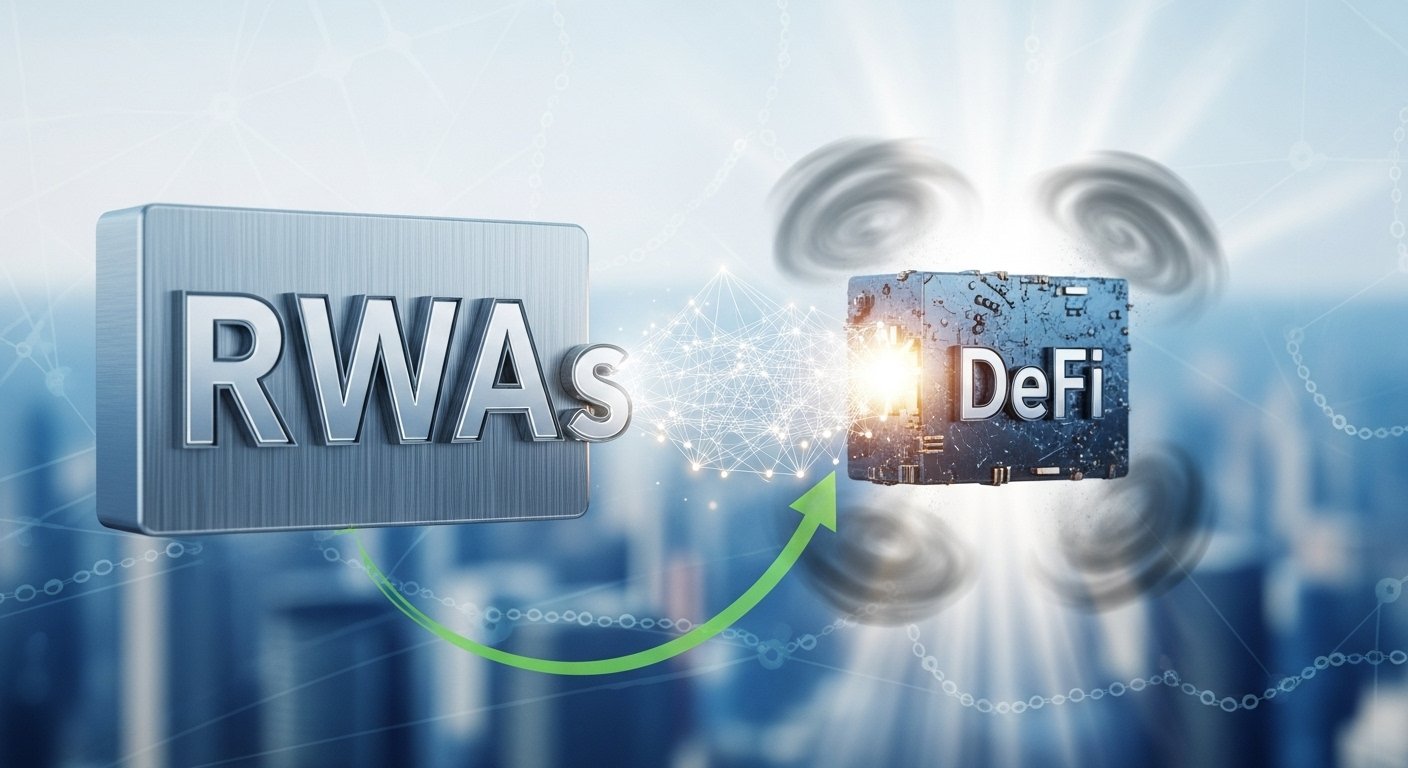
When people talk about “real adoption,” they often mean connecting crypto rails to real-world economic activity. That’s where tokenized assets and real-world assets (RWA) become crucial. In 2026, the RWA narrative isn’t just a buzzword; it’s an attempt to make on-chain finance relevant beyond crypto-native capital.
Tokenized treasuries, funds, invoices, commodities, and structured products can turn DeFi into a more complete financial stack. Stablecoins are the cash leg, and RWAs are the yield leg. Together, they can create a pipeline of on-chain capital formation that feels less speculative and more productive.
Why RWAs Could Change DeFi’s Reputation
A persistent critique of DeFi is that it circulates value inside a closed loop. RWAs break that loop by tying yield to external cash flows. If these markets grow in 2026, DeFi could look more like an open financial marketplace than an isolated experiment.
But this also introduces new complexity: counterparties, legal structures, jurisdictional issues, disclosures, and settlement guarantees. The DeFi protocols that integrate RWAs successfully will need stronger governance frameworks and tighter operational discipline. The upside is huge, but the bar is higher.
A Return of NFTs in 2026: Reinvention, Not Replay
NFTs don’t need another profile-picture mania to come back. In fact, the return of NFTs in 2026 is more plausible if it’s not a copy of the last cycle. The NFT market’s biggest mistake was confusing speculative demand with enduring value. When prices collapsed, many concluded NFTs were “dead.” But the underlying primitive—provable digital ownership—still matters.
The return of NFTs will likely be quieter, more useful, and more integrated into products that people already want. Think membership access, in-game assets, ticketing, licensing, creator monetization, and digital goods with real distribution channels. That’s not just an “NFT revival”; it’s NFTs finding their correct shape.
NFT Utility: Identity, Access, and Digital Rights
NFTs excel when they represent something beyond the image. In 2026, you may see more NFTs used as access keys for communities, subscriptions, events, and premium features. NFTs can also function as portable reputation or identity markers in ecosystems where users want continuity across platforms.
This is where Blockcast 84 resonates: a return of NFTs doesn’t have to mean a return of irrational speculation. It can mean NFTs finally doing the job they were built for—representing ownership, access, and rights in a native digital way.
Brands, Creators, and the Distribution Problem
One reason NFTs struggled is that distribution was often limited to crypto-native audiences. By 2026, the brands and creators that succeed with NFTs will treat them as product infrastructure, not a one-off drop. When onboarding feels seamless—when wallets are abstracted, payments feel normal, and perks are clear—NFTs can become an invisible backend for loyalty and engagement.
Instead of shouting “buy my NFT,” the pitch becomes “here’s your membership,” “here’s your ticket,” or “here’s your collectible that unlocks experiences.” The NFT is just the container.
How These Trends Connect: Stablecoins, DeFi, and NFTs as One Stack
It’s tempting to treat stablecoins, DeFi, and NFTs as separate narratives. In 2026, they increasingly look like parts of the same stack. Stablecoins serve as the base money and settlement layer. DeFi provides financial services—swaps, lending, yield strategies, and structured products. NFTs provide ownership and identity primitives that can power access, rights, and distribution.
When these pieces work together, the ecosystem feels less like isolated experiments and more like an emerging digital economy. A user might hold stablecoins for spending, use DeFi for savings or yield, and carry NFTs that represent memberships, tickets, or digital goods. That flow is coherent. And coherence is what the market has been missing.The User Experience Shift: From “Crypto First” to “User First”
The most important 2026 upgrade isn’t a new token standard or a faster chain—it’s user experience. When apps become simpler, safer, and more intuitive, adoption expands. Wallet abstraction, better recovery options, clearer transaction previews, and better consumer protections can turn crypto from a niche hobby into a mainstream tool.
This is also why the future of DeFi is tightly linked to stablecoins: stablecoins create familiar value units, which reduce psychological friction. And NFTs, when tied to real benefits, reduce the “why would I want this?” problem. Combined, these trends help crypto feel less alien.
What to Watch in 2026: Signals That the Thesis Is Real
If you want to evaluate whether Blockcast 84 is pointing to a real 2026 shift, focus on outcomes rather than headlines. Stablecoins gaining merchant and fintech integrations is a real signal. DeFi improving safety, liquidity efficiency, and user experience is a real signal. NFTs returning with utility and distribution beyond crypto-native circles is a real signal.
What doesn’t count as a real signal? Temporary price spikes with no sustained usage. If 2026 becomes a durable year, the on-chain data will show it: more stablecoin transactions, more recurring DeFi usage, and NFTs being used as infrastructure rather than novelty. The market has been through enough cycles to know the difference.
Conclusion
The big takeaway from Blockcast 84 | Licensed to Shill: What’s in Store for 2026 – Stablecoins, the Future of DeFi.. and a Return of NFTs? is that the market’s center of gravity is shifting. Stablecoins are moving from trading rails to everyday financial rails. The future of DeFi is leaning toward systems that prioritize reliability and risk management. And the return of NFTs is less about hype and more about utility, ownership, and digital rights.
If 2026 is crypto’s “grown-up year,” it won’t be because the narratives are louder. It’ll be because the products are better, the rails are smoother, and the use cases make sense to people who don’t care about crypto culture. That’s the real win: when crypto becomes useful enough that it doesn’t need to shout.
FAQs
Q: Why are stablecoins expected to grow in 2026?
Stablecoins are positioned to grow in 2026 because they offer fast, low-cost settlement and can integrate into payments, remittances, and fintech apps more easily than many traditional rails.
Q: What does the future of DeFi look like beyond hype?
The future of DeFi is likely to focus on safer protocols, stronger risk controls, deeper on-chain liquidity, and better user experience so DeFi products feel more like reliable financial tools.
Q: Will NFTs really return in 2026?
A return of NFTs in 2026 is plausible if NFTs emphasize utility—like access, ticketing, memberships, and digital rights—instead of repeating purely speculative cycles.
Q: How do RWAs and tokenized assets affect DeFi?
Real-world assets and tokenized assets can connect DeFi to external cash flows, making yield less dependent on internal crypto loops and potentially improving DeFi’s long-term credibility.
Q: What should I track to know if 2026 crypto trends are real?
Look for adoption signals like increased stablecoin transaction volume, consistent DeFi usage with sustainable yields, improved security standards, and NFTs being used for real benefits rather than hype.
See More: Cryptocurrencies Price Prediction Asia Wrap Jan 30